
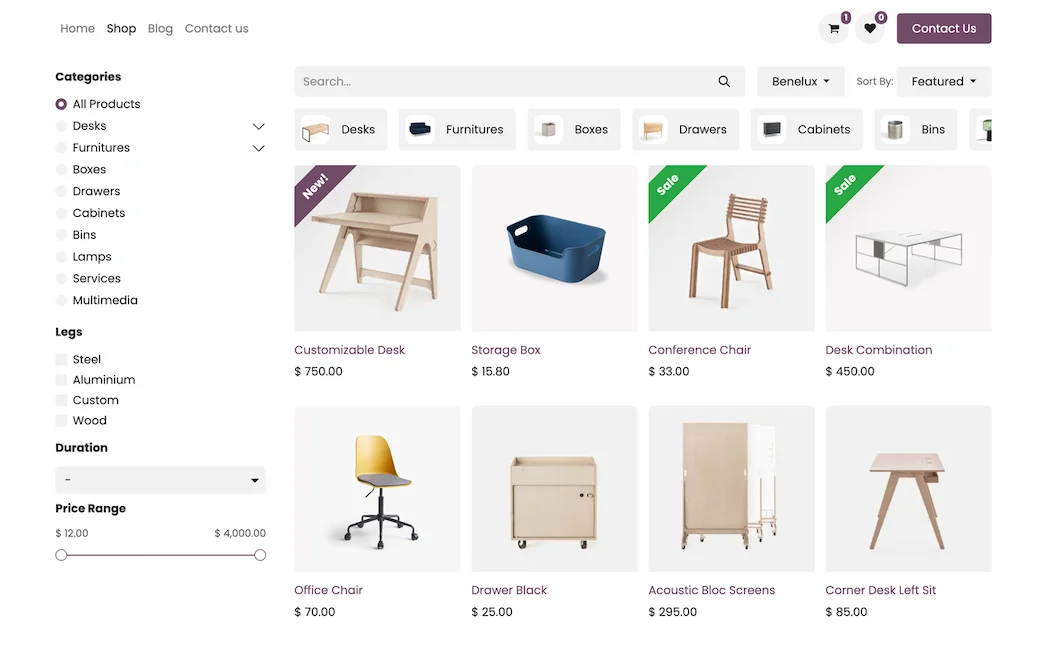
Catálogo de la tienda en línea de Odoo con productos y filtros · Nextdoo, Partner Oficial de Odoo
Tres dolores que disappear
El problema
Web Shopify/Prestashop con la sincronización rota
Cómo lo resolvemos
El catálogo, el stock y los precios viven en el ERP. La web es solo una ventana a esos datos.
El problema
Tarifas B2B mal montadas
Cómo lo resolvemos
Precios por cliente y grupo, cantidades y contratos. B2B y B2C en la misma plataforma.
El problema
Expensive payment gateways
Cómo lo resolvemos
Redsys, Stripe, PayPal y Bizum nativo sin comisiones extra de plataforma.
Real Odoo eCommerce
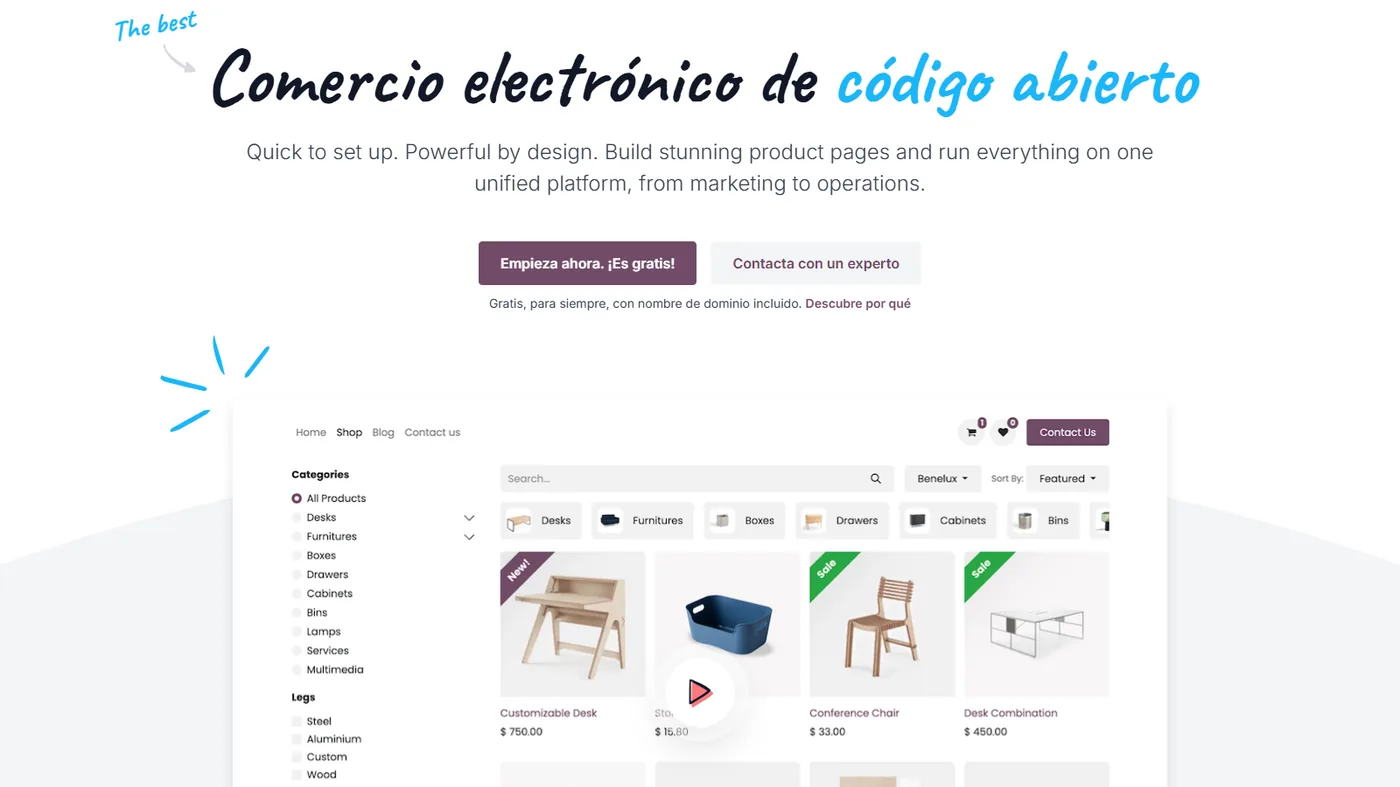
Captura real de Odoo. Esto es lo que tu equipo verá cada día.
Cómo negocios como el tuyo lo usan
Caso real
Mayorista B2B con descuentos por cliente
Distribuidores con su propia lista de precios, descuentos por tramos y condiciones de pago pactadas. Cada cliente ve su propio precio al iniciar sesión. Carrito persistente entre sesiones.
Caso real
Marketplace de un solo proveedor
Vende tus productos en línea con un catálogo amplio, variantes (talla/color), filtros por categoría y buscador interno. Optimizado para SEO por producto y categoría.
Caso real
Tienda física + en línea sincronizadas
Stock unificado entre el TPV de la tienda física y el ecommerce. Vendes online y descuenta del mismo stock que la tienda. Devoluciones online recogidas en tienda.
Qué incluye
Unified catalogue
Los productos, las variantes, el stock y las imágenes salen todos del ERP. Cero datos duplicados.
Precios por cliente
Listas de precios, descuentos y condiciones B2B. B2C abierto al público.
Portal de cliente
Histórico, facturas, repeticiones de pedido y contratos. Autoservicio 24/7.
Online payments
Redsys, Stripe, PayPal, Bizum y financiación a plazos.
Native SEO
Multilingüe con hreflang, sitemap, schema y llms.txt. Optimizado para Google y para la IA.
Integrated marketing
Cupones, carritos abandonados, venta adicional y recomendaciones. Integración con email marketing.
Cuatro fases. Cero sorpresas.
Mapeamos tu operativa actual, los sistemas que usas, los equipos implicados y tus prioridades. Resultado: un alcance cerrado por escrito y un plan de hitos.
Configuramos el módulo en tu Odoo: campos, vistas, automatizaciones e integraciones con los módulos vecinos. Iteramos contigo en una semana.
Si vienes de otro sistema, migramos tus datos en un entorno de pruebas. Validamos saldos, conciliaciones y registros punto por punto antes de la puesta en marcha.
Tu equipo aprende en sesiones prácticas con tus datos reales. Tras la puesta en marcha, pasas a soporte mensual con un SLA y horas para mejoras.
Preguntas preguntas frecuentes sobre Odoo Ecommerce
¿Admite variantes de producto (talla/color)?
Sí. Un producto padre con atributos configurables y variantes generadas automáticamente. Stock por variante. Filtros por atributo en el sitio web.
¿Tiene buscador interno?
Sí, con autocompletado. Búsqueda por nombre, código y atributos. Puedes priorizar productos y mostrar relacionados.
¿Puedo conectarme con Amazon o eBay?
Sí, con módulos de OCA o de pago. Sincroniza catálogo, stock y pedidos. Puede requerir configuración técnica adicional.
¿Admite carritos abandonados?
Sí. Un correo automático tras X horas sin finalizar la compra. Plantilla configurable. Integración con email marketing para las series de recuperación.
Se integra con el resto de tu Odoo
Sin datos duplicados. Sin sincronizaciones rotas.
Módulos que se complementan
Desliza para ver más → o pulsa en cualquiera




Por qué montar tu tienda online con Odoo
La tienda en línea de Odoo comparte catálogo, stock y clientes con el resto del negocio. Lo que se vende en la web descuenta del mismo inventario que la tienda física, así que nunca vendes algo que ya no tienes.
Al no depender de conectores entre sistemas distintos, hay menos puntos de fallo y menos mantenimiento. Los pedidos web fluyen directamente al proceso de ventas y logística.
Para un comercio que además quiere vender online sin duplicar la gestión, es el camino más limpio. Lo adaptamos a tu catálogo y a tu identidad de marca.
Recursos y enlaces relacionados
Información oficial: Documentación oficial de Odoo.
Un solo Odoo, todos los módulos conectados
Cada módulo encaja con el resto. Explora las demás piezas de Odoo y los sectores donde las implantamos.