E-invoicing between businesses will no longer be optional. The 'Crea y Crece' Law (Create and Grow Law) establishes that B2B transactions (between businesses and self-employed individuals) must be conducted with e-invoices, with a phased rollout. This is not the same as sending a PDF by email: we are talking about an invoice in a structured format that both parties can process and whose status can be tracked. Preparing in advance avoids last-minute stress. This guide explains what it is, who it affects, and how to get ready with Odoo.
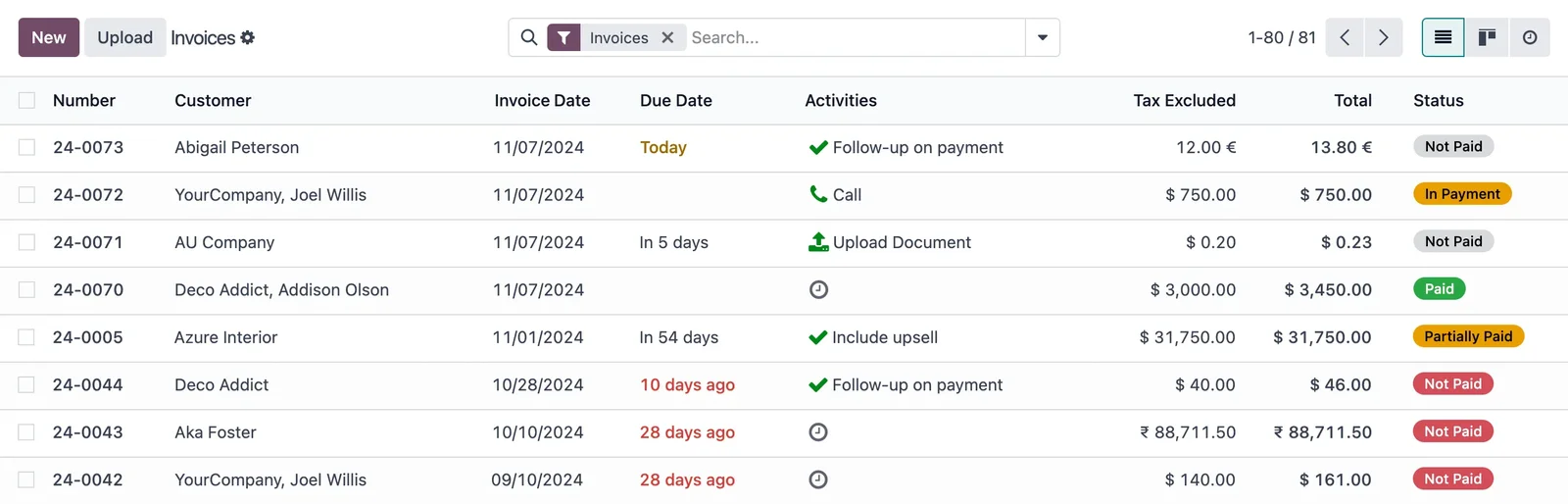
En 30 segundos. Mandatory B2B e-invoicing: What it is, who it affects, requirements, and how to prepare with Odoo. Your essential guide from a partner.
What is mandatory B2B e-invoicing
Today, many businesses already send invoices in PDF, but this is not strictly speaking an e-invoice. The 'Crea y Crece' Law obligation refers to an invoice in a structured format, which the recipient's system can read and process automatically, and with the possibility of communicating the invoice status (accepted, paid, rejected). The aim is to reduce late payments and digitalise inter-company relationships. This is a different obligation from VeriFactu — which is about invoice registration — although both aim at the same thing: more transparent invoicing. You can see the other piece in VeriFactu and Odoo.
Who it affects and when
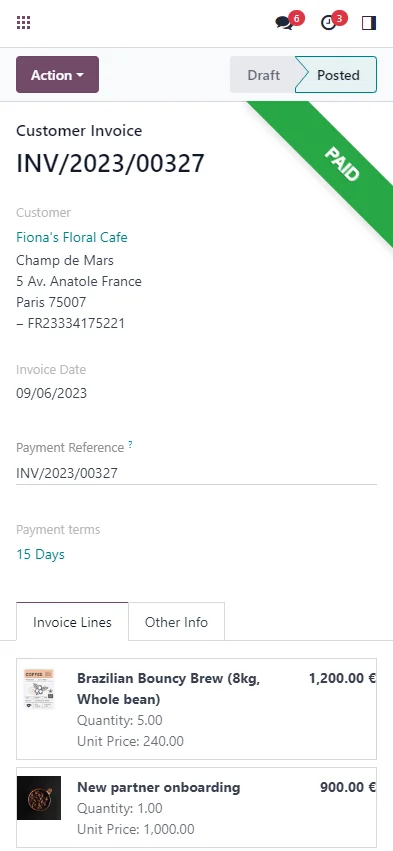
It will affect all businesses and self-employed individuals in their B2B operations, but not all at once: the rollout is planned in phases, starting with businesses with higher turnover and then extending to the rest. The specific dates depend on regulatory development, which has been adjusting, so it is prudent not to rely on anecdotal information and to consult the official calendar at the website of the Spanish Tax Agency or with your consultancy firm. What is certain is the direction: B2B e-invoicing is coming, and preparing with time always turns out better than rushing at the end.
What it requires from your company
In practice, compliance means being able to:
- Issue invoices to other businesses in the required structured electronic format.
- Receive and process e-invoices from your suppliers.
- Report the status of invoices (acceptance, payment…).
- Retain and be able to consult all of this in an organised manner.
The important thing is that it is not just another manual process, but that your invoicing system is prepared to do it for you.
How to prepare with Odoo step by step
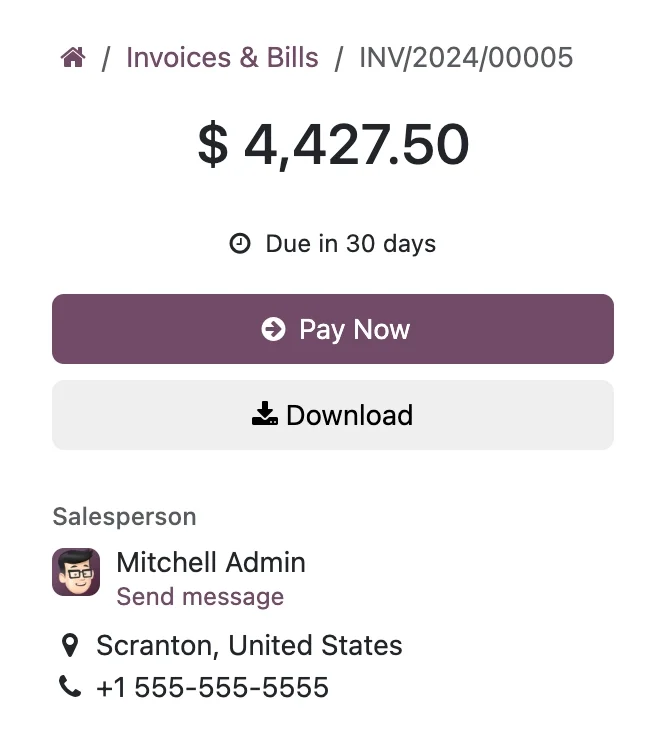
Step 1 · E-invoicing in electronic format
Odoo is configured to issue invoices in the structured electronic format, in addition to the version the client sees. Deliverable: e-invoice issuance ready.
Step 2 · Receiving supplier invoices
Odoo is prepared to receive and process e-invoices sent by your suppliers, without manually typing in data. Deliverable: automated reception.
Step 3 · Statuses and tracking
Tracking of each invoice's status is activated, to know if it is accepted, paid, or pending. Deliverable: invoice lifecycle control.
Step 4 · Integration with B2B customers and suppliers
If you work with a B2B portal, e-invoicing is integrated into that flow; the focus is on Odoo B2B e-commerce. Deliverable: compliant B2B flow.
Why it's advisable to get ahead
Waiting until the last day to adapt to such an obligation is a recipe for stress: haste, extra costs, and errors. Getting ahead has advantages beyond mere compliance: a well-implemented e-invoicing system reduces administrative work (less typing, fewer errors), speeds up collections by tracking the status of each invoice, and prepares your company to work with large clients who already demand it. With Odoo, preparing for the obligation is also modernising your invoicing, not just meeting a requirement.
Common e-invoicing errors
- Believing that sending a PDF is already 'e-invoicing': it is not in the sense of the regulation.
- Only preparing for issuing and forgetting about receiving supplier invoices.
- Leaving it until the obligation is already upon you.
- Trusting anecdotal dates instead of confirming the official calendar.
With a partner who knows the regulations, you'll be ready without any surprises; it's advisable to choose carefully who you implement with.
How much does it cost and how long does it take to prepare it in Odoo?
If you already use Odoo, activating e-invoicing is a confined configuration; if you are implementing Odoo, it is integrated into the project. The framework is in Odoo implementation and cost details in how much Odoo costs.
Indicative and non-binding deadlines; they depend on your specific case and regulatory developments.
What to do now to avoid being late
Although the final timetable depends on the regulations, there are sensible things you can do now to avoid a last-minute rush. Firstly, review how you currently invoice and which companies you invoice: if you work with large clients, it's likely that electronic invoicing will reach you sooner from their end. Secondly, check that your invoicing system is —or will be— ready for the structured format, both for issuing and receiving. Thirdly, organise your customer and supplier data, because an electronic invoice with incorrect data will bounce back. And fourthly, speak to your advisory firm and your technology partner to have a plan, instead of improvising when the obligation kicks in.
Getting ahead doesn't mean doing everything today; it means not leaving it until the last minute. Companies that leave these kinds of changes until late end up paying more and making more mistakes; those who prepare with time to spare experience it as an improvement to their invoicing, not a burden. With Odoo, this preparation is mainly configuration, so the work is done once and is ready for when the obligation comes into force for your company.
Frequently Asked Questions
When is electronic invoicing mandatory between companies?
The 'Crea y Crece' Law establishes it with phased implementation, starting with companies with the highest turnover. The dates depend on the regulations, so it's advisable to confirm them with the AEAT or your advisory firm.
Does sending a PDF count as an electronic invoice?
Not in the sense of the regulation. A structured format that the recipient's system can process is required, not a simple document to read.
Who does the obligation affect?
All companies and self-employed individuals in their B2B operations, in a staggered manner according to size, starting with those with the highest turnover.
Does Odoo allow you to issue and receive electronic invoices?
Yes. Odoo is configured to issue invoices in the required electronic format and to receive and process those from your suppliers, with status tracking.
Is it the same as VeriFactu?
No. VeriFactu concerns invoice record-keeping; B2B electronic invoicing concerns the mandatory electronic format between companies. They are distinct and complementary obligations.
Do I have to change software to comply?
Not necessarily, but your invoicing system must be ready. Odoo is ready, so if you already use it or implement it, you cover the obligation from within the system itself.
What do I gain by getting ahead?
Less administrative work, quicker collections, and being ready for clients who already require electronic invoices, as well as avoiding last-minute rushes.
Do I need a separate platform?
With Odoo, a large part of the process is managed from within the system itself. The details for your specific case and according to the regulations will be specified by the partner when preparing the configuration.
Is electronic invoicing for companies the same as for public administrations?
Not exactly. With public administrations (B2G), electronic invoicing has been mandatory for years through FACe; the novelty of the 'Crea y Crece' Law is to extend this obligation to operations between private companies.
Do you want to be ready for mandatory electronic invoicing without stress?
At Nextdoo, an official Odoo partner, we prepare your invoicing for B2B regulations and for VeriFactu, according to your specific case. Start by implementing Odoo or request a diagnosis for your company.
Sources: Tax Agency electronic office and official Odoo documentation. Indicative information, not tax advice; confirm the timetable and details with the AEAT or your advisory firm.
Sources
Official sources consulted: official Odoo documentation y Tax Agency electronic office (VeriFactu). Cost and deadline figures are indicative and non-binding, subject to variations depending on the project.