
SEO in Odoo Website: how to position your store
Having a website built with Odoo is not enough to appear on Google: you have to work on SEO. The good news is that Odoo Website already includes many of the tools you need for positioning as standard, and with a few well-ordered adjustments, your store can compete with others in your sector. In this guide, we explain, in simple language designed for the store owner, how to apply SEO in Odoo Website step by step: what to configure, how to write your content and how to take care of speed. We are Nextdoo, Official Odoo Partner specialised in retail, and this is the same approach we follow with our clients.
What Odoo Website brings to SEO and what depends on you
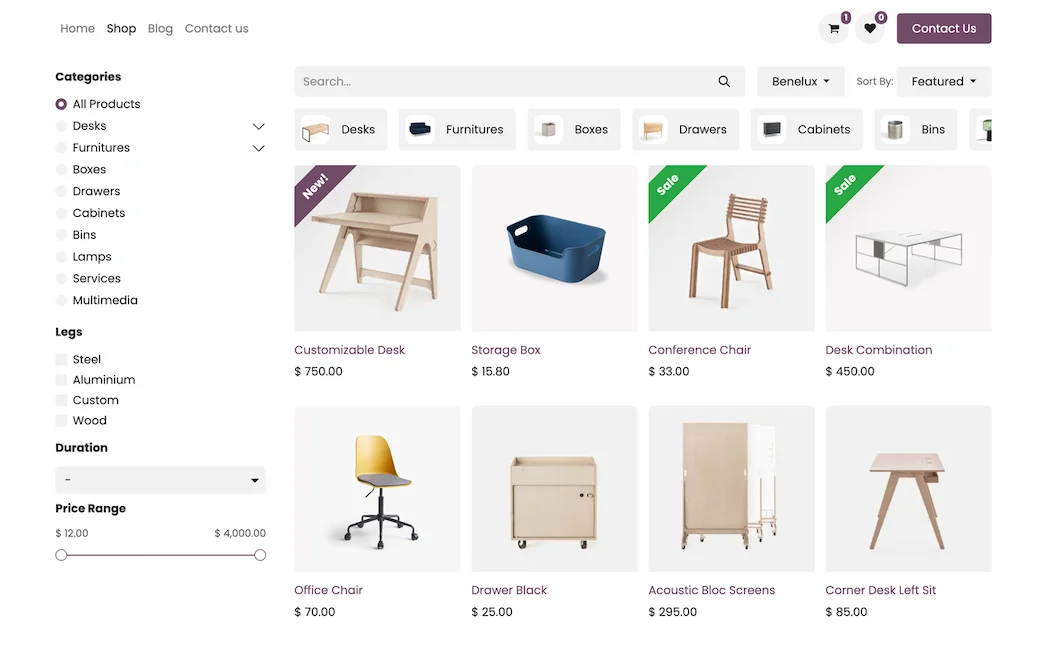
SEO in Odoo Website is supported by two pillars. The first is the technical part, which Odoo covers almost by itself: each page and each product has fields for the SEO title, meta description and URL, clean and readable URLs are generated, there is an automatic sitemap and pages look good on mobile. This means that the foundation upon which Google evaluates your website is already well resolved and you don't have to programme anything to get started.
The second pillar depends on you or whoever manages the website: filling in those fields correctly, writing useful content, organising the menu and categories logically, and keeping the store up to date. Odoo gives you the car; you set the direction. If you want to better understand how your website is built within the platform, you can review our Odoo Website page, where we explain the module in detail.
On-page SEO: the adjustments that really make a difference
The first thing is to take care of the SEO title and meta description of each page. The title is the blue link that appears on Google and should include the keyword you want to be found for and the name of your store or city. The meta description is the grey text below: it doesn't directly affect positioning, but it encourages clicks, so write it like a small two-line advert. Odoo lets you edit both from the SEO promoter on each page, with a traffic light that warns you if something is missing.
Next, check that each page has a single clear main heading and that the URLs are short and descriptive: better your-store.com/office-chairs than an address full of numbers. Add alt text to images describing what they show, as it helps Google and accessibility. And link your pages together naturally so that visitors and search engines can move around your website with ease. These details, repeated on each product page, make a difference compared to a competitor who neglects them.
Content: the true engine of positioning
No technical adjustment compensates for a lack of useful content. Google positions pages that respond well to what people search for, so think about what questions your customer asks before buying and answer them on your product pages, in categories, and in a blog. Original and specific descriptions, using the words your customers actually use, are worth much more than generic text copied from the manufacturer.
A blog within Odoo Website is one of the most cost-effective ways to gain visits: each article well-oriented to a real question in your sector is a new entry point to your store. You don't need to publish every day; it's preferable to have a few solid and updated texts than many empty ones. If your project is an online store with a catalogue, it's also convenient to coordinate SEO with sales configuration; we cover this in Odoo Ecommerce.
Speed and mobile experience
Load speed affects positioning and, above all, whether visitors leave before seeing your product. In Odoo, the factor that usually weighs most heavily is images: upload them at a reasonable size and let the platform optimise them, avoid enormous photos on the homepage and don't load each page with dozens of blocks and animations that add nothing.
Also check how your website looks on mobile, because today most visits come from phones and Google takes this into account. Odoo generates responsive versions, but it's worth reviewing them: ensure buttons are easy to press, text can be read without zooming, and the buying process works with a thumb. Free tools like Google's PageSpeed Insights give you a score and specific clues on what to improve.
Structure, menus and errors that sink your SEO
A well-organised website ranks better. Order the menu and categories following your customer's logic, not your warehouse's, and avoid duplicate pages or old addresses that lead to errors. When you change a page's address, set up a redirection so you don't lose visits that were already coming to the old one; Odoo allows you to manage this without touching code.
The most common errors we see are product pages without their own description, empty SEO titles or titles repeated throughout the store, unoptimised images and menus that hide the catalogue. None of these are serious on their own, but together they slow down positioning for months. A methodical review of these points usually yields visible results without a large investment.
When to ask for help and what to expect
Much of the SEO in Odoo Website can be managed by the store's own team with consistency and method. If you prefer to delegate it, or if you're starting a new project and want to be well configured from day one, it makes sense to rely on a partner who knows the platform inside out. At Nextdoo, we review the technical configuration, organise the structure and leave a content roadmap so the business can continue on its own.
It is important to have realistic expectations: SEO is a long-term race and results usually become noticeable over several months, not days. Any estimation of timescales, scope or investment given to you should be understood as a reference estimation, not binding, and adjusted to your specific case after reviewing your website. If you want us to analyse your store and tell you where to start, we can look at it together in an Odoo Consultancy session.
Frequently asked questions
Is Odoo Website good for SEO?
Yes. Odoo Website includes SEO titles, editable meta descriptions, clean URLs, an automatic sitemap and a mobile-adapted design as standard. The technical foundation is well covered; the result depends on you filling in those fields correctly and publishing useful and updated content.
Can I do the SEO for my Odoo store myself?
For the most part, yes. Editing titles, descriptions, URLs, images with alt text and creating blog articles does not require advanced technical knowledge. For initial setup or a new website, the support of a partner who knows the platform may be worthwhile.
How long does it take for a website built with Odoo to rank?
SEO is a marathon. Improvements usually start to be noticed after several months of consistent work, not days. Technical changes are applied quickly, but the rise in Google is gradual and depends on the competition in your sector.
What's the first thing I should improve to rank my store?
Start with the SEO titles and meta descriptions of your main pages and product listings, using original descriptions instead of copied text, and by optimising the file size of your images. These are low-cost adjustments with a visible impact.
Does loading speed affect SEO in Odoo Website?
Yes. A faster website ranks better and reduces bounce rate, especially on mobile. In Odoo, the factor that usually weighs most heavily is images: upload them at a reasonable size and avoid overloading pages with unnecessary blocks. Google's PageSpeed Insights gives you free guidance.
Related resources
Official information: Official Odoo documentation.