The year-end accounting close is that time of year when you need to sort out the financial year's accounts: balancing, reviewing, making adjustments and getting everything ready for the annual accounts and tax returns. Done at the last minute and with disorganised bookkeeping, it's a nightmare; done on an up-to-date system, it's an orderly process. This guide explains what the year-end close is, what it involves, and how Odoo helps you achieve it with reconciled accounts. The specifics of your case, as always in accounting and tax, should be confirmed with your adviser.
En 30 segundos. Understand year-end accounting close & what it entails. Learn how Odoo helps streamline the process for SMEs. A practical guide from an Odoo partner.
What is the Year-End Close?
The year-end accounting close is the set of operations that conclude a financial year. Basically, it's putting an end to a year's accounts: ensuring everything is recorded and reconciled, making the necessary adjustments, and determining the financial year's result (the profit or loss). From that close, the annual accounts are prepared, and the financial year's tax obligations are made ready, such as corporation tax for companies. It's not a mechanical process: it involves accounting judgment, which is why it's usually done in conjunction with an adviser. What can be greatly facilitated is having the data organised and reconciled, which is where a good system makes all the difference.
What the Year-End Close Involves
The year-end close is not a single act, but a series of reviews and adjustments. Broadly speaking, it usually includes: balancing the ledger accounts and reconciling bank statements; reviewing and accounting for the depreciation of fixed assets; recording provisions and any corresponding adjustments; regularising stock according to the physical inventory; reviewing accruals and prepayments (ensuring each is in its correct financial year); and, finally, adjusting the result by allocating income and expenses to their appropriate place to determine the profit or loss. Each of these steps requires judgment, which is why the close is a collaborative effort with an adviser. But all rely on a common foundation: that the year's bookkeeping is complete and reconciled. If that foundation is missing, the close becomes a last-minute reconstruction.
How Odoo Helps You with the Year-End Close
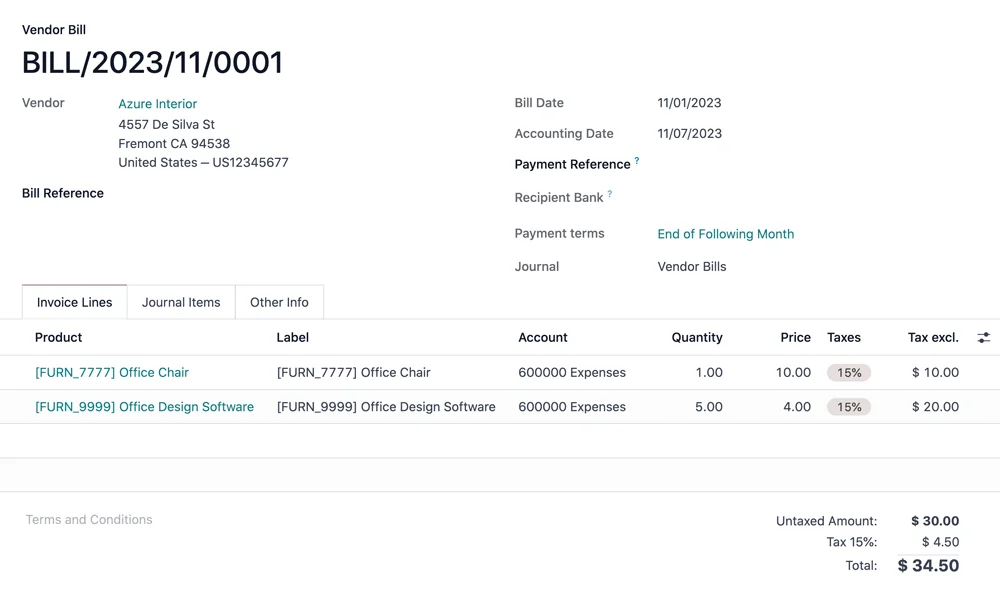
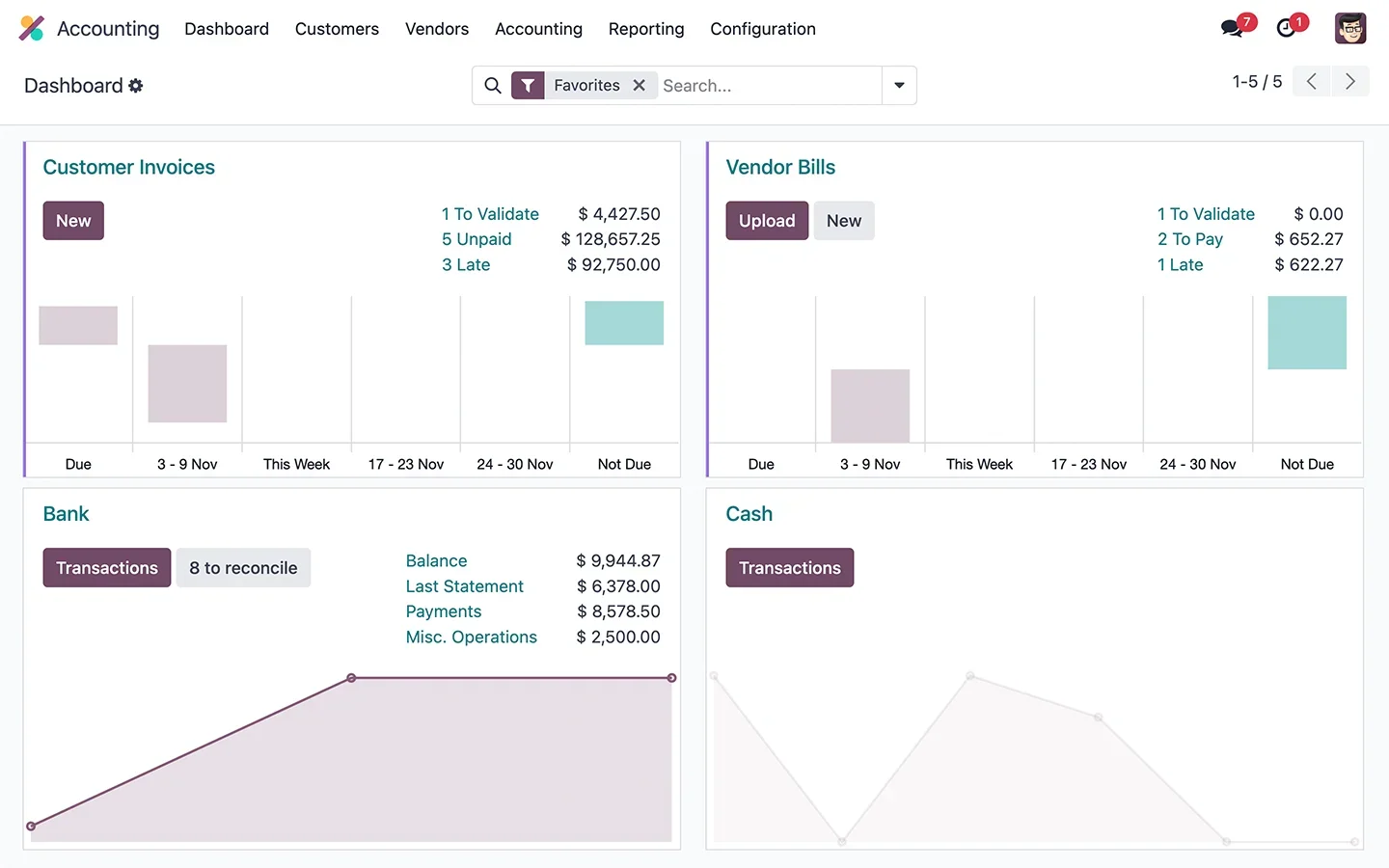
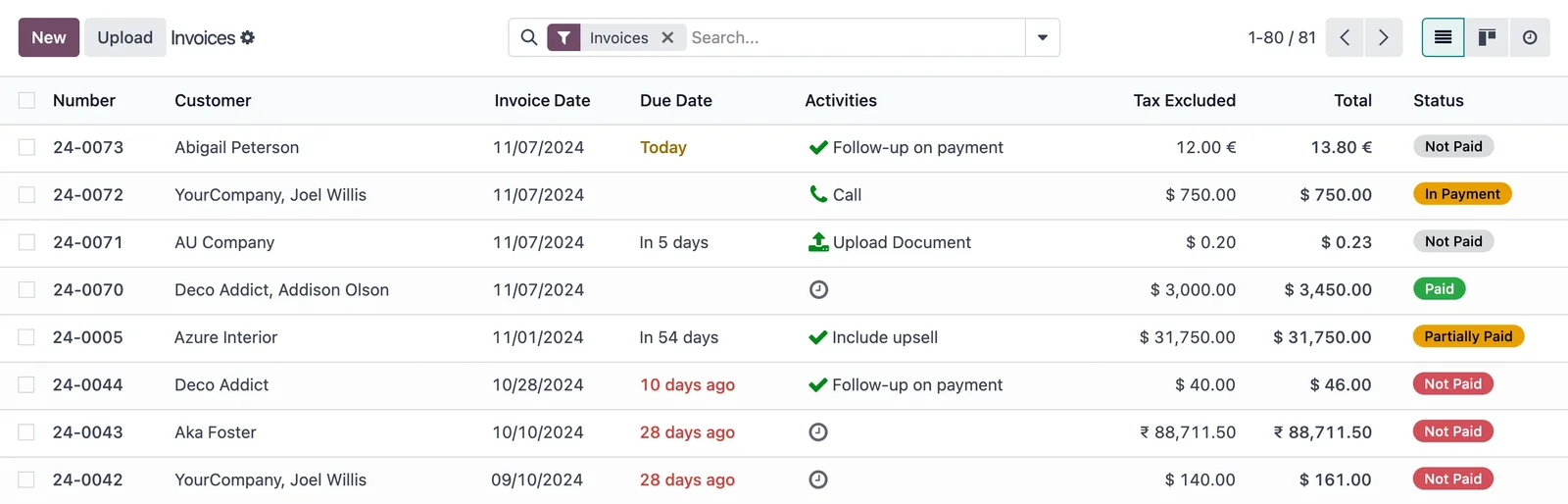
Here's the practical key. Most of the difficulty of the close isn't in the final adjustments, but in reaching them with up-to-date and reconciled bookkeeping. And that's exactly what an integrated system provides. With Odoo, every invoice of sale, every purchase and every transaction automatically generates its entries throughout the year, bank statements are continuously reconciled, and balances are always available and updated in your accounting system. This means that when the close arrives, you're not starting from scratch or a pile of papers: you're working with live, reconciled accounts, on which you and your adviser make adjustments for depreciation, provisions, and regularisations with reliable data. Odoo also facilitates the financial reports (balance sheet, profit and loss account, ledgers) needed to review and prepare for the close. The accounting judgment is provided by the adviser; the order and data, by the system. More detail in the Odoo accounting documentation.
Frequent Errors in the Year-End Close
With the close, some common pitfalls recur that should be avoided. The first, arriving with overdue bookkeeping and having to record months' worth of entries at once, with the risk of errors. The second, not reconciling bank statements during the year and finding discrepancies at the end. The third, forgetting adjustments like depreciation, provisions, or accruals and prepayments. The fourth, not reconciling stock with the physical inventory. And the fifth, leaving everything until the last minute and doing it in a rush. All have the same antidote: up-to-date bookkeeping throughout the financial year and good support from an adviser. The framework for an Odoo management project is in Odoo implementation, and it's advisable to choose the right partner who understands Spanish accounting.
The Close Starts in January, Not December
There's an idea worth internalising: a good close isn't done in December; it's prepared all year round. The most common error is treating the close as a last-minute task, when in reality its difficulty depends almost entirely on how the bookkeeping has been managed over the previous twelve months. If every invoice has been recorded promptly, bank statements have been regularly reconciled, and stock is up-to-date, the close is an orderly process of review and adjustment. If, however, the bookkeeping has been done haphazardly, the close becomes an anxious reconstruction. Therefore, the best investment for a smooth close isn't hiring more hours in January, but having a system throughout the year that keeps bookkeeping live and reconciled. That's the fundamental change brought by working with integrated management: it transforms the annual close from a shock into the natural consequence of a well-managed year.
Frequently Asked Questions
What is the year-end accounting close?
It's the process by which, at the end of the financial year, accounts are reviewed and adjusted to determine the year's result and prepare the annual accounts and tax obligations.
What does the year-end close involve?
Reconciling balances and bank statements, reviewing depreciation and provisions, regularising stock, reviewing accruals and prepayments, and adjusting the result. It requires accounting judgment, which is why it's done with an adviser.
Does Odoo automatically perform the year-end close?
Odoo keeps your bookkeeping up-to-date and reconciled throughout the year and provides the necessary reports, so you reach the close with organised data. You coordinate the judgment-based adjustments with your adviser.
Do I need an adviser for the close if I use Odoo?
Yes, it's advisable: the close involves accounting and tax judgment that should be reviewed by a professional. Odoo provides order and reliable data; the adviser provides the judgment and validation.
When is the year-end close performed?
At the end of the financial year (usually the calendar year), with the annual accounts and tax obligations submitted within the deadlines set by regulations. Consult the calendar with your adviser.
Why is it important to keep bookkeeping up-to-date?
Because the difficulty of the close depends on it: with up-to-date bookkeeping, the close is an orderly process; if it's overdue, it becomes a rushed reconstruction with a risk of errors.
What reports do I need for the close?
Usually the balance sheet, the profit and loss account, and the ledger accounts, among others. Odoo generates these from your accounting records, ready for review with your adviser.
Are the year-end close and annual accounts the same?
Not exactly: the close is the process of regularising the financial year's accounts, and the annual accounts are the documents prepared based on that close. One leads to the other, but they are distinct.
When are annual accounts submitted?
Companies' annual accounts are approved and filed within the deadlines set by commercial regulations after the financial year-end. It's advisable to confirm the specific calendar with your adviser.
Does Odoo generate the balance sheet and profit and loss account?
Yes. From your accounting records, Odoo generates the balance sheet, the profit and loss account, and the ledgers, which form the basis for reviewing and preparing the close with your adviser.
Do you want to reach the close with reconciled accounts and no surprises?
At Nextdoo, an official Odoo partner, we keep your bookkeeping up-to-date throughout the year, so that the close is the natural consequence of a well-managed financial year. Start with Odoo Accounting or request a diagnostic.
Sources: Spanish Tax Agency e-headquarters and Odoo documentation. Information for guidance only, not accounting or tax advice; confirm criteria, adjustments, and deadlines with your adviser.
Sources
Official sources consulted: official Odoo documentation y Spanish Tax Agency e-headquarters (VeriFactu). Cost and timeline figures are indicative and non-binding, subject to variations depending on the project.