Choosing an ERP is one of the decisions that most shapes an SME's day-to-day operations for years, which is why it's a bit daunting. There are many options, each with its own pitch, and it's easy to end up choosing by brand or what the neighbour uses instead of what fits your business. This guide doesn't sell you a universal winner —it doesn't exist—: it explains what a good ERP should have for a Spanish SME, fairly compares the most common options, and helps you decide judiciously.
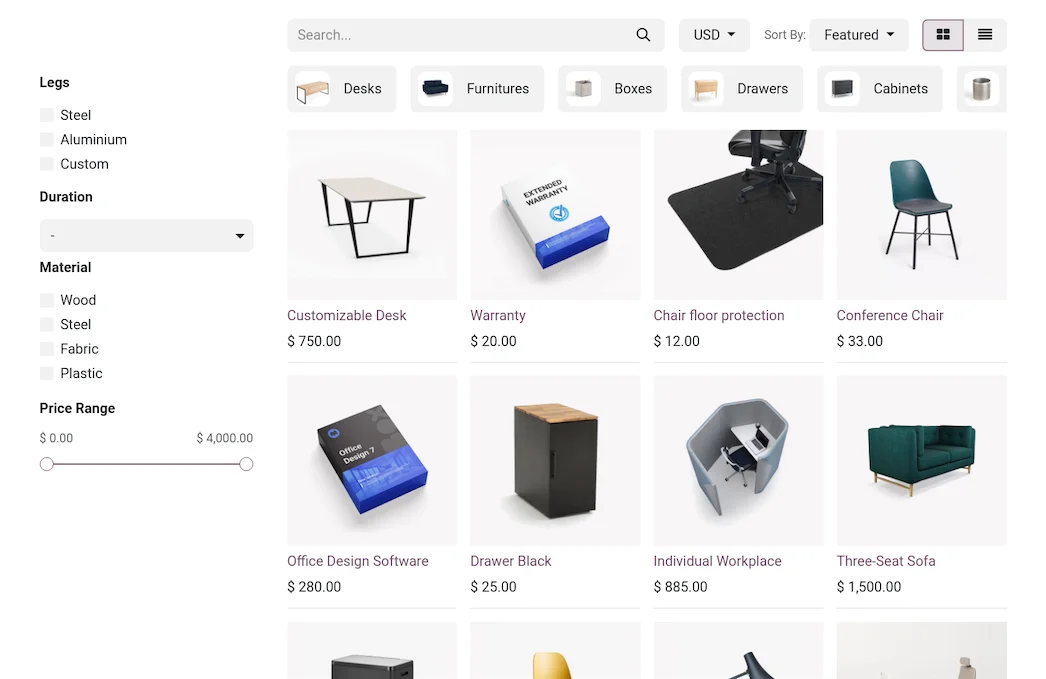
En 30 segundos. Find the best ERP for SMEs in Spain 2026. Compare top options (Odoo, SAP, Sage, Dynamics, Holded), learn what to look for & how to choose.
What a good ERP should have for a Spanish SME
Before looking at brands, it's advisable to be clear about the criteria that truly matter for an SME:
- Reasonable and predictable cost, without surprises per user or per module.
- Up-to-date Spanish tax compliance: VAT, tax forms and, from 2026, VeriFactu mandatory.
- Flexibility: that it adapts to how you work, not the other way around, and that it can grow in phases.
- Integrated areas: sales, purchases, inventory, invoicing and accounting communicating with each other.
- Ease of use, so that the team adopts it effortlessly.
- Cloud and multi-user, to work from anywhere and simultaneously.
- A good local partner to support you. Here it helps to know
With those criteria in hand, the question shifts from 'which one is best' to 'which one best suits my case'.
The most used options by SMEs in Spain
An honest review of the most common alternatives, based on their general positioning (each company should validate the specifics for their own situation):
- Odoo: modular and flexible system, with many integrated areas, modern interface, cost
reasonable and up-to-date Spanish localisation. It's a good fit for SMEs that want to grow in phases.
- SAP Business One: powerful and geared towards medium-to-large businesses; it usually involves a cost and a
greater rigidity than a small SME needs.
- Microsoft Dynamics 365 Business Central: robust and within the Microsoft ecosystem; its model per
user and its partner dependency make it expensive for many SMEs.
- Sage: classic and strong in Spanish accounting; its integrated operational part often falls
behind a comprehensive ERP.
- Holded: convenient and cloud-based for micro-SMEs and self-employed individuals; as the business becomes more complex,
it struggles with some needs.
This description is indicative: the best way to compare is based on your real operations, not on a brochure.
Indicative comparison by criteria
| Criterion | Odoo | Large enterprise ERP | Accounting-only software |
|---|---|---|---|
| Cost for an SME | Feature-rich, in phases | High | Low, but limited |
| Spanish Tax Compliance / VeriFactu | Yes (Enterprise) | Sí | Sí |
| Integrated areas (sales, stock, accounting) | Yes, in one system | Yes, but complex | No, accounting only |
| Flexibility to adapt | Alta | Medium, costly to modify | Baja |
| Ease of use | Alta | Medium | Medium |
| Grow in phases | Sí | Difficult | Not applicable |
Qualitative and indicative comparison; it does not replace an analysis of your specific situation. The terms 'Large enterprise ERP' and 'accounting-only software' describe categories, not a specific product.
Why Odoo is a good fit for most SMEs
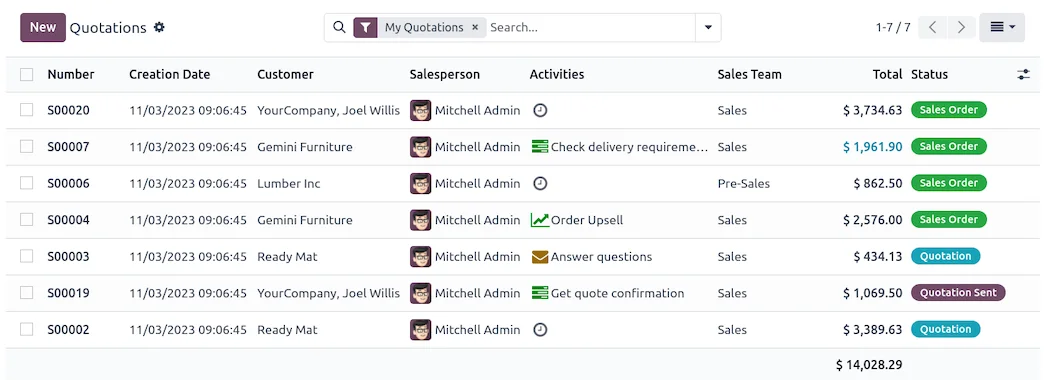
As an Odoo partner, our recommendation is honest: for most Spanish SMEs, Odoo is the one that best balances cost, flexibility, and integrated areas. Not because it's 'the most powerful' in abstract —it might not be for a multinational—, but because it covers what an SME needs without overpaying or getting tied down. You can start with the essentials and expand as the business demands, with tax compliance —including VeriFactu— up-to-date and a cost you'll see in how much Odoo costs. That balance is what makes it, for the SME profile, the option you'll least regret choosing.
When another ERP might make more sense
Honesty dictates: Odoo isn't always the best option. If you are a large enterprise with very complex processes and a budget for it, an ERP like SAP or Dynamics can offer capabilities you won't need to justify. If you are a self-employed individual or micro-SME with very simple operations and no intention to grow, a lighter tool might suffice. And if your only need is accounting and nothing else, an accounting programme might be all you need. Recognising this is part of choosing well: the best ERP is the one that fits your size and your plans, not the most talked-about one.
How to choose without making a mistake
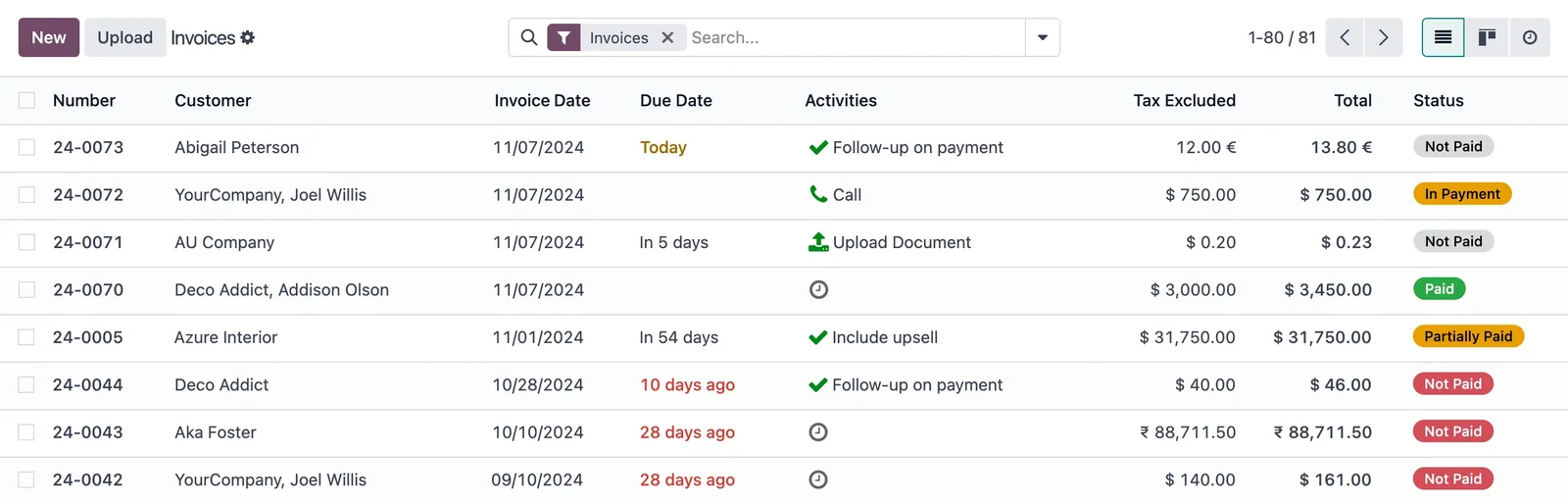
A straightforward method to decide wisely: first, define what problem you want to solve and what areas you need to integrate. Second, filter by Spanish tax compliance and realistic cost for your size. Third, assess the flexibility and whether you can grow in phases. Fourth, test with a demo based on your real operations, not a brochure example. And fifth, see who will support you: a good partner is as important as the software. If Odoo fits after that filter, you have the project framework in Odoo implementation; and if you're coming from another system, in the migration checklist.
The most common mistakes when choosing an ERP
When choosing an ERP, a few pitfalls are repeatedly encountered that should be avoided. The first, choosing by **brand** or what another company uses, without checking if it suits yours. The second, focusing only on the **licence price** and forgetting the total cost —implementation, users, maintenance— over several years. The third, being dazzled by **features you'll never use** instead of looking at what you need daily. The fourth, not testing it on your **actual operations** and relying on a generic demo. And the fifth, choosing the software and neglecting who will **support** you, when a good partner carries as much weight as the product. Avoiding these five errors is, often, what separates a good choice from an expensive regret you'll carry for years.
Frequently asked questions
What is the best ERP for an SME in Spain?
There isn't a single one: it depends on your size, sector, and budget. For most SMEs looking for a complete, flexible system with up-to-date tax compliance at a reasonable cost, Odoo usually offers the best balance.
Which ERP is cheaper for an SME?
The cost depends on the scope, but Odoo stands out for its phased model which avoids paying for users and modules you don't use, something common in ERPs aimed at large companies.
Which ERP best complies with Spanish tax regulations and VeriFactu?
ERPs with Spanish localisation cover VeriFactu, which becomes mandatory in 2026. In Odoo, the Enterprise edition includes it; it's advisable to confirm localisation in any option you consider.
Do I need an ERP or is accounting software enough for me?
If you only need accounting, an accounting package might suffice. If you want to integrate sales, inventory, and invoicing with accounting, that's where an ERP makes the difference.
Can I change ERP later if I make a mistake?
Yes, you can migrate, but it costs time and data; that's why it's advisable to choose carefully and test it on your actual operations before deciding.
Is Odoo suitable for a small SME?
Yes. Its modular model allows you to start with the essentials at a contained cost and expand in phases, which is often ideal for an SME.
How do I know which ERP suits my business?
By defining your needs, filtering by cost and tax compliance, and trying a real demo. An experienced partner helps you make that selection without brochure biases.
Is a cloud ERP better than an on-premise one?
For most SMEs, yes: the cloud avoids the need for servers and local backups, allows working from anywhere simultaneously, and simplifies maintenance. Odoo works in the cloud with all these advantages, without compromising on up-to-date Spanish tax compliance.
Do you want to know if Odoo is the ERP that suits your SME?
At Nextdoo, an official Odoo partner, we help you decide with a demo based on your actual operations, without any smoke and mirrors. Start with the implementation of Odoo or request a diagnosis of your case.
Source: official Odoo documentation. Qualitative and indicative comparison; the best ERP depends on each case. Cost figures not included as they depend on the scope.
Sources
Official sources consulted: official Odoo documentation y electronic headquarters of the Tax Agency (VeriFactu). Cost and timeframe figures are indicative and non-binding, subject to variations depending on the project.