SAP is a name that commands respect: the standard for large corporations. Their product for medium-sized businesses, SAP Business One, competes in many tenders with Odoo when an SME is looking for a serious ERP. But they are two distinct philosophies, and the one that commands more doesn't always fit best. This comparison explains how they truly differ, what each entails in terms of cost and effort, and when it makes sense to choose one or the other. We are an official Odoo partner, so we know that side thoroughly; even so, this is a balanced read, because a poorly chosen ERP is one of the most expensive mistakes a company can make.
En 30 segundos. Odoo vs SAP Business One: real differences, cost, licensing, customisation, and when to choose each. An honest comparison from a partner.
What is SAP Business One and what is Odoo
SAP Business One is SAP's ERP solution designed for small and medium-sized businesses. It inherits the brand's prestige and robustness, with a mature product covering finance, sales, purchasing, inventory, and production. It is a powerful system, aimed at companies that want the assurance of a leading manufacturer and can afford a commensurate implementation and maintenance.
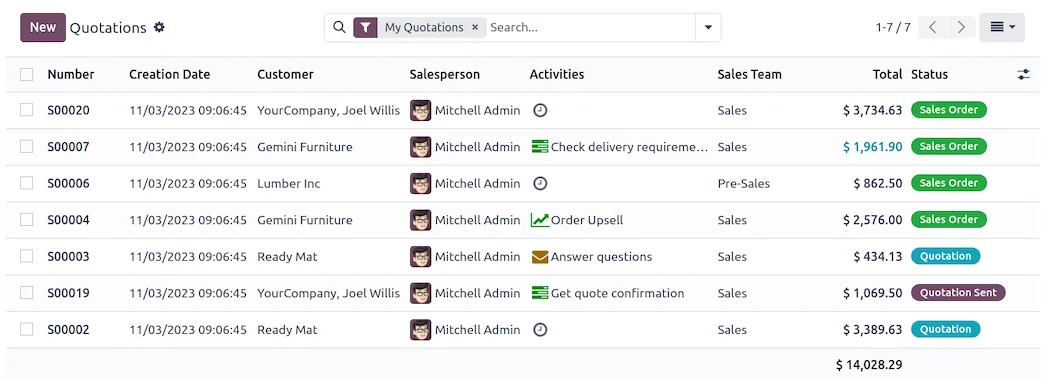
Odoo is an open-source ERP that integrates modules for sales, CRM, inventory, invoicing, accounting, purchasing, manufacturing, online store, projects, and more into a single platform. Its modular approach allows you to start with what's necessary and expand gradually, and its open nature gives it a flexibility and cost that make it very attractive for SMEs. You can see how a project is approached in Odoo implementation.
How they differ
The fundamental difference is corporate weight versus agility. SAP B1 provides the robustness and backing of a world-leading brand, with all that implies: a very proven product, but also a more demanding model in terms of cost, implementation, and rigidity. Odoo offers flexibility, speed of implementation, and a more contained cost, with the trade-off that support comes from a community and a network of partners, not from a single corporate giant.
Differences that often tip the balance:
- Software model. SAP B1 is proprietary and closed. Odoo is open-source, with data access
and customisation, in the cloud or on its own server.
- Cost. Odoo usually has a significantly lower total cost, both in licences and implementation.
- Agility. Odoo implementations tend to be faster and in phases; SAP B1 usually entails
longer and more demanding projects.
- Customisation. Odoo adapts with greater scope to specific processes; SAP B1 is very powerful but more
structured.
- Fit. SAP B1 excels in medium-to-large businesses with complex processes; Odoo, in SMEs that
want power without over-sizing.
Comparison: Odoo versus SAP Business One
Indicative summary by approach; each company weighs factors differently according to its size and complexity.
| Odoo | SAP Business One | |
|---|---|---|
| Tipo | Modular comprehensive ERP, open-source | Proprietary ERP for medium-sized businesses |
| Key strength | Cost, agility, and flexibility | Robustness and backing of a leading brand |
| Ideal for | SMEs that want power without excessive cost | Medium-sized businesses with complex processes |
| Implementation | More agile, in phases | Longer and more demanding |
| Customisation | High (open) | High but more structured |
| Total cost | More contained | Higher |
Indicative comparison. Specific features depend on the version and configuration; confirm this on the official websites.
Cost and licence model
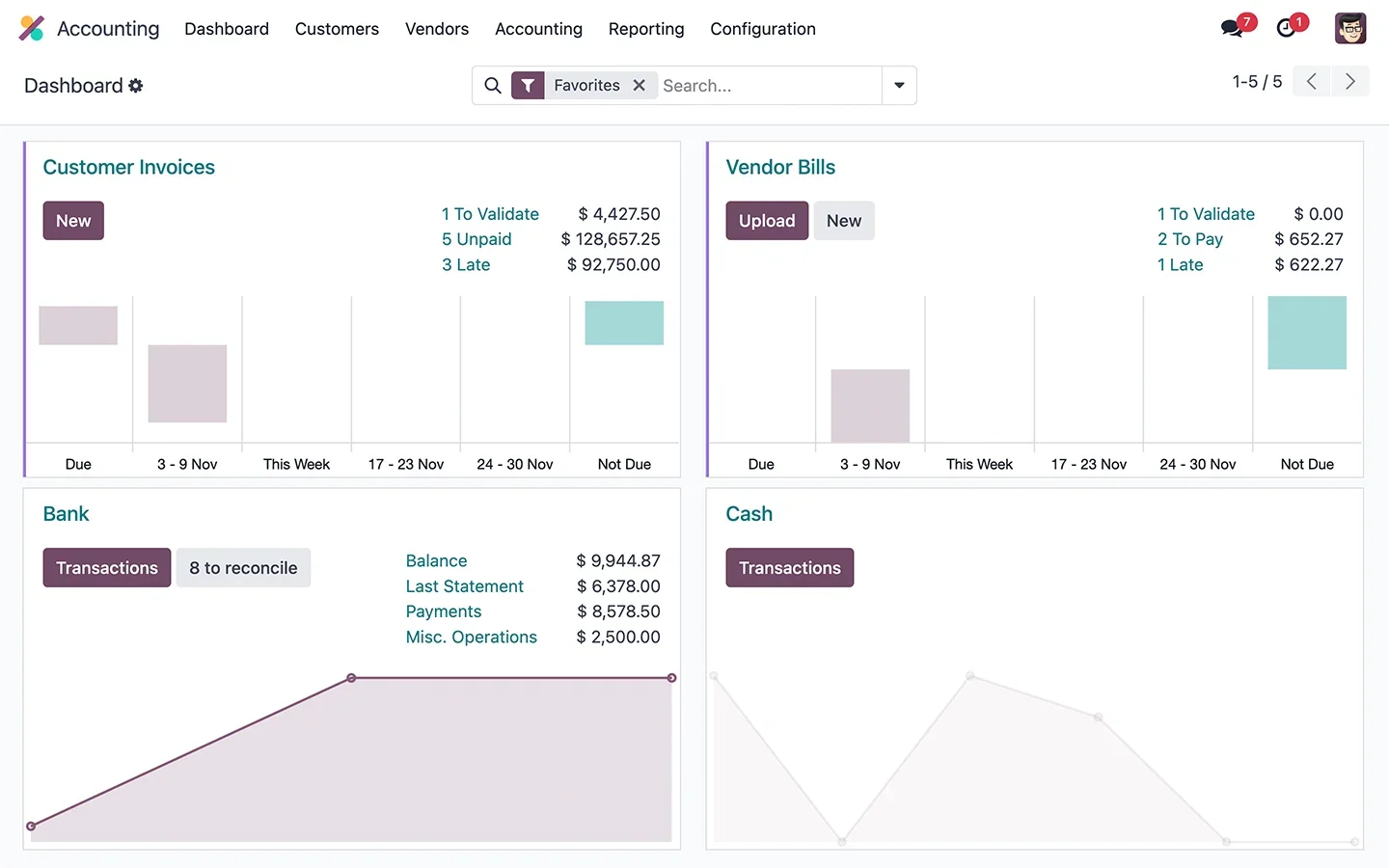
Here lies one of the biggest practical differences. SAP Business One operates under a corporate model: licences, implementation, and maintenance with the cost structure typical of a major manufacturer. Odoo, being modular and open, allows you to much better adjust the investment to what you truly need, and its total cost is usually considerably lower for an SME. That said, the price should never be looked at in isolation: what matters is the Total Cost of Ownership —licences or subscription, implementation, training, maintenance, and evolution— versus the value it provides. You have an honest guide to what makes up the price in how much Odoo costs. And it's worth remembering that, with either, the factor that most determines success is choosing the right partner who implements it.
When to choose each one
SAP Business One makes sense if you are a medium-sized business with complex processes, with a budget for a demanding implementation, and if you particularly value the backing of a world-leading brand. It is a solid choice for those who prioritise that guarantee and can bear its cost.
Odoo fits better if you are an SME that wants a powerful and integrated ERP without the bill or rigidity of a large corporate, if you value agility and the possibility of implementing in phases, and if you want a flexible system that adapts to your processes and grows with you. For the vast majority of Spanish SMEs, Odoo offers the power they need at a cost they can afford.
The key question is an honest one: do you truly need the structure of a large corporate, or are you looking for a powerful, agile, and size-appropriate system? For most SMEs, the second description fits better.
Migrating from SAP to Odoo
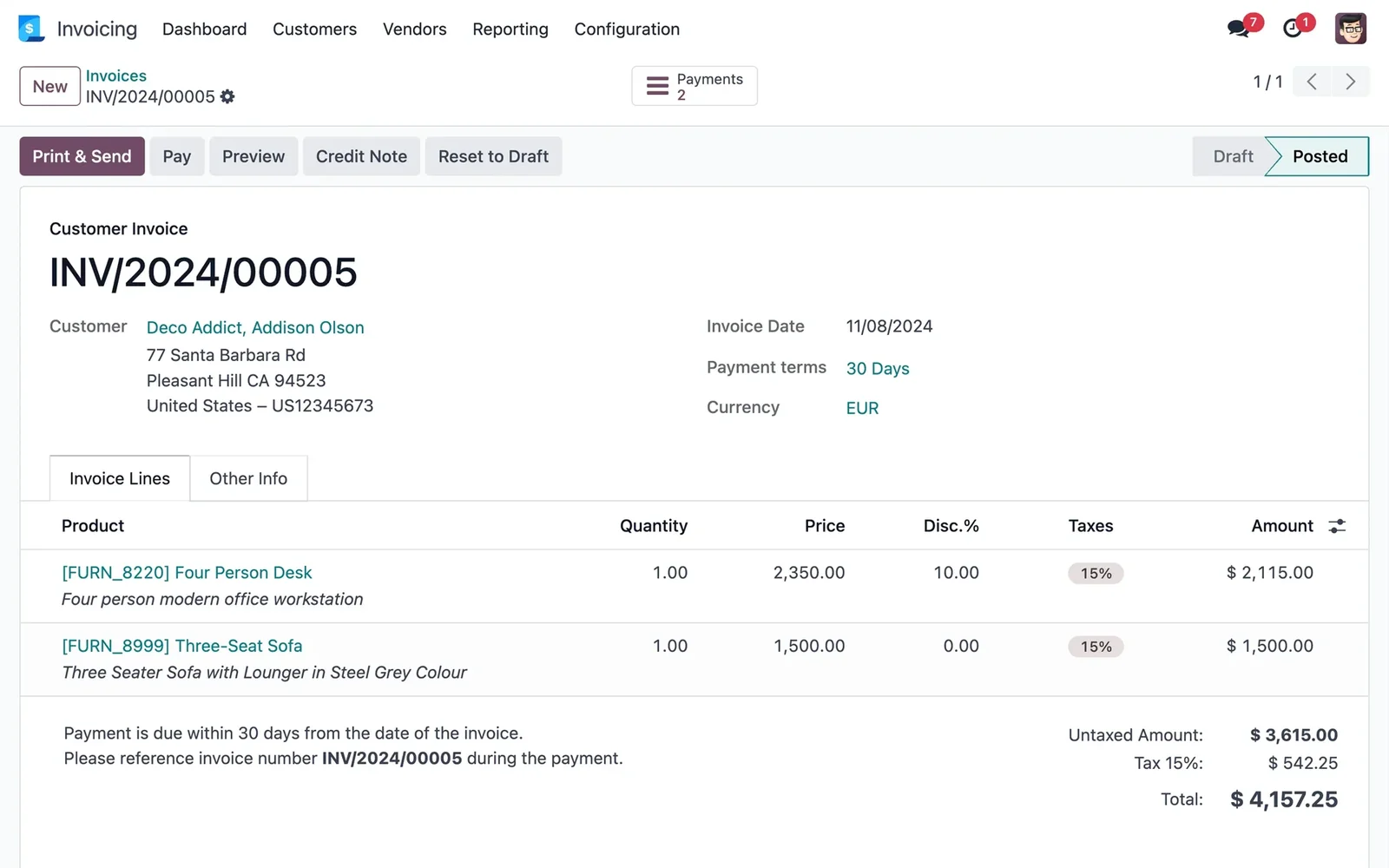
If you already use SAP —Business One or another version— and are considering the change, it is a perfectly manageable process with adequate planning. A well-executed migration transfers your master data (customers, suppliers, products), your history, and your accounting, and leaves the new system compliant with Spanish tax regulations and with VeriFactu. It's covered in our guide on how to migrate from SAP Business One to Odoo. If you come from another environment like Sage, there's also the option of migration from Sage.
Frequently Asked Questions
Is Odoo better than SAP Business One?
Not in abstract terms: it depends on your company. SAP B1 brings the weight of a leading brand for medium and complex environments; Odoo offers agility, flexibility, and lower cost for SMEs. For most SMEs, Odoo provides the necessary power at a more proportionate price.
Why does Odoo usually cost less than SAP B1?
Because of its modular and open-source model: you adjust the investment to what you need, and implementations tend to be more agile. Even so, always compare the total cost, not just the licence.
Is Odoo as powerful as SAP for an SME?
For the needs of the vast majority of SMEs, yes: it covers finance, sales, purchasing, inventory, manufacturing, and more in an integrated way. SAP B1 can offer advantages in very large or complex environments.
Is it difficult to migrate from SAP to Odoo?
It's a project that requires planning, but it's common and perfectly viable. With an experienced partner, data, history, and tax compliance are preserved.
Which is implemented faster?
Odoo is usually implemented more agilely and in phases; SAP B1 tends towards longer projects. The actual timeline depends on the scope and the quality of the initial data.
SAP B1 or Odoo for a medium-sized business?
If the company is large, very complex, and prioritises corporate backing, SAP B1 is a solid option. If it seeks power with agility and contained cost, Odoo usually gains ground.
How much does each one cost?
It depends on the version, modules, and conditions of each manufacturer, which should be consulted officially. Compare the total cost of ownership against the value it provides for your specific case.
Is SAP Business One too much for a small SME?
For many small SMEs, SAP B1 is oversized in terms of cost and complexity. In these cases, an agile ERP like Odoo usually covers what's needed with an investment more proportionate to the business size.
Are you comparing Odoo and SAP Business One for your company?
At Nextdoo, an official Odoo partner, we frankly analyse your case and tell you if Odoo covers what you need at a lower cost. Start with Odoo implementation or request a business diagnosis.
Indicative comparison. The specific features and prices of each manufacturer change, confirm them on their official websites.
Sources
Official sources consulted: Odoo official documentation y electronic headquarters of the Tax Agency (VeriFactu). Indicative and non-binding cost and timeline figures, subject to variations depending on the project.