In a factory, ERP cannot just handle invoices and stock. It needs to know what is produced, with which materials, on which machine, how much each part costs, and which batch was dispatched each day. Properly implementing Odoo in manufacturing connects purchasing, warehouse, production, and accounting in a single thread, so that when an order comes in, the system already knows what to manufacture, what to buy, and by when. This guide explains how to bring it to your workshop, without technical jargon and in phases.
En 30 segundos. Implement Odoo in manufacturing: MRP, bills of materials, work orders, batch traceability, and planning. Step-by-step guide by experts.
Why a factory needs more than a generic ERP
A business sells what it buys; a factory transforms. This difference changes everything: you need to control raw materials, semi-finished goods, and finished products simultaneously, know the real cost of each order, and guarantee traceability if the product requires it. That's why a generic approach falls short, and an approach designed for production, like the one you'll see in Odoo for manufacturing.
Which Odoo modules come into play
- Manufacturing (MRP): production and work orders.
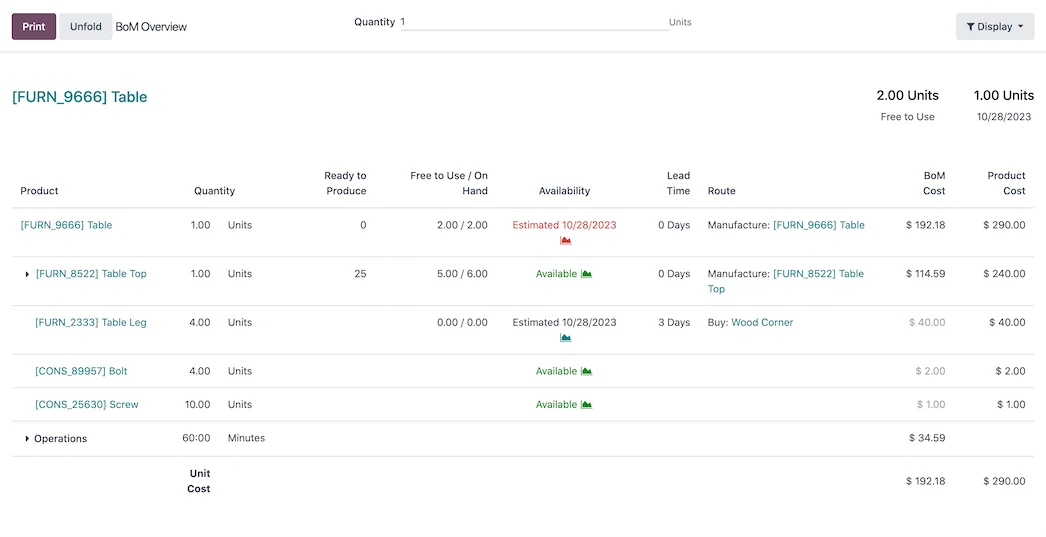
- Bills of Materials (BoM): what each product is composed of, with its quantities.
- Inventory: raw materials, semi-finished goods, and finished products, with batches or serial numbers.
- Purchasing: automatic procurement according to planning.
- Quality and Maintenance: in-process controls and machines in good working order.
- Accounting: real cost per order and invoicing compliant with regulations.
How to implement Odoo in manufacturing step by step
Step 1 · Master data and Bills of Materials
The foundation. Products, raw materials, and, crucially, the Bills of Materials for each item are loaded. A well-configured BoM is what allows Odoo to calculate needs and costs. Deliverable: verified catalogue and BoMs.
Step 2 · Routings and work centres
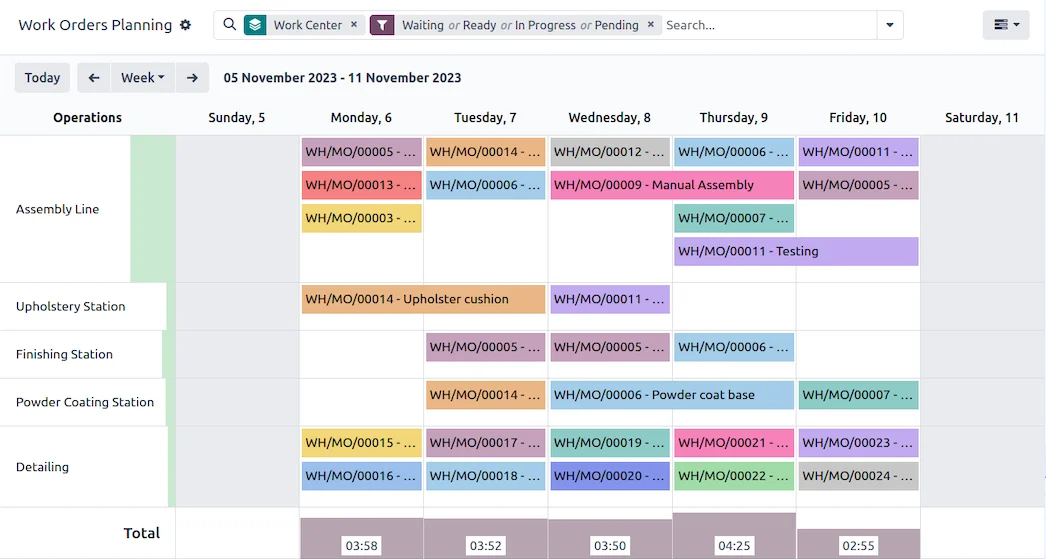
The manufacturing phases and on which machine or workstation each is carried out are defined, with their timings. This way the system knows how long it takes to produce and how much it costs in labour. Deliverable: configured production routings.
Step 3 · Planning (MRP)
The engine is activated which, upon an order or forecast, calculates what to manufacture, what to buy, and by when. It's the leap from 'firefighting' to producing in advance. Deliverable: planning functioning on a pilot product.
Step 4 · Inventory and batch traceability
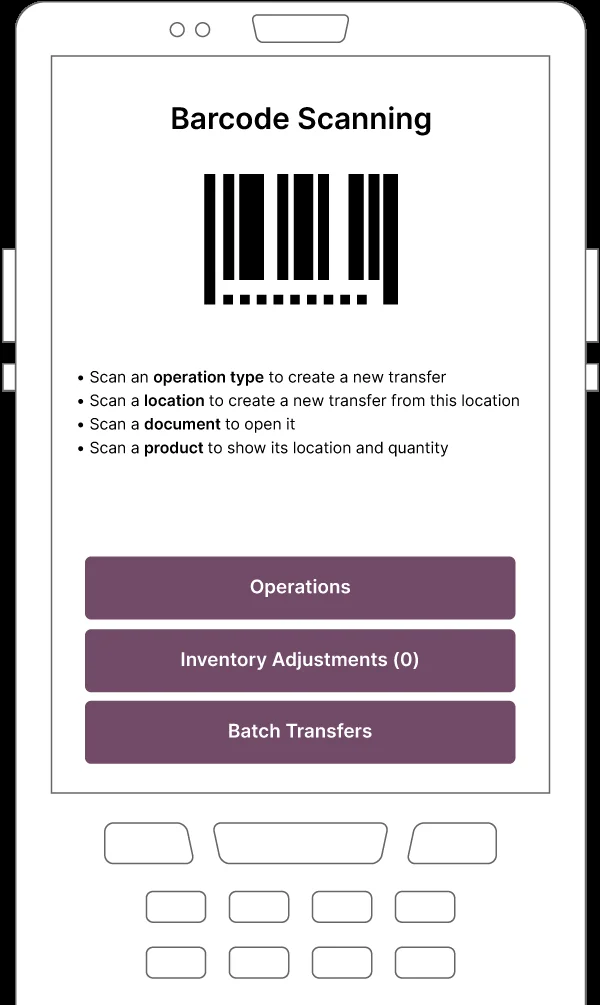
Stock control at each stage and traceability by batch or serial number are configured, essential in food, chemical, or automotive industries. Deliverable: end-to-end traceability.
Step 5 · Quality, maintenance, and cost
Quality controls at critical points, machine maintenance, and tracking of the real cost per order are added, to finally know which product is profitable. Deliverable: active quality and cost control.
Step 6 · Start with one line and expansion
It starts on one product line or family, stabilises, and then extends to the rest of the plant. Starting scoped avoids stopping production during the change. Deliverable: plant operating in Odoo in phases.
Traceability and regulations
In addition to product traceability, invoicing must comply with VeriFactu, mandatory in Spain in 2026. Configuring it from the start avoids tax problems later on; this is explained in our guide to VeriFactu and Odoo.
How much does it cost and how long does it take?
| Complexity | Estimated timeframe | Example |
|---|---|---|
| Simple manufacturing | 6 – 10 weeks | Assembly with simple BoMs |
| Medium | 2 – 4 months | Multiple routings, MRP planning, traceability |
| Complex | 4 – 6 months or more | Multi-plant, demanding quality, machine integrations |
Indicative and non-binding timeframes and costs; they depend on the product, routings, and data quality. Cost details, without made-up figures, in how much Odoo costs.
Frequent errors when implementing Odoo in manufacturing
- Setting up incomplete Bills of Materials or without real quantities.
- Wanting to plan the entire plant on the first day instead of one line.
- Not properly defining work centres and their timings.
- Leaving traceability until the end when regulations demand it.
If you come from another system or from spreadsheets, rely on a partner with industrial experience: how to choose an Odoo partner.
From order to delivery: how it flows in Odoo
The best way to understand what changes when implementing Odoo in a factory is to follow an order. A customer order comes in and, thanks to the Bills of Materials, the system instantly knows what raw materials are needed; if there's no stock, it generates the purchase request. When the material arrives, production orders are launched with their phases in each work centre, and each operator logs their progress. Upon completion, the product enters the warehouse with its batch, ready to be dispatched, and accounting already has the real cost of that order. All in a single thread, without intermediate spreadsheets. This continuous flow is what reduces idle times and handover errors between departments.
What a factory gains by implementing Odoo
Beyond 'tidying up the workshop', the concrete return usually comes from three areas. The first, knowing the real cost per product, which almost always brings surprises and allows for price adjustment. The second, fewer stockouts and less overstock, because planning purchases what is needed when it is needed. And the third, traceability, which stops being a burden and becomes a commercial advantage when a client or an audit demands it. It's not magic: it's finally having a single place where purchasing, warehouse, and production tell the same truth.
What questions you should answer before starting
Before configuring anything, there are fundamental decisions that condition the entire project in a factory. It's worth having them clear because changing criteria halfway through is costly.
The first is how you define your products: whether you work with a fixed catalogue, by variants, or custom-made to order, because that determines how the Bills of Materials are set up. The second is the level of traceability you need: whether it's enough to control the finished product or if regulations compel you to track each batch of raw material to the customer. The third is how you plan: against order, against stock, or a mix, which defines how the planning engine operates. And the fourth is to what extent you want to connect machines or if it's sufficient for operators to manually record their progress in an initial phase.
You don't need to answer everything perfectly from minute one — in fact, many answers are refined as you go — but you do need to have them on the table, because they set the order of phases and avoid rework. A partner with industrial experience helps you frame them correctly; it's part of why it's advisable to choose wisely who you implement with.
Frequently asked questions
Is Odoo suitable for a small industrial SME?
Yes. You can start with just Bills of Materials and production orders, and add planning, quality, and maintenance once the team is already using it. Starting scoped is what makes it viable.
What is MRP in Odoo?
It is materials requirements planning: based on orders or forecasts, Odoo calculates what materials to buy and what to manufacture, and by when, to produce in advance instead of at the last minute.
Does Odoo control batch traceability?
Yes. It allows tracking each batch or serial number from raw material to finished product, something key in food, chemical, or automotive industries.
How long does it take to implement Odoo in a factory?
A simple manufacturing setup, between 6 and 10 weeks; a medium one, 2 to 4 months. This is determined by product complexity, routings, and the state of your data.
Do you want to bring your production to Odoo without stopping the plant?
At Nextdoo, an official Odoo partner, we implement manufacturing in phases, starting with one line and with traceability from day one. Start by Odoo for manufacturing or request a diagnostic of your workshop.
Source: official Odoo documentation (Manufacturing). Indicative and non-binding figures.
Sources
Official sources consulted: official Odoo documentation and Tax Agency's e-office (VeriFactu). Indicative and non-binding cost and timeframe figures, subject to variations depending on the project.