
In summary. Odoo POS stores products, prices, taxes, and customers on the device itself. When the internet goes down, you can continue charging normally with no data loss. When the connection returns, everything automatically synchronises. With a backup 4G router and a card machine with its own SIM, the risk of operational interruption is minimal for the vast majority of Spanish retail SMEs.
The most repeated fear we hear at Nextdoo when we talk to shop owners is always the same: «What if the internet goes down?». It’s a legitimate question. A cloud POS system that stops working during peak hours is a real problem, not an anecdote.
Odoo POS has a specific answer to that: real offline mode. Not a patch, not a workaround. An architecture designed for your shop to keep selling even if the connection disappears for hours.
Odoo POS keeps your shop operational without an internet connection thanks to local storage of products, prices, and taxes on the device.
What «offline mode» really means in a POS system?
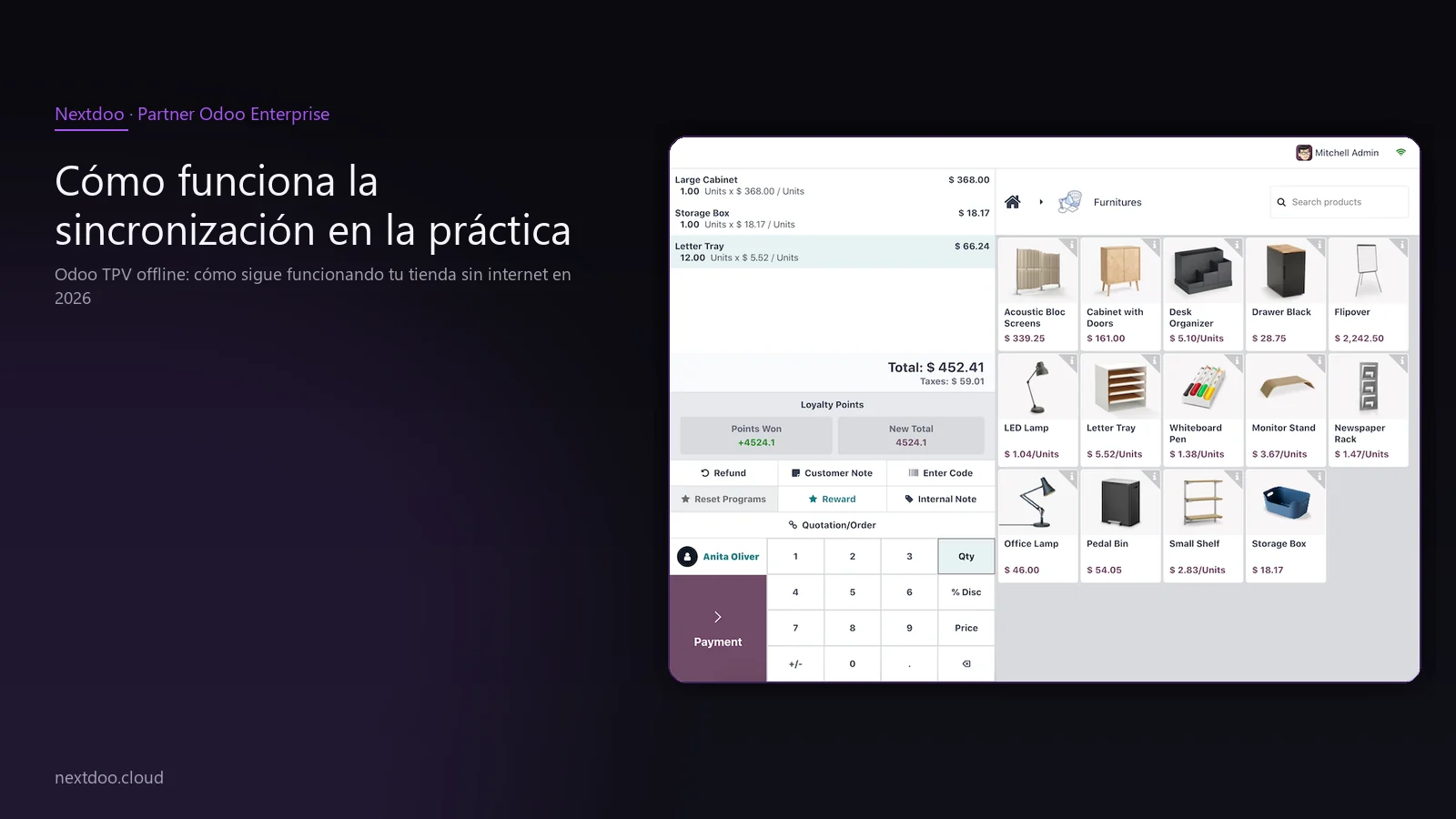
When we talk about offline mode in a cloud POS system, there are two very distinct realities. The first is cosmetic offline: the application remains open but doesn't record anything, or it records locally but then you have to reconcile manually. The second is real offline: the application works normally and synchronises by itself when the network returns.
Odoo POS belongs to the second group. It uses the browser's local storage to save a functional copy of everything you need at the till: product catalogue, price lists, VAT types, regular customer data, and printer settings. When the connection drops, that local cache takes over without the shop assistant noticing the difference.
Orders generated in offline mode are saved in a queue. They are not lost. When the internet returns, the system sends them to the server automatically and in order. Inventory, accounting, and reports are updated without you having to do anything.
This isn't magic. It's an architectural decision Odoo made from the outset, precisely for shops with unstable connections. And in Spain, where many retail SMEs operate in premises with shared fibre or in areas with irregular infrastructure, that makes all the difference.
How does synchronisation work in practice?
Imagine your shop has a sales peak on a Saturday afternoon and, at that moment, the router fails. The shop assistant notices nothing: they continue scanning items, managing change, printing receipts. The POS system is working with the local cache.
Each transaction is recorded locally with its exact time, items sold, amount collected, and payment method. When the connection returns, Odoo uploads that batch of operations to the server in the correct order. Stock is deducted, the till balances, and reports reflect the actual sales for the day.
An important point: synchronisation is automatic but also visible. From the management screen, you can see at any time if there are pending orders to upload and how many there are. There's no black box. You know exactly what has happened.
This transparency is especially relevant for owners who manage several shops from a single panel. Even if a shop has been offline for two hours, when it reconnects, the data appears integrated as if there had never been an interruption.
Real limitations you should know
Being honest here is important. Odoo POS's offline mode is robust, but it has limits that you should know before implementing it.
Bank card payment. The card machine needs its own connection to authorise payments. Odoo does not control the card machine; your bank or payment gateway controls it. If the card machine does not have its own 4G SIM or there is no mobile coverage, card payments will not go through. Cash still works always.
VeriFactu and AEAT compliance. Royal Decree 1007/2023 (VeriFactu) requires invoicing IT systems to record and send events to the AEAT in real-time or as soon as possible. Odoo manages this correctly: records are generated locally and sent when the connection returns. There is no loss of traceability, but real-time sending is paused during the outage. For the vast majority of situations, this is acceptable, but it is advisable for your tax adviser to be aware of it.
Multi-store stock. If you have several shops connected to the same system, the stock seen by the offline shop is what it had at the time of the last synchronisation. If another shop sells the last item while you are offline, you could sell it twice. In shops with many unique products or minimum unit management, this requires an internal protocol.
Very prolonged outages. If the connection goes down for more than four or five hours and you have a catalogue with frequently changing prices or real-time discounts, the cache may become outdated. This is an unusual scenario, but it exists.
None of these limitations are exclusive to Odoo. Any cloud POS system has the same or worse restrictions. The difference is that Odoo manages them better than average and allows safeguards to be configured to mitigate them.
What is the recommended setup for a physical shop in Spain?
At Nextdoo, we have implemented Odoo POS in shops across various sectors, from fashion to motorbike spare parts, including hospitality and food. Over time, we have established a base configuration that works well in the Spanish context.
Backup connectivity. The most important element. A 4G LTE router configured for automatic failover of the main internet costs little and eliminates 95% of the risks. When fibre goes down, the router switches by itself to the mobile network in seconds. Most urban and peri-urban commercial areas have sufficient 4G coverage to keep the POS system operational.
Card machine with integrated SIM. Many banks offer card machines with their own 4G SIM. This decouples card payment from the status of your local internet connection. Even if your fibre fails and your backup 4G also fails, the card machine can continue authorising payments through its own channel.
Local thermal printer. Connected via USB or Bluetooth to the POS device, it does not depend on the network. Receipts are printed without any problem in offline mode.
Stable hardware. A dedicated POS device, not a laptop used for other things. The more stable the browser environment where Odoo POS runs, the more reliable the offline cache.
With these four elements in place, a standard Spanish retail shop has very high operational resilience. Internet outages cease to be a threat and become a minor technical annoyance that the system resolves by itself.
Odoo POS versus pure-offline solutions
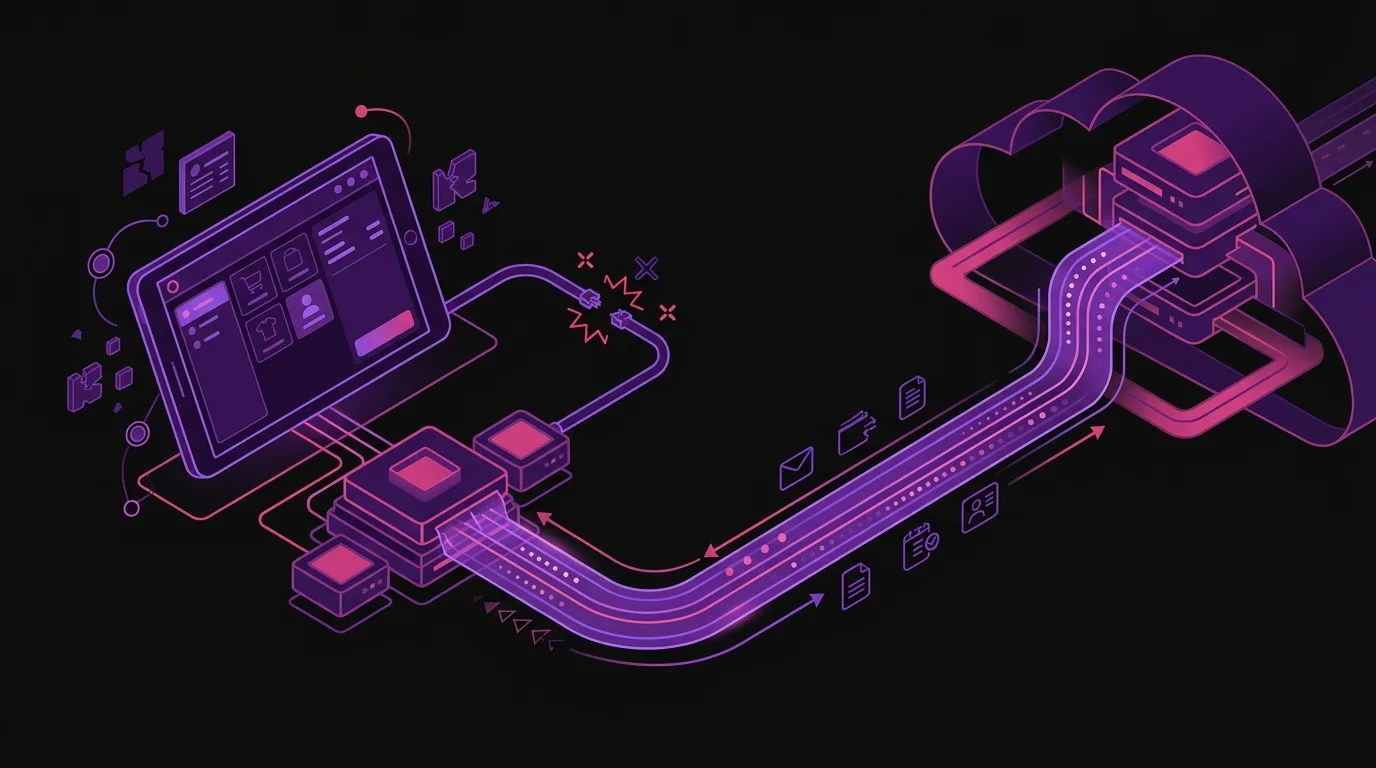
In some situations, especially in rural areas without 4G coverage or stable fibre, it's worth asking if a pure-offline system wouldn't be more suitable. It's worth answering this honestly.
A pure-offline POS, like some hospitality or retail systems for areas without network, stores everything locally and synchronises with the cloud only at specific times (usually at night or when manually connected). It has the advantage that it always functions absolutely without a network.
The disadvantage is that you lose everything that makes an integrated system valuable: real-time stock, a consolidated view of multiple shops, automatic accounting, real-time VeriFactu compliance, connected customer loyalty. Basically, you have a modern cash register, not an ERP.
Odoo POS is not the ideal solution if your shop is in a municipality without mobile coverage and with frequent power cuts. For that specific profile, there are more suitable solutions, and Nextdoo would have no problem telling you in an initial conversation.
But for 95% of Spanish retail SMEs, which operate in urban or peri-urban environments with a reasonably stable connection, Odoo POS with the appropriate backup configuration is significantly better than any pure-offline alternative, precisely because you don't give up integration.
How do VeriFactu, TicketBAI and tax compliance affect offline mode?
This point deserves its own section because in 2026 it is a real concern for any Spanish business.
Royal Decree 1007/2023 establishes the requirements that invoicing IT systems must meet. VeriFactu implies that each invoice record must be traceable and, in the case of taxpayers adhering to VeriFactu, sent to the AEAT. TicketBAI applies in the Basque Country and Navarra with similar requirements.
Odoo, in its Enterprise version with the Spanish localisation active, complies with both regulations. Each transaction generates a record with a chained hash that guarantees integrity and unalterability. When there is a connection, the submission to the AEAT is immediate. When there isn't, the records accumulate in a queue and are sent as soon as the network returns, maintaining chronological order and the integrity of the chaining.
What you cannot do with Odoo offline (nor with any other system) is send in real time without a connection. That is physically impossible. What Odoo does guarantee is that no record is lost, that traceability is complete and that, when the connection returns, compliance is total.
If you have doubts about how this affects your specific tax situation, the most sensible thing is to discuss it with your accounting firm. What we can guarantee is that Odoo's architecture is designed to comply with current regulations in Spain.
What about customer loyalty and customers in offline mode?
An aspect often overlooked is customer management during connection drops. In many retail shops, the assistant needs to identify the customer to apply member discounts, accumulate loyalty points or process a return linked to a previous purchase.
The local cache of Odoo POS includes the active customer database. This means that, in offline mode, you can search for a customer by name, NIF or telephone, identify them in the sale and apply their commercial conditions. Loyalty points generated during that period are recorded locally and synchronise when the network returns.
What doesn't work in offline mode is the consultation of purchase history from other shops or the real-time validation of digitally issued vouchers. These are specific and infrequent situations, but it's advisable for the shop team to be aware of them to manage customer expectations at such times.
Conclusion: the question is not if the internet will go down, but what happens when it does
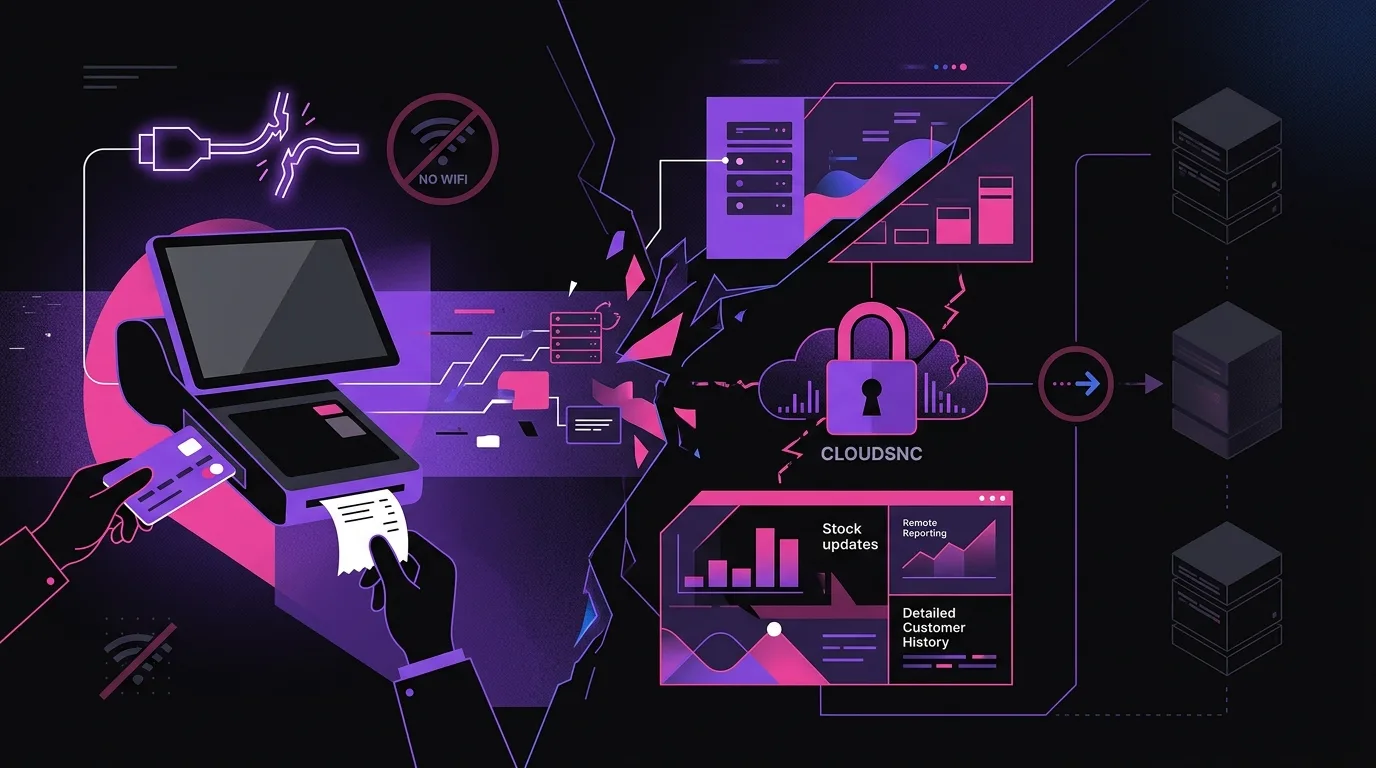
Internet goes down. It happens with the best fibre in the world. The relevant question is not if it will happen, but if your business is prepared for when it does.
Odoo POS provides a practical and proven answer to that question. With the correct backup configuration, the impact of a connection drop in a Spanish retail shop is practically nil. The assistant continues to work, the customer continues to shop, and the system records everything without loss.
At Nextdoo, we have been configuring Odoo POS in retail SMEs across various sectors in Spain for some time. If you have a shop with an unstable connection, several shops that you need to manage centrally, or simply want to know if Odoo fits your specific operation, tell us your case. A no-obligation conversation usually clarifies more than any article.
Indicative information. Actual deadlines, costs and scopes are confirmed after a personalised analysis. JLM Business Solutions SL · B16842831.
Frequently asked questions
How long can Odoo POS function in offline mode without problems?
There is no fixed time limit. Odoo POS can operate in offline mode for hours normally in terms of sales recording and customer management. The main practical consideration is that, if the outage lasts a long time, the stock cache may become outdated with respect to movements made in other shops or warehouses. For brief outages or even those lasting several hours, the system functions with full reliability in the vast majority of usual retail operations.
What happens with VeriFactu compliance if the POS was offline during the sale?
What happens with VeriFactu compliance if the POS was offline during the sale? Odoo generates the record of each transaction with a chained hash on the device itself, regardless of whether there is a connection. When the internet returns, these records are sent to the AEAT in chronological order. Data traceability and integrity are guaranteed. No loss of tax records occurs. If you have doubts about how this applies to your specific situation, the most appropriate thing is to consult your accounting firm or tax adviser.
Can I charge by credit card when Odoo POS is in offline mode?
It depends on the card terminal, not Odoo. Card payment requires the card terminal to communicate with the banking network to authorise the transaction. If your card terminal has its own 4G SIM, it can continue processing card payments even if your main internet connection has gone down. If the card terminal depends on your local network, card payments will not be possible during the outage. That's why we recommend card terminals with integrated SIM as part of the standard configuration.
I have three shops with Odoo. If one goes offline, does it affect the others?
No. Each point of sale functions independently. If one shop loses connection, the other two remain synchronised with the central server without any problem. The only practical implication is that the stock seen by the offline shop is the last recorded before the outage. When the connection returns, that shop catches up with all the movements that occurred during its absence.
Is Odoo offline POS suitable for premises in a rural area without mobile coverage?
It depends on the level of connectivity available. If the premises do not have stable fibre or any type of mobile coverage, Odoo POS's offline mode can manage the day's sales, but synchronisation with the server will remain pending until there is a network connection. In such cases, it is advisable to analyse whether the real-time integration offered by Odoo provides sufficient value compared to the dependence on a connection. At Nextdoo, we assess each case before recommending a solution.
What is the difference between Odoo POS and a pure-offline system for a physical shop?
A pure-offline POS stores everything locally and synchronises periodically, which makes it totally independent of the network. Its major limitation is that you lose real-time integration: central stock, automatic accounting, connected loyalty, consolidated reports. Odoo POS combines the best of both worlds: it functions reliably offline, but when there is a connection, it operates as a fully integrated ERP. For most Spanish retail SMEs with reasonable connectivity, this integration is worth more than total network independence.
Frequently asked questions
What happens to my sales if the internet goes down while I'm using Odoo POS?
Odoo POS continues to function as normal. The system stores products, prices, and taxes on the device, so you can take payments offline. When the internet is restored, all data automatically synchronises without any loss of information.
How long can my shop operate without internet with Odoo POS?
Odoo POS can function for hours offline because it saves essential data on the device. To minimise risks, it is recommended to have a backup 4G router and a payment terminal with its own SIM, which virtually reduces the probability of operational interruption to zero.
Do I have to do anything manually when the internet returns after an outage?
No. Synchronisation is automatic when the connection is restored. You do not need to reconcile data or perform manual actions; everything updates itself in the system.
Does Odoo POS's offline mode work with Spanish fiscal requirements like VeriFactu?
Yes, Odoo POS maintains fiscal compliance in offline mode. Data is recorded locally and synchronises when there is a connection, respecting VeriFactu and TicketBAI requirements without issues.
Can I access my customers and loyalty programmes if there's no internet?
Yes, because Odoo POS stores customer information on the device. You can consult histories and apply loyalty discounts offline, and data synchronises when the internet is restored.