
A dealership is, in reality, several businesses at once: vehicle sales, workshop, spare parts, and aftersales. Each has its own pace and figures, and when they operate separately —each with its own programme or spreadsheet— no one sees the complete picture. Implementing Odoo in a dealership unites these areas into a single system, so that a vehicle, a repair, or a part leaves a trace from entry to payment. This guide explains how to set it up, step by step.
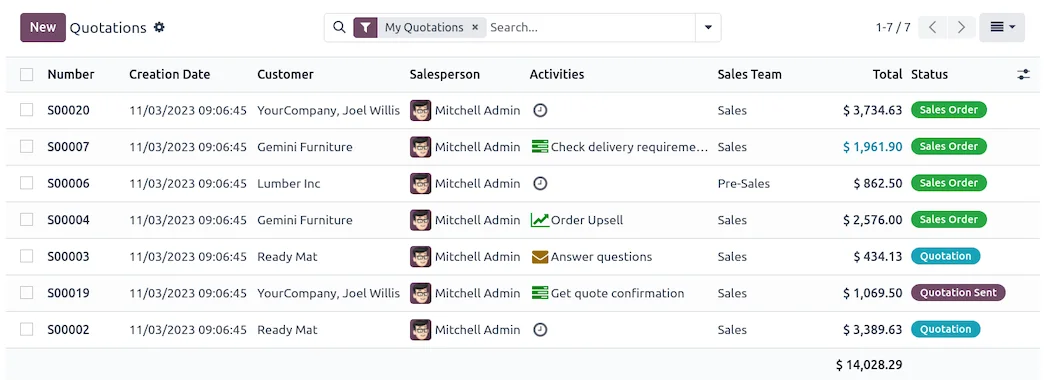
En 30 segundos. Implement Odoo in a car dealership: vehicle stock, workshop, spare parts, sales & after-sales in one system. Step-by-step guide from a partner.
Why a dealership needs its own approach
Selling a car or a motorbike is not the same as dispensing a part at the counter or invoicing a workshop repair. Each area has its own flow, but they share customers, stock, and accounting. The value of Odoo lies precisely there: in sales, workshop, and spare parts communicating with each other. The approach for the sector is in Odoo for dealerships.
How to implement Odoo in a dealership step by step
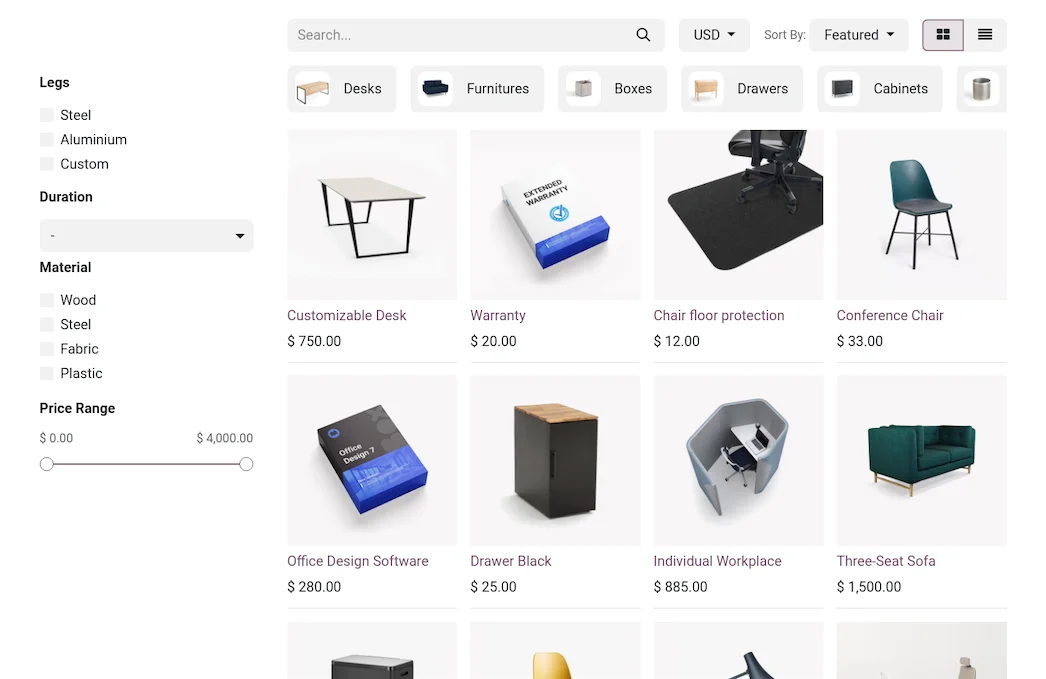
Step 1 · Vehicle Stock
The vehicle inventory is registered with its data (model, chassis, registration, status), so that you always know what you have, what is reserved, and what has been sold. Deliverable: controlled vehicle stock.
Step 2 · Spare Parts Warehouse
The parts warehouse is organised with references and barcodes, and it connects to the spare parts counter for quick sales, just like in any retail business. The counter base is the same as a Retail POS. Deliverable: operational spare parts.
Step 3 · Workshop and Repair Orders
Repair orders are configured: what is done on each vehicle, what parts it consumes, and how many hours it takes, to know the real cost and invoice without omissions. Deliverable: workshop with work traceability.
Step 4 · Sales and Documentation
The sales flow is set up with quotes, financing, and associated documentation, so that each operation is complete and compliant. Deliverable: organised sales process.
Step 5 · Aftersales, Accounting, and VeriFactu
Aftersales (service reminders, customer follow-up) are linked, and invoicing is made compliant with VeriFactu, mandatory in Spain in 2026. Deliverable: compliant aftersales and invoicing.
What a dealership gains with Odoo
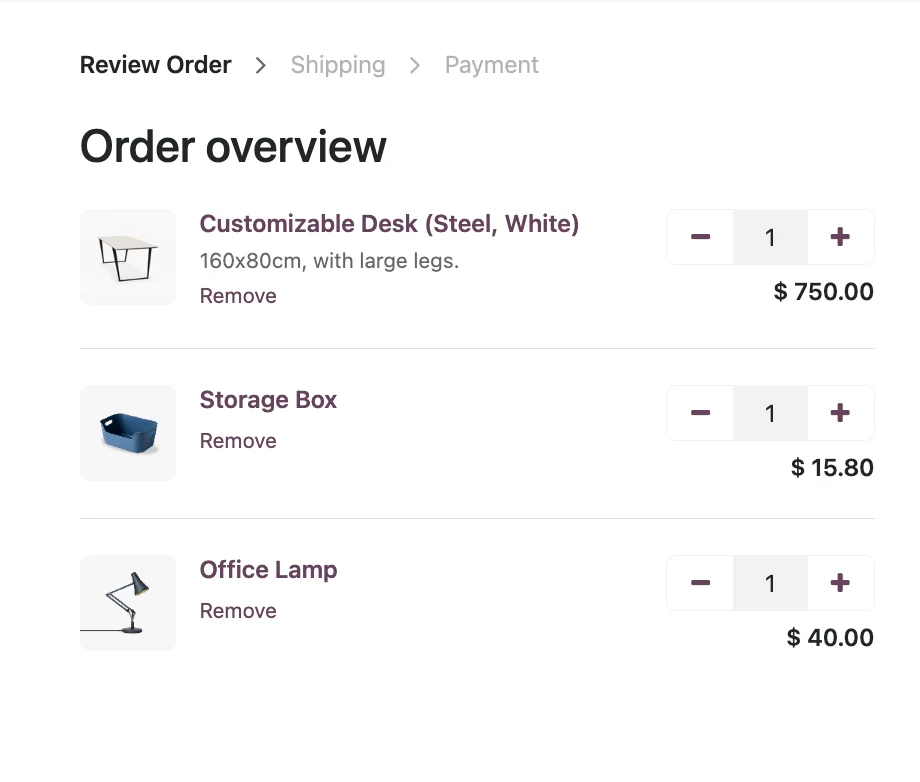
- A single customer record for sales, workshop, and spare parts.
- Real cost per repair, including parts and labour.
- Reliable vehicle and parts stock, without surprises.
- Aftersales that builds loyalty, with automatic reminders and follow-up.
Common mistakes when implementing Odoo in a dealership
- Setting up the workshop without linking parts consumption to the warehouse.
- Managing vehicle sales separately and losing the full customer picture.
- Leaving aftersales to memory instead of the system.
- Opening all four areas at once instead of in phases.
With an experienced partner, these issues are avoided; it is advisable to choose carefully who you implement with. You can find the general framework in Odoo implementation and the cost in how much Odoo costs.
From vehicle to customer: how it flows in Odoo
The best way to understand what changes is to follow the complete journey. A vehicle enters stock with its data; when a customer is interested, a quote is generated with its financing and linked to their record. If the vehicle needs preparation or the customer brings theirs in for service, a workshop order is opened that consumes parts from the same warehouse that the spare parts counter sells from, so that stock always reconciles. Upon delivery or invoicing, accounting already has the real cost of the operation —vehicle, parts, and labour— and aftersales starts automatically with its service reminders. All with a single customer record that sees sales, workshop, and spare parts. That continuous thread is what eliminates the typical information silos of a dealership.
What you need before starting
Before configuring, it helps to have the vehicle inventory ready with its data, the spare parts catalogue with references and barcodes, and a clear idea of how the workshop currently operates (types of repair, times, labour rates). It's also advisable to decide which area to start with: spare parts and workshop are usually the best starting point because they yield quick results, and vehicle sales are integrated afterwards. And, as always, an internal person responsible for validating decisions maintains the project's pace.
How much does it cost and how long does it take?
| Scope | Indicative timeframe | Example |
|---|---|---|
| One area | 4 – 8 weeks | Spare parts or workshop operational |
| Medium | 2 – 4 months | Workshop + spare parts + sales connected |
| Complete | 4 months or more | Sales, workshop, spare parts, and aftersales integrated |
Indicative and non-binding timeframes and costs; they depend on how many areas you activate and the state of your data. Cost details in how much Odoo costs.
Aftersales: where the recurring margin is
In a dealership, vehicle sales are the visible part, but a good portion of the sustained margin lies in aftersales: services, repairs, and spare parts throughout the vehicle's life. The problem is that when this information exists in people's heads or on loose sheets, it gets lost. When implementing Odoo, each sold vehicle is linked to its customer and its history, so the system can notify of the next service, remind of a manufacturer's campaign, or suggest changing a wear part at the right time.
This transforms aftersales from a reactive task —waiting for the customer to call— into a proactive relationship that builds loyalty and generates revenue. And since everything is in the same record, the workshop advisor sees what was sold, what has been repaired, and what is due now, without asking three colleagues. For many dealerships, organising aftersales is the part of the project that pays for itself fastest, because it directly impacts recurring revenue. Starting with spare parts and the workshop, precisely for this reason, is usually the phase with the quickest return.
Frequently asked questions
Is Odoo suitable for a motorcycle or car dealership?
Yes. The approach is the same: vehicle stock, workshop, spare parts, and aftersales connected. The data for each vehicle changes, not the system's logic.
Can I manage the workshop and spare parts store in the same Odoo?
Yes, and it's one of the biggest advantages: the workshop consumes parts from the same warehouse that the counter sells from, so the stock always reconciles.
Does Odoo control vehicle stock by chassis or registration?
Yes. You can identify each vehicle by its unique data and track its status from entry until it is sold or delivered.
How long does it take to implement Odoo in a dealership?
It depends on how many areas you activate initially. Starting with one —spare parts or workshop— takes a few weeks; covering the entire dealership takes longer. Going in phases is recommended.
Does Odoo manage sales financing?
You can record the financing conditions for each operation and link them to the sale and the customer's record, so that the documentation is complete, organised, and easy to consult.
Can I manage multiple brands or multiple locations in the same Odoo?
Yes. Odoo manages multi-company and multi-warehouse, so you can manage multiple brands or sales points with their differentiated stock, invoicing, and accounting, but with an overall view.
Does aftersales automatically send service reminders?
Yes. As each vehicle is linked to its customer and history, the system can schedule reminders for upcoming services or campaigns, transforming aftersales into a proactive relationship that builds loyalty.
Do I need in-house IT staff to run Odoo in the dealership?
No. In the cloud, maintenance is covered by the service and configuration is carried out by the partner; your team only needs to use the system day-to-day, without worrying about the technical aspects.
Do you want your dealership running on Odoo with sales, workshop, and spare parts united?
At Nextdoo, an official Odoo partner, we implement it in phases, starting with the area that is most urgent for you. Start by Odoo for dealerships.
Source: Odoo official documentation (Sales). Indicative and non-binding figures.
Sources
Official sources consulted: Odoo official documentation and electronic headquarters of the Tax Agency (VeriFactu). Indicative and non-binding cost and timeframe figures, subject to variations depending on the project.