
Form 347 has a reputation for being tedious: it's the annual declaration of transactions with customers and suppliers exceeding a certain amount. Matching who bought from or sold to you above the threshold, and ensuring it also aligns with what they declare, is where the headaches begin. A system that keeps your transactions organised saves you that work. This guide explains what Form 347 is, who submits it, when, and how Odoo helps you prepare it. The specifics of your case, as always in taxation, should be confirmed with your tax advisor or the Tax Agency.
En 30 segundos. What is Modelo 347 for third-party operations? Who files it, when, and how Odoo helps you prepare it. Practical guide from an Odoo partner.
What is Form 347
Form 347 is an annual informative declaration of third-party transactions. It records, customer by customer and supplier by supplier, transactions whose total amount over the year exceeds a specific threshold. Its nature is informative: nothing is paid with it; instead, it informs the Tax Office who you have transacted with and for how much, so that the Tax Agency can cross-reference the data between the parties (what you declare about a supplier should match what that supplier declares about you). It is, therefore, a declaration where data consistency is very important. The specific rules and threshold are set by the regulations, viewable on the Tax Agency website.
Who must submit it
Generally, self-employed individuals and companies that have carried out transactions with any customer or supplier which, in total, exceed the established annual threshold (traditionally €3,005.06, although it's advisable to confirm this) must submit Form 347. There are exceptions and specific rules: for instance, certain transactions already reported through other channels may be excluded, and those under specific regimes or information systems have their own rules. Therefore, if you are unsure whether it applies to you or which transactions to include, this is precisely the kind of thing your tax advisor should confirm based on your specific case.
When is it submitted
Form 347 is submitted once a year and refers to transactions from the previous financial year. Its deadline is set by the taxpayer's calendar and is usually in the first few months of the year following the declared year. As the exact date can vary from year to year, it's wise to consult the current official calendar or rely on your tax advisor to avoid being late. As it's an annual submission, it's easy to forget or leave it until the last minute, and that's where disorganised accounting becomes a problem.
How Odoo helps you with Form 347
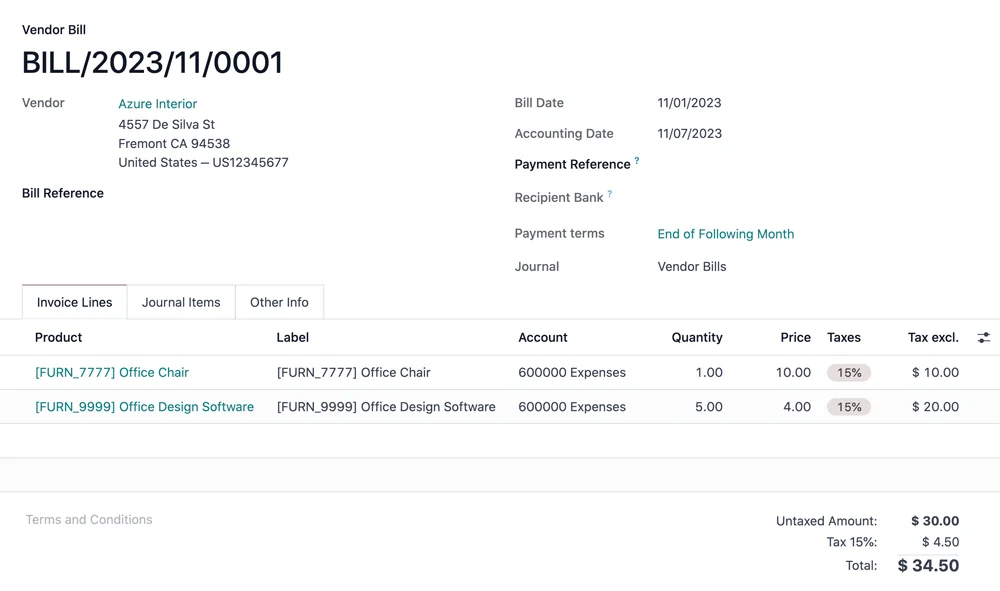
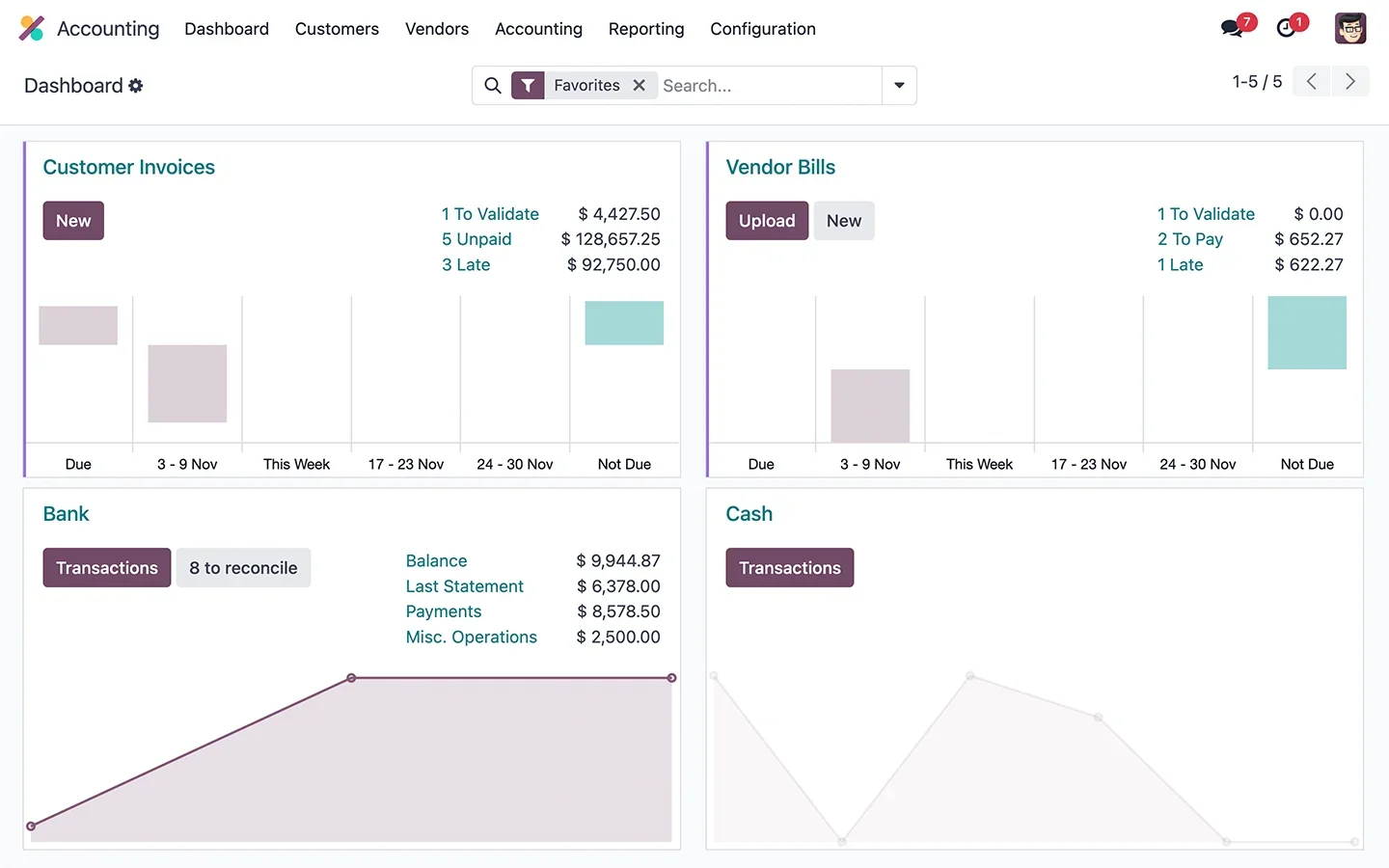
Here's the practical part. Form 347 requires summing, for each customer and each supplier, the total transactions for the year and identifying who exceeds the threshold. Doing it manually, reviewing invoices one by one, is tedious and prone to errors. With the Spanish localisation activated, Odoo has all your sales and purchase transactions associated with each customer and supplier, so it can aggregate these amounts by third party and help you identify who exceeds the threshold, based on your own accounting. Since your invoices are well-recorded from the outset, the data is reliable and consistent, which is exactly what Form 347 needs for the figures to match those of the other party. The result: you prepare the declaration with the amounts already totalled by the system, and you coordinate the final validation with your tax advisor. More detail in the Odoo accounting documentation.
Common errors with Form 347
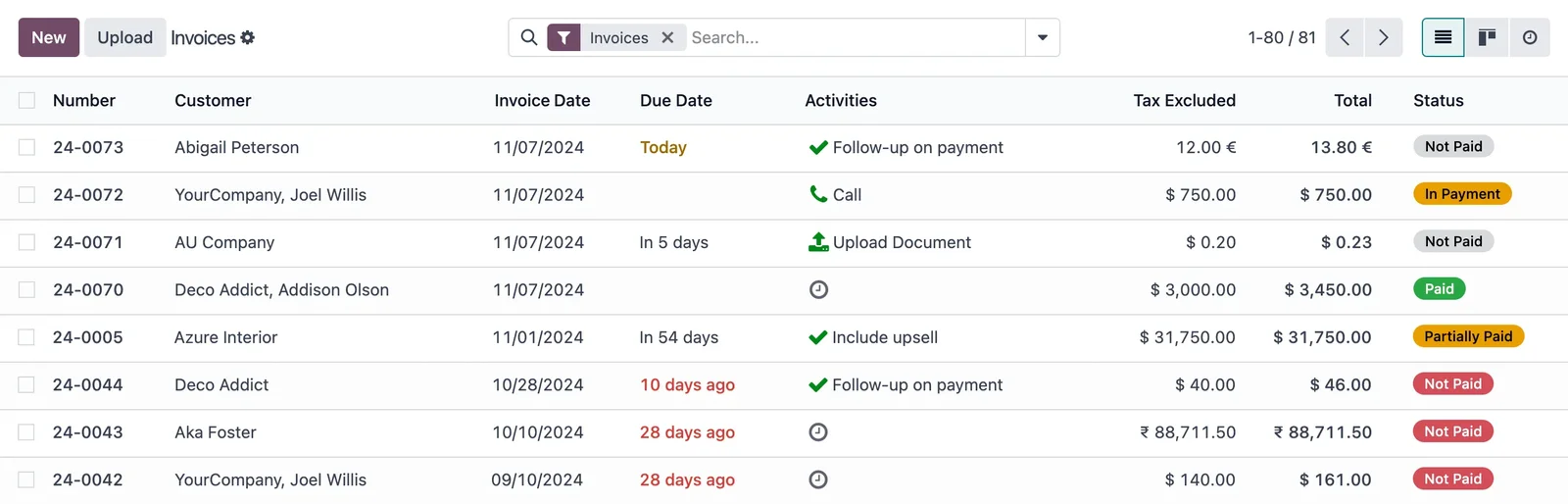
Some pitfalls are common with Form 347. The first is that amounts do not match those of the customer or supplier, which generates warnings when data is cross-referenced; this is often due to differences in criteria (for example, in which quarter each transaction is attributed). The second is forgetting a third party who exceeded the threshold due to disorganised accounts. The third is including transactions that were not applicable or excluding those that were. And the fourth is leaving it until the last minute and rushing it. All of these are reduced with organised and up-to-date accounting, where each transaction is properly assigned to its third party and its period. The framework of a project is in Odoo implementation, and it's advisable to choose the right partner who understands Spanish taxation.
Why data consistency is key for Form 347
What makes Form 347 special compared to other declarations is that the Tax Office cross-references your data with that of the other party. If you declare that you purchased a certain amount from a supplier, and they declare a different amount, a discrepancy arises. Therefore, more than the process itself, what's important is that your figures are consistent and reflect the reality of the transactions. And that's where having all information in one system makes a difference: when sales, purchases, and accounting are kept together and up-to-date, the third-party amounts are a faithful reflection of what has happened, not a post-hoc reconstruction from loose papers. This original reliability is the best way to avoid the discrepancies that turn Form 347 into a headache. Working with integrated management not only saves time when preparing the declaration but also reduces the risk of data not matching.
FAQs
What is Form 347?
It's an annual informative declaration of transactions with each customer or supplier that exceed a threshold in the year. It doesn't involve any payment: it informs the Tax Office, which cross-references the data between the parties.
What is the threshold for Form 347?
Traditionally, transactions with the same third party exceeding €3,005.06 in the year. It's advisable to confirm the current threshold and exceptions with your tax advisor, as there are nuances by type of transaction.
Who must submit Form 347?
Generally, self-employed individuals and companies with transactions exceeding the threshold with a third party. There are exceptions (transactions already reported through other channels, certain regimes), so confirm it with your tax advisor.
When is Form 347 submitted?
Once a year, referring to the previous financial year, within the deadline set by the taxpayer's calendar (usually in the first few months of the following year). Consult the exact current date.
Does Odoo prepare Form 347?
Odoo aggregates amounts by customer and supplier from your accounting, helping you identify who exceeds the threshold. The validation and submission are coordinated with your tax advisor.
Why does Form 347 sometimes show discrepancies?
Because the Tax Office cross-references your data with that of the other party, and differences in criteria (such as the quarter of attribution) generate warnings. Consistent and up-to-date accounting greatly reduces this risk.
Do I have to submit Form 347 if I already report via SII?
Those who report via SII may be exempt from Form 347. This is precisely the kind of particularity that should be confirmed with your tax advisor based on your case.
Does Form 347 include transactions with or without VAT?
It includes the total transactions with each third party above the threshold, according to the criteria set by regulations. There are nuances about what is included and how, so it's advisable to confirm them with your tax advisor.
Are intra-community transactions included in Form 347?
No: intra-community transactions are declared on Form 349, not Form 347. Each type of transaction has its own declaration, and a good system keeps them separate from the outset.
Do you want Form 347 to be a formality and not a headache?
At Nextdoo, an official Odoo partner, we keep your transactions organised by customer and supplier, so that the amounts reconcile from the outset. Start with Odoo Accounting or request a diagnosis of your case.
Sources: Tax Agency online portal and Odoo documentation. Indicative information, not tax advice; confirm threshold, deadlines, and exceptions with your tax advisor or the AEAT.
Sources
Official sources consulted: official Odoo documentation y Tax Agency online portal (VeriFactu). Cost and deadline figures are indicative and non-binding, subject to variations depending on the project.