
Form 303 is one of those quarterly obligations that no sole trader or company can miss: the VAT return. Preparing it manually, reconciling sales and purchase invoices, is where errors and last-minute stress emerge. A good management system removes much of that burden. This guide explains what Form 303 is, who needs to submit it, when, and how Odoo helps you get it ready without any nasty surprises. The specifics of your case, as always with tax matters, should be confirmed with your tax advisor or the Agencia Tributaria.
En 30 segundos. What is Modelo 303 VAT form? Who submits it, when & how Odoo helps you prepare it error-free. A practical guide from an Odoo partner.
What is Form 303
Form 303 is the self-assessment for Value Added Tax (VAT). In practice, it is the form you use each period to inform Hacienda of two things: the output VAT (the VAT you've charged to your customers on your sales invoices) and the input VAT (the VAT you've paid to your suppliers on your purchases). The difference between the two is generally what you pay to Hacienda; and if you've paid more VAT than you've charged, it may result in a credit or a refund. Ultimately, it's the way to periodically settle the VAT you collect as an intermediary. The specific rules are laid out in the regulations, which you can consult on the Agencia Tributaria's website.
Who needs to submit it
Generally, Form 303 must be submitted by sole traders and companies that carry out VAT-registered activities, i.e., the vast majority of those who sell goods or services with VAT in Spain. There are specific rules depending on the scheme (for example, those on the 'recargo de equivalencia' surcharge scheme have their own process) and the type of activity, so if you're unsure if it applies to you and under what conditions, it's precisely the kind of thing you should confirm with your tax advisor. What is common is that if you charge VAT, this form is part of your periodic obligations.
When to submit it
Form 303 is submitted periodically, usually quarterly for most sole traders and SMEs, although certain companies submit it monthly. Each submission covers a specific period and has its deadline within the taxpayer's calendar published by the Agencia Tributaria. As exact deadlines can vary and depend on your specific situation, it's wise not to rely on a remembered date but to consult the official current calendar or rely on your tax advisor to avoid late submission, as submitting past the deadline has consequences.
How Odoo helps you with Form 303
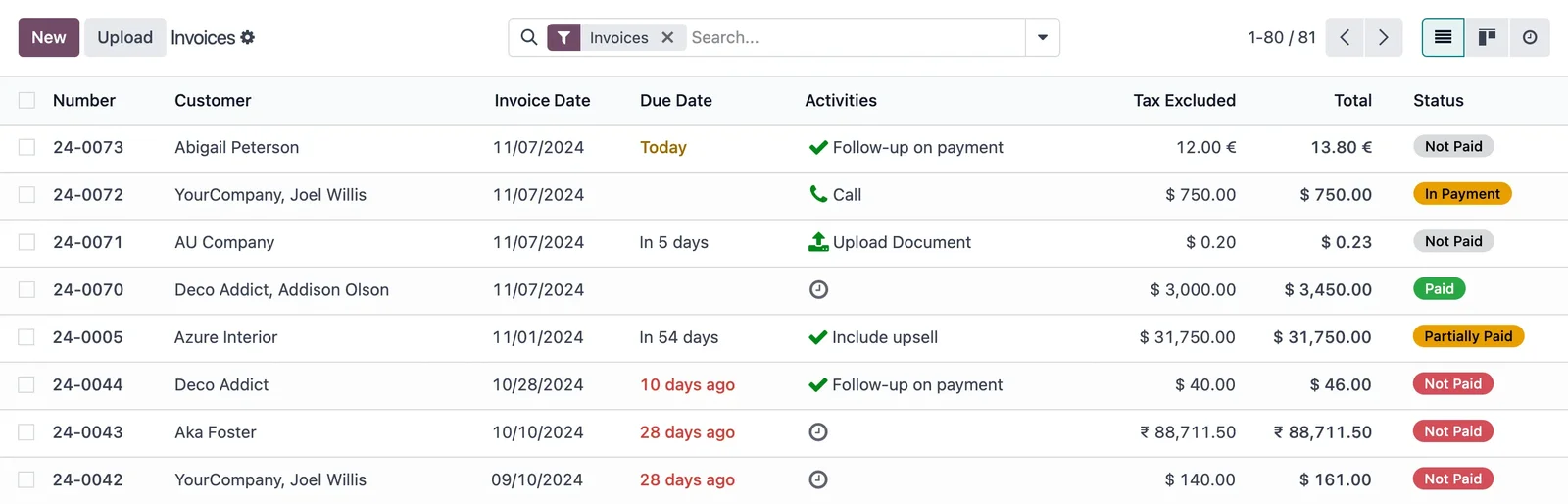
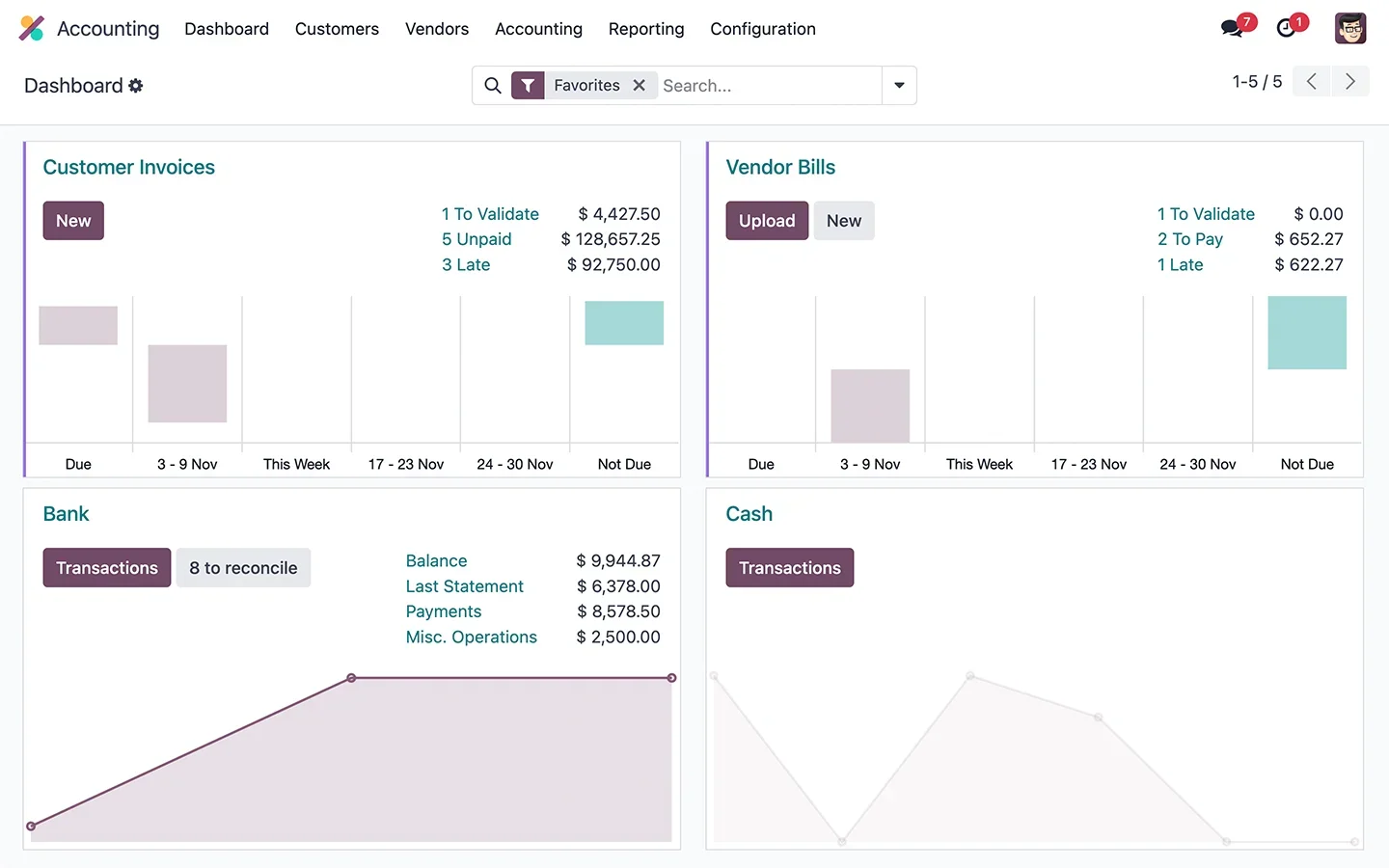
Here's the practical part. Form 303 draws data from your accounting records: specifically, the VAT from your sales invoices and your purchase invoices. If that information is kept in an organised system, preparing Form 303 ceases to be a puzzle. With the Spanish localisation activated, Odoo automatically records the VAT for each invoice and keeps the ledgers up to date, so that the data required for Form 303 is generated directly from your own accounting records without having to manually reconcile invoices or transfer figures from one place to another. Moreover, as the invoicing is VeriFactu compliant, the basis for VAT calculation is reliable from the outset. In practice, this means less manual work, fewer transcription errors, and arriving at your quarterly submission with the figures already reconciled. The final submission to Hacienda should be coordinated with your tax advisor, but you'll arrive with the groundwork already completed. You can see more in the Odoo accounting documentation.
Common errors with Form 303
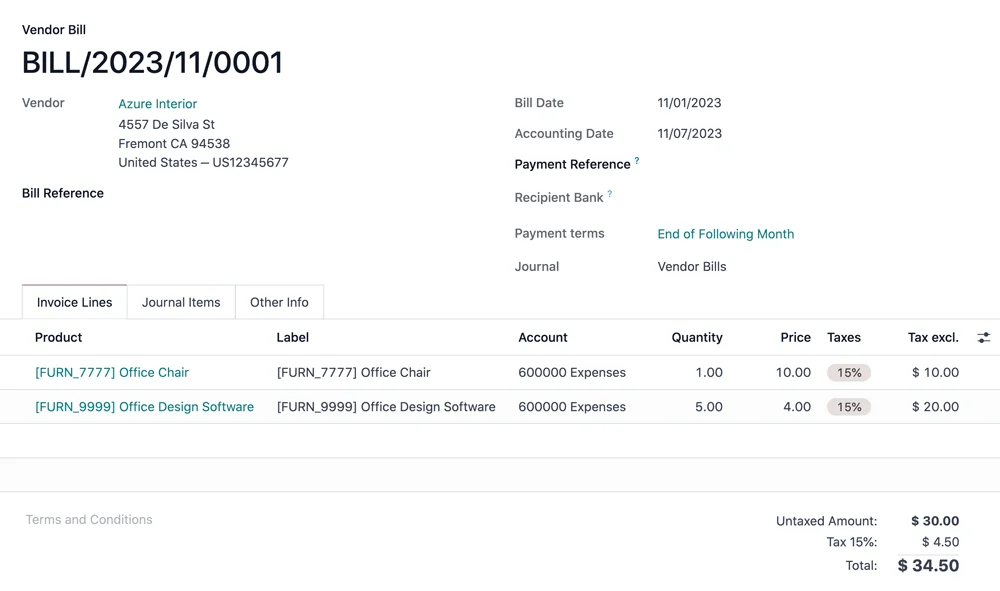
With Form 303, some recurring issues should be avoided. The first is incorrectly recording VAT on invoices (e.g., wrong rates, incorrectly marked exempt transactions), which then leads to errors in the return. The second is not including all deductible purchase invoices, leading to overpayment, or conversely, deducting what shouldn't be. The third is leaving it until the last day and making errors due to rushing. And the fourth is keeping unorganised accounting records that don't reflect the true financial position. All these issues can be mitigated by the same approach: organised and up-to-date accounting, where VAT is correctly recorded from the invoice, and strong support from your tax advisor. The framework for an Odoo management project is detailed in the Odoo implementation, and it's advisable to choose the right partner who understands the Spanish localisation.
Form 303 and the rest of your VAT obligations
Form 303 doesn't exist in isolation: it's part of a set of VAT obligations that should be viewed as a whole. Throughout the year, you submit your periodic self-assessments, and at year-end, an annual summary. Depending on your activity, you might also declare intra-community transactions or transactions with third parties. The advantage of managing everything within a single system is that this information isn't scattered: the same invoices that feed Form 303 can be used for other forms, without needing to re-enter data. When accounting is centralised and up to date, each tax obligation ceases to be a sudden panic and becomes a readily available snapshot from the system. That, beyond the specific Form 303, is the true advantage of working with integrated management rather than separate documents that need to be reconciled every quarter.
Frequently asked questions
What is Form 303?
It's the VAT self-assessment: the form used to periodically declare the output VAT on your sales and the input VAT on your purchases, in order to pay the difference, offset it, or claim a refund.
Who needs to submit Form 303?
Generally, sole traders and businesses with VAT-registered activities. There are specific rules depending on the scheme and activity, so it's advisable to confirm your case with your tax advisor.
How often is Form 303 submitted?
Typically every quarter for most sole traders and SMEs, and monthly for certain companies. Exact deadlines are available in the taxpayer's calendar published by the Agencia Tributaria.
Does Odoo automatically submit Form 303?
Odoo prepares and maintains the VAT data that feeds Form 303 from your accounting records, so you arrive at the declaration with the figures reconciled. The final submission is coordinated with your tax advisor according to your setup.
What happens if I submit Form 303 late?
There may be surcharges or penalties. Therefore, it's advisable to keep your accounting up to date and not leave preparation until the last moment; an organised system helps you meet deadlines.
Do I need a tax advisor if I use Odoo?
Odoo greatly simplifies the preparation and control work, but the validation and tax submission should be coordinated with your tax advisor, who will confirm the specifics of your case.
Does Odoo work for other VAT forms?
Yes. The same organised accounting records that feed Form 303 are used for the annual summary and, depending on your activity, for other forms, without needing to re-enter data.
Is Form 303 the same as Form 390?
No. Form 303 is the periodic VAT self-assessment; Form 390 is the annual VAT summary. They are related —Form 390 summarises what was declared in the year's Form 303 submissions—, but they are distinct tax returns with different deadlines.
Can I deduct all the VAT on my purchases in Form 303?
Only the VAT on expenses attributable to your business activity and deductible according to regulations. Some expenses have limited or no deductibility. It's advisable for your tax advisor to review what is deductible in your case to avoid over-deducting.
Do you want to approach Form 303 with your figures already reconciled?
At Nextdoo, an official Odoo partner, we ensure your accounting and VAT are organised from the invoice stage, so that each quarter is a routine process, not a panic. Start by Odoo Accounting or request a case diagnosis.
Sources: Agencia Tributaria's electronic headquarters and Odoo documentation. This information is for guidance only and does not constitute tax advice; please confirm deadlines, schemes, and specifics with your tax advisor or the AEAT.
Sources
Official sources consulted: Official Odoo documentation y Agencia Tributaria's electronic headquarters (VeriFactu). Cost and timeline figures are indicative and non-binding, subject to variations depending on the project.