In summary. At Nextdoo, we implement Odoo Enterprise in a much shorter timeframe than the market standard, integrating AI into the analysis, custom development, data migration, and training phases. It's not a marketing claim: it's the consequence of having a defined method and the right tools. The initial analysis determines if your project fits this model or requires a different scope.
ERP implementation has always had a reputation for being a long, expensive, and painful project. For a Spanish SME with between ten and thirty users, hearing «six months for the project» is usually enough to postpone the decision indefinitely. At Nextdoo we have changed that pattern by integrating artificial intelligence into every phase of the process. The result: complete Odoo Enterprise implementations — with data migration, Spanish localisation, and team training — within a timeframe that was previously unthinkable.
Nextdoo reduces Odoo Enterprise implementation times by integrating artificial intelligence into analysis, development, migration, and user training.
Why does a traditional Odoo implementation take so long?
A standard Odoo Enterprise implementation for an SME with between fifteen and twenty-five users follows a path that few companies pause to analyse before signing. Process analysis, core system configuration, custom functionality development, data migration from the previous system, testing, and training: all of that adds up. And it adds up to a lot.
The real bottleneck is not in the number of available hours, but in the way of working. When a senior consultant has to write every piece of custom functionality from scratch, manually review thousands of data records, or prepare generic training materials for each client, time slips away without the project making perceptible progress.
Furthermore, in Spain, we add layers of tax complexity that other European markets do not have. The Spanish localisation of Odoo —VeriFactu, TicketBAI for the 'foral' territories, the AEAT models— requires precise configuration. Any error here has real consequences with the tax authorities. That forces us to go slowly if you don't have automated and pre-validated processes.
The usual market outcome is a project that extends beyond expectations, consumes the client's internal resources for months, and generates uncertainty. Not because the partners are bad: it's just that the methodology hasn't evolved at the pace of the available tools.
What changes when you integrate AI into the workflow?
Artificial intelligence does not replace the consultant. What it does is eliminate the repetitive, high-volume tasks that previously consumed most of a senior profile's time.
At Nextdoo, we have systematically integrated AI tools — specifically in the analysis, development, data migration, and training phases. Not as an experiment: as part of the standard process for each project.
Accelerated initial analysis
The first meeting with the client produces a detailed transcription of their processes. Previously, converting that transcription into an ordered, prioritised, and mapped requirements document against Odoo's capabilities was days of work. Now we do it in hours.
The result is a clear roadmap from the outset. The client sees what the team will be working on each week, which standard Odoo functionalities cover their needs, and what requires custom development. No surprises halfway through the project.
Custom functionality generation
This is the most significant change. Previously, developing a custom functionality for Odoo required a consultant to build each piece from scratch: data structure, interfaces, business logic, permissions, validations. This could take one or two weeks per functionality.
Now, with AI assisting code generation, the consultant starts with a complete functional base in hours. Their work shifts towards review, fine-tuning, and testing. The final output has the same quality — it passes the same quality controls — but the time invested is radically less.
A concrete example: for a client in the motorcycle sector in Valencia, we developed a booking management functionality with a deposit within hours, which previously would have required nearly two weeks of development. The consultant reviewed it, tested it with real data, and validated it. Identical quality, radically different time.
Data migration without weeks of manual work
Migration from previous systems — Holded, Sage, Excel, or any other source — is usually one of the most tedious steps. The data arrives dirty: inconsistent formats, duplicates, empty fields, erroneous encodings.
With AI assisting data cleaning and transformation, what was previously a process of days becomes hours. And with automatic cross-validation — stocks, accounting balances, customer data — the margin of error is substantially reduced before a single record enters the new system.
Team training without endless sessions
Training is another phase where time is lost. Four or five sessions with the entire team, repeating the same explanations for users with different levels of confidence in the technology, with the consultant present at all times.
At Nextdoo, we integrate an AI assistant directly into the client's Odoo environment from the first day of training. The team can resolve queries in natural language, at any time, without waiting for the next session. The consultant intervenes for complex cases, and in-person training focuses on critical business workflows. The total training time is significantly reduced.
The Nextdoo method: the project phases
Below, we describe how a typical project is structured with our methodology. The timeframes are indicative for a standard SME; more complex projects require adjustments that are determined in the preliminary analysis.
Phase 1: Discovery and design
We start with an intense working session with the client's key team. The objective is to document the critical business processes in plain language, without jargon. What each department does, how information flows, what goes wrong today, and what absolutely cannot fail tomorrow.
Based on that, we generate an executive document with the complete project map: what Odoo solves as standard, what requires specific configuration, and what needs custom development. The client approves that document before technical work begins.
Phase 2: Technical setup and system base
We install and configure Odoo Enterprise on the client's infrastructure. The complete Spanish localisation —VeriFactu for those obliged, TicketBAI for the Basque and Navarre territories, the AEAT tax models— is configured from the outset, not as a later add-on.
The initial import of master data —products, customers, suppliers, chart of accounts— is prepared and validated before execution. An error in this phase can contaminate months of operational data.
Phase 3: Custom development and integrations
This is the phase where AI makes the most difference. The custom functionalities identified in the analysis are developed, reviewed, and validated. Integrations with third parties —payment gateways, carriers, e-commerce platforms, bank connections, AEAT itself— are configured and tested.
Commercial document templates —invoices, quotes, delivery notes, emails— are personalised with the client's branding. Approval workflows and business automations are configured as agreed in the analysis.
Phase 4: Full migration and testing
The full migration from the previous system is executed. Not just master data: also relevant operational history. We validate by cross-referencing accounting balances, stock levels, customer and supplier data.
Next, we carry out a real operation test: a full day of simulated work with real data. The client's team operates the system as if it were already in production. Findings are corrected before go-live.
Phase 5: Team training
On-site or remote training sessions, recorded for later reference, focused on the client's specific workflows. Not generic Odoo training: training on how that specific client will use the system.
From the first day of training, the AI assistant is available in the client's environment. User manuals are generated with the specific business nomenclature and processes, not generic templates.
Phase 6: Go-live and stabilisation
The go-live is a planned moment, not a surprise. We go live in production with intensive monitoring during the first forty-eight hours. The Nextdoo team is available for rapid response during this critical period.
One week after go-live, we conduct a formal review: what works well, what needs adjustment, what questions have arisen in real operation. Premium support remains active during the following months.
Real case study: motorcycle e-commerce in Valencia
In March 2026, we completed the implementation of Odoo 19 for a motorcycle business with a physical shop and online channel, twelve employees and a catalogue of nearly three thousand references. They came from Holded.
The initial analysis identified twenty-eight relevant processes and four functionalities requiring custom development: brand discount management, connection with a second-hand marketplace, sector-specific returns management and bidirectional synchronisation between the physical shop and the online channel.
The four functionalities were developed, reviewed, and validated in less than ten days from the start of the project. The nearly three thousand catalogue references were migrated with generated and reviewed descriptions, including texts for the online channel. The real operation test —a full day of simulated sales— did not produce any critical incidents.
The team went live in production at the end of the scheduled period. First invoice issued in Odoo within hours of go-live. No data loss, no operational loss during migration, with the team trained and the AI assistant available from the day of training.
When is this method not the right solution?
Honesty is part of our proposal. Not all companies fit this agile implementation model.
- Companies with more than eighty users and very specific business processes require a longer timeframe to do things well.
- Sectors with very demanding regulation —healthcare, pharmaceutical, defence— have validation and documentation requirements that cannot be compressed without risk.
- Complex manufacturing with advanced production planning needs detailed modelling that does not allow for shortcuts.
- Companies with very unique legal requirements, outside of the standard in Spain, need a specific prior analysis before committing to any timeframe.
In all these cases, the prior analysis determines the actual scope and timeframe. We do not apply the same mould to projects that need different treatment.
What does a Nextdoo implementation include?
Without going into specific figures —which always depend on the specific complexity of each project and are confirmed after the prior analysis—, a standard implementation for a Spanish SME includes:
- Odoo Enterprise licences through Nextdoo as an official partner.
- Complete configuration of the Spanish localisation: VeriFactu, TicketBAI where applicable, AEAT models.
- Data migration from the previous system, with cross-validation.
- Development of the custom functionalities identified in the analysis.
- Integrations with relevant external systems for the business.
- Team training with specific materials for the client.
- Post-go-live support for a reasonable period to ensure stabilisation.
The budget adjusts to the size and complexity of each project. A standard SME has a very different cost to a company with multiple warehouses, several sales channels, and a complex supply chain.
Conclusion: speed is not the goal, operability is
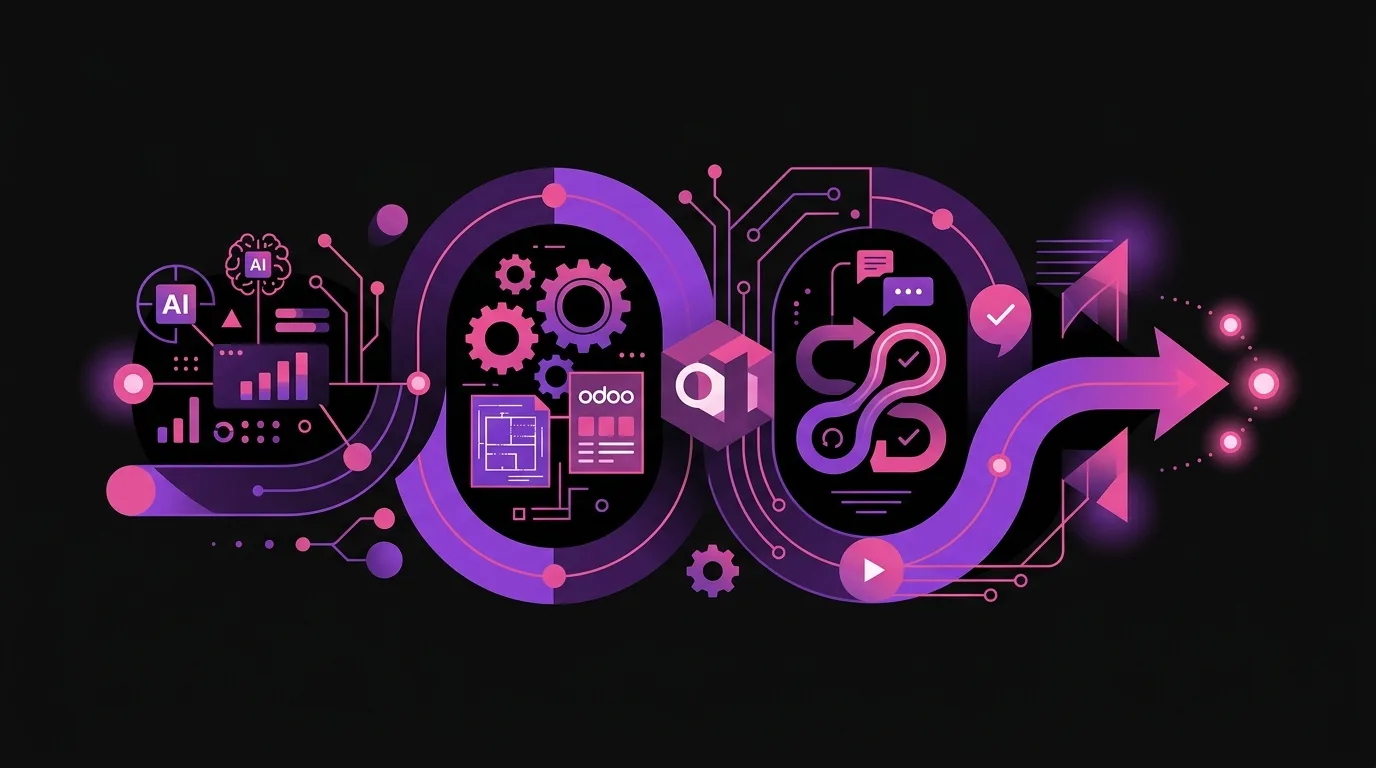
The short timeframe is not an end in itself. It is the consequence of having a well-defined method and the right tools to execute it. An SME that goes live on Odoo within a reasonable timeframe, without surprises and with the team trained from day one, recovers its investment sooner and suffers less during the transition.
At Nextdoo, we have applied this method to companies in retail, hospitality, the motorcycle sector and SMEs of all types in Spain. If your company is considering making the move to Odoo Enterprise, the first step is always the same: a conversation to understand your business and provide you with an honest analysis of what you need.
Indicative information. Actual timeframes, costs and scopes are confirmed after a personalised analysis. JLM Business Solutions SL · B16842831.
Frequently asked questions
Is such a tight implementation deadline real or just marketing?
It is real for the company profile it targets: SMEs with between five and forty users with reasonably standard business processes. The key is not to reduce the scope but to automate the most time-consuming tasks. For companies with greater complexity, the deadline is extended proportionally, and we indicate this from the preliminary analysis. We never promise a deadline we cannot meet.
What happens if the system is not ready by the end of the expected deadline?
At Nextdoo, we do not invoice for the implementation until the client is operational. If the project is extended due to reasons attributable to our methodology, the client does not bear that additional cost. What can affect the deadline are scope changes introduced during the project or delays in the provision of data and information by the client, something we agree upon and manage transparently from the outset.
Does the AI you use in development produce code of sufficient quality for production?
All code generated with AI assistance undergoes review by a senior Nextdoo consultant and automated tests before reaching the production environment. AI accelerates the generation of the functional foundation; the consultant reviews and validates that it meets business requirements, Odoo standards, and Spanish tax requirements. The final output has the same quality controls as any manual development.
Do you cover the complete Spanish fiscal localisation, including VeriFactu and TicketBAI?
Yes. Spanish localisation is a standard part of any implementation we carry out. We configure VeriFactu for companies obliged according to AEAT regulations, TicketBAI for the chartered territories that require it, and the usual tax models. Keeping up to date with Spanish fiscal regulations is not optional: it is part of what we guarantee as an official Odoo Enterprise partner.
Can you migrate data from any previous system?
We regularly work with migrations from Holded, Sage, QuickBooks, spreadsheets, and other management systems. The process includes cleaning, transformation, and cross-validation of the data before the final migration. The volume we can handle and the effort required depend on the state of the source data; this is evaluated in the preliminary analysis and included in the proposal.
What support do I have after the production go-live?
We include a post-go-live support period with priority response time. During this period, we cover incidents, adjustments arising from actual use, and team queries. At the end of this period, the client can contract a continuous support plan with Nextdoo. The SLA details are specified in the proposal, as they depend on the project's profile.
Frequently asked questions
How long does an Odoo implementation typically take for an SME?
A standard Odoo Enterprise implementation for an SME with between fifteen and twenty-five users typically lasts around six months. Nextdoo significantly reduces this timeframe by integrating artificial intelligence into the analysis, development, data migration, and training phases.
Is quality lost when accelerating Odoo implementation?
No. Speed is achieved through a defined methodology and AI tools that automate repetitive tasks, not by cutting requirements or functionalities. The result is a complete implementation without sacrificing any aspect of the business.
In which project phases is artificial intelligence used?
AI is integrated into the initial analysis, the development of tailor-made functionalities, data migration and cleaning, and team training. It is also used to generate documentation automatically, reducing the time consumed by each phase.
What does a Nextdoo Odoo implementation include?
A Nextdoo implementation includes data migration from the previous system, Spanish localisation, team training, and all tailor-made functionalities necessary for the SME to be operational on the new system.
Is the Nextdoo method suitable for all Odoo projects?
No. The initial analysis determines whether your project fits this model or requires a different scope. There are cases where a traditional implementation is more appropriate depending on the specific characteristics of the business.