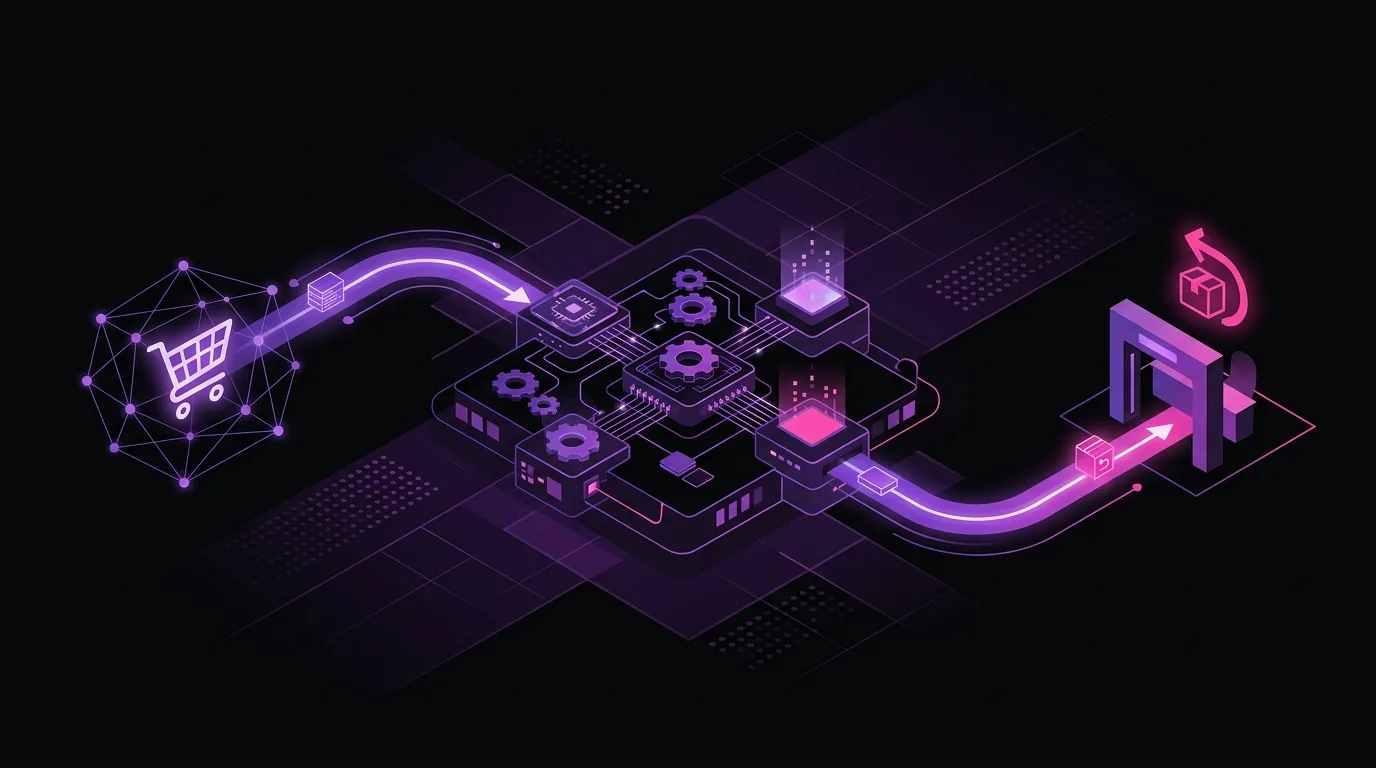
In summary. Odoo natively manages the complete omnichannel returns flow: the customer buys from the eCommerce, goes to any physical store with the digital receipt, the cashier scans the QR, Odoo locates the original order, updates that store's stock, and issues the refund using the same payment method. No calls to the central warehouse, no extra paperwork, with fiscal traceability included for VeriFactu 2026.
Returns are the moment of truth in retail. A customer who buys online and needs to return in-store can become a brand ambassador or someone who never comes back. It all depends on how long the process takes and how many explanations they have to give.
Why omnichannel returns are the Achilles' heel of Spanish retail?
Most retail SMEs in Spain manage the online channel and physical store with different tools. An eCommerce platform on one side, point-of-sale software on the other, and a spreadsheet to reconcile stock at the end of the day. When a customer wants to return something they bought online in-store, the process turns into a call to the warehouse manager, manual order lookup, and often a veiled 'come back tomorrow'.
That scenario is no longer acceptable. According to INE data, e-commerce in Spain continues to grow, and customers expect the same fluidity in after-sales as in purchase. A poorly managed return not only loses the customer but also damages the store's reputation in a market where reviews are everything.
The underlying problem is structural: when systems don't share data, each return requires manual intervention. And manual intervention scales poorly, generates errors, and increases the operational cost of retail.
Odoo solves this because eCommerce, point of sale, and warehouse management coexist on the same platform. There's no integration to maintain, no synchronisation to fail. The online order is already in the same system used by the store's till.
The complete flow: from online purchase to in-store return
Understanding the flow from start to finish helps to see the real value of having everything integrated.
The customer buys an item of clothing from the eCommerce. Odoo automatically generates the order, the electronic invoice, and a digital receipt with a unique QR code that identifies that transaction. The customer receives the receipt by email or can view it from their account.
Days later, the customer goes to the physical store with the item of clothing and the QR on their mobile or on paper. The cashier opens the returns function in the point of sale, scans the QR with the usual scanner, and Odoo displays the original order on screen with all its lines: product reference, size, colour, price paid, payment method used.
The cashier selects the lines the customer is returning, indicates the reason (incorrect size, defect, change of mind) and validates. At that moment, three things happen simultaneously: that store's stock is updated, the credit note is generated linked to the original invoice, and the payment refund process is initiated through the corresponding channel.
The customer receives a confirmation email with the refund. If they had created an account on the eCommerce, they can view the complete history from their profile. The entire process, from entering the store to leaving, is measured in minutes.
How to prepare the system to make the flow work from day one?
The above flow is only possible if the infrastructure is correctly configured from the start. There are three conditions that must be met.
The first is that the eCommerce and point of sale must be on the same Odoo instance. Having the eCommerce on an external platform connected via API is not sufficient. Native omnichannel returns require online orders to be Odoo orders, not imported records.
The second condition is to have warehouse management correctly configured. Each physical store must have its own differentiated warehouse or stock location. This way, when the return is validated in-store, the product enters the stock of that specific store and becomes available for immediate sale at that point, not in a generic warehouse.
The third condition is to have configured the payment methods so that the point of sale recognises the method used in the online order. This allows the refund to be processed through the same channel without manual intervention: card refunds to card, Bizum refunds to Bizum.
A well-executed implementation by a retail-specialised partner leaves these three conditions ready before going live. It's not something the store team should configure on the fly.
The till operation: what the cashier sees
From the cashier's perspective, the process is straightforward. No technical training or knowledge of integration details is needed.
With the till session open, the cashier accesses the returns function. They have two options: scan the QR from the customer's receipt or manually search for the order by name, email, or order number.
Once the order is located, the screen displays the lines available for return. The cashier selects the relevant ones, indicates the quantity if it's partial (e.g., the customer returns one of the three T-shirts bought), and chooses the reason from those configured by the company.
Upon validation, the system confirms the refund and generates the corresponding documentation. The cashier doesn't need to call anyone or fill in any additional forms. The information is automatically recorded and traced.
In the configurable return reasons, each company can define those that best suit its operations:
- Incorrect size or measurement
- Manufacturing defect or transit damage
- Product does not match online description
- Customer remorse
- Duplicate gift
- Exchange for another model
This information is valuable in the medium term. Analysing the reasons for returns helps to identify problems in eCommerce product sheets, recurring supplier failures or errors in the size guide.
How to avoid stock discrepancies between stores?
This is one of the points that most concerns store managers when discussing omnichannel returns. What happens to stock when a returned product was purchased online and returned in-store?
Odoo accurately records stock movement. The returned product enters the warehouse of the store where the return is made, regardless of where the original order was prepared. This is operationally correct: the product is physically in that store and must be accounted for there.
If the company manages multiple warehouses and wants the returned stock to go back to the central warehouse, it can configure an automatic transfer rule. In that case, the return generates a pending transfer movement that the logistics manager can approve when deemed appropriate.
The result in any case is that there are no discrepancies. Online stock, the stock of each store, and returns pending review are managed in the same tool with real-time visibility from any point in the organisation.
For a retailer with several stores in different cities, this centralised visibility is particularly useful. The purchasing manager can see at any time which products are being returned most, in which stores, and for what reasons, without waiting for weekly reports.
The customer refund: fiscal traceability and VeriFactu 2026
The fiscal aspect of returns is not minor. In Spain, a return implies a credit note or corrective invoice that must be correctly linked to the original invoice. With the progressive implementation of VeriFactu from 2026, the traceability of these documents is mandatory for companies obliged to adopt the system.
Odoo automatically generates the credit note upon validating the return. The document is linked to the original invoice with all required data: reference of the corrected invoice, reason for correction, amounts, and corresponding VAT. This record is sent to VeriFactu in the same way as the original invoice.
The payment refund process depends on the method used for the purchase:
- Bank card: the refund is managed as a charge reversal, either via the in-store card terminal or the online payment gateway
- Bizum: the refund is initiated via the same channel
- Cash: the cashier hands over the amount from the till and it is recorded at the end of the day's close
- Electronic voucher: if the customer prefers a voucher for future purchases, Odoo generates it and it is linked to their account
The credit note generated by Odoo complies with the requirements of the Tax Agency for corrective invoices according to article 13 of the Invoicing Regulations. This is especially relevant for companies that invoice other companies (B2B), but also for correct registration in Modelo 303 for VAT settlement.
How to manage an exchange for another size or model?
In practice, many returns are not pure returns. The customer doesn't want their money back; they want the correct size. Or they want to exchange the blue model for the black one.
Odoo manages this flow as two linked operations in the same till session. First, the return of the original product is validated. Immediately after, the replacement product is added to the receipt. If the price is identical, the balance is zero, and the customer neither pays nor receives anything. If there is a price difference, the cashier charges or refunds the difference at the time.
This flow avoids a common problem when systems are not integrated: the customer receiving a refund for the returned product and then having to make a new online purchase to receive the correct one, with corresponding shipping times. One-step in-store management resolves the most common case immediately.
It's also possible that the customer wants to return in-store and exchange for a product not available in that store but is available in the online warehouse. In that case, the return is processed normally in-store, and the new order is generated from the eCommerce or from the point of sale itself with home delivery.
What returns data helps improve the business?
One of the less visible but most valuable benefits of managing returns in Odoo is the analytics it automatically generates.
Each return is recorded with the product, the reason, the original purchase channel, the store where it was processed, and the refund method. With this information, management can identify patterns that would otherwise go unnoticed.
Some practical examples:
- A specific product code accumulates a high percentage of returns due to «manufacturing defect». A signal to review the supplier.
- Returns for online purchases are significantly higher in one product category. A signal that product sheets or size guides are not clear enough.
- One physical store accumulates more returns than others for the same product code. This may indicate a storage or handling problem.
This analytics does not require building special reports. The data is in Odoo and can be consulted from the sales, inventory, or point-of-sale dashboards, depending on the information each manager needs.
What changes regarding managing eCommerce and store separately?
For an SME that has been operating with separate online and physical channels for years, the difference unifying them in Odoo makes is quickly noticeable in three areas.
In operations, the manual work of cross-referencing orders between systems disappears. The cashier doesn't need to look at another screen or call the warehouse. The process is faster and commits fewer errors.
In stock, the usual discrepancies between what the online system states and what is physically in-store are eliminated. Returns update inventory in real time across both channels.
In fiscal matters, credit notes are correctly generated linked to the original invoices, complying with the requirements of the AEAT and VeriFactu for companies already within scope.
The investment in unifying systems is recovered through operational efficiency, error reduction, and a customer experience that generates real loyalty.
Frequently asked questions
Can the customer return in any store even if they bought online?
Yes, provided all stores are on the same Odoo instance and have access to the original order. The return can be processed at any point of sale in the network, regardless of where the online order was managed. Stock is updated in the store where the return is made.
What happens if the customer doesn't have the receipt or can't remember the email?
The cashier can search for the order by the customer's first and last name. If the customer created an account in the eCommerce, all their orders are linked to that profile and are accessible from the point of sale. If they purchased as a guest and have no details, the company must define its returns policy for such cases.
Are partial returns supported?
Yes. If the customer bought three items and only wants to return one, the cashier selects only that line and the corresponding quantity. The credit note is generated only for the amount of the returned items. The rest of the order is not affected.
How do returns affect Modelo 303 VAT?
Each credit note rectifies the VAT quota of the original invoice. Odoo automatically records these movements in the VAT reports, which facilitates the completion of the quarterly Modelo 303. The Tax Agency requires rectifying invoices to be identifiable and correctly linked to the original invoice, something Odoo manages natively.
Is VeriFactu mandatory for a retail store in 2026?
The mandatory nature of VeriFactu is being progressively implemented according to the calendar published by the AEAT. Companies with significant invoicing are obliged to adopt a verifiable invoicing registration system. It is advisable to check with your consultancy or tax advisor on what date it applies to you according to your volume and legal form. Odoo has the Spanish localisation prepared to comply with these requirements.
How long does it take to implement this flow in a retail SME?
It depends on the starting point: if you already have Odoo or are starting from scratch, if you have one store or several, if the catalogue is digitised or not. Generally speaking, a retailer with one or two stores and an organised catalogue can have the omnichannel flow operational within a reasonable timeframe after the initial analysis. The important thing is to properly configure the warehouses and payment methods phase to avoid subsequent problems.
Conclusion: well-managed returns build loyalty
A return is not the end of the customer relationship; it's an opportunity to show that the shopping experience is well thought out from start to finish. Brands that manage returns smoothly, quickly and without friction build a reputation that translates into recurring customers.
Odoo provides the infrastructure to make this possible without the need for intermediate solutions, fragile integrations, or manual work. All on the same platform, with the fiscal traceability required by Spanish regulations in 2026.
If your retail business still manages the online channel and physical store separately, now is the time to consider the change. The omnichannel returns flow is one of the first benefits that materialise after a well-executed implementation.
Contact Nextdoo to analyse your specific situation and see which steps are most suitable for your business.
Indicative information. Actual timelines, costs and scopes are confirmed after a personalised analysis. JLM Business Solutions SL · B16842831.
Frequently asked questions
Can the customer return to any store even if they bought online?
Yes, provided all stores are on the same Odoo instance and have access to the original order. The return can be processed at any point of sale in the network, regardless of where the online order was managed. Stock is updated in the store where the return is made, maintaining full traceability of the movement.
What happens if the customer doesn't have the receipt or doesn't remember the email?
The cashier can search for the order by the customer's first and last name. If the customer created an account in the eCommerce, all their orders are linked to that profile and are accessible from the point of sale. If they purchased as a guest and do not have any identifying data, the company must define its returns policy for such cases and communicate it clearly in the purchase process.
Are partial returns supported?
Yes. If the customer bought several items and only wants to return one or part of them, the cashier selects only the corresponding lines and quantities. The credit note is generated only for the amount of the returned items. The rest of the order is not affected, and the original invoice is correctly rectified partially.
How do returns affect Modelo 303 VAT?
Each credit note rectifies the VAT quota of the original invoice. Odoo automatically records these movements in the VAT reports, facilitating the completion of the quarterly Modelo 303. The Tax Agency requires rectifying invoices to be identifiable and correctly linked to the original invoice, a requirement that Odoo manages natively according to the Spanish localisation.
Is VeriFactu mandatory for a retail store in 2026?
The mandatory nature of VeriFactu is progressively implemented according to the calendar published by the AEAT. Companies with significant invoicing must adopt a verifiable invoicing registration system. It is advisable to check with your consultancy on what date it applies to you according to your volume and legal form. Odoo has the Spanish localisation prepared to comply with these requirements from the initial configuration.
How long does it take to implement this flow in a retail SME?
It depends on the starting point: if you already have Odoo or are starting from scratch, if you have one or several stores, and if the catalogue is digitised. Generally speaking, a retailer with one or two stores and an organised catalogue can have the omnichannel flow operational within a reasonable timeframe after the initial analysis. The important thing is to properly configure the warehouses and payment methods phase to avoid subsequent problems. Indicative range subject to personalised analysis.
Frequently asked questions
How does the physical store know my order when I go to return something I bought online?
The customer receives a QR code on the digital receipt of their online purchase. Upon arriving at the store, the cashier scans that code, and Odoo automatically locates the original order in the system, without the need for manual searches or calls to the warehouse.
Is the store's inventory updated when I return an item?
Yes, Odoo immediately updates the stock in the store where you make the return. The system prevents discrepancies between stores and keeps inventory information synchronised in real time.
How long does it take for the refund to reach my account?
Odoo processes the refund using the same original payment method at the time of the return. Timings depend on your bank, but the system generates the transaction immediately without intermediaries.
What happens if I want to exchange the item for another size or model instead of getting a refund?
Odoo natively manages exchanges within the same returns flow. The cashier can process the exchange directly at the till without additional paperwork, instantly updating the stock of both items.
How is VeriFactu 2026 tax compliance met for returns?
Odoo includes automatic tax traceability in all omnichannel returns, generating the necessary records for VeriFactu 2026 without the need for additional paperwork or manual management.