In summary. Square is an agile POS for micro-businesses: easy to start, proprietary hardware and per-transaction commission. Odoo POS is the point of sale of a complete management system with advanced inventory, native Spanish accounting and integrated VeriFactu. For a Spanish SME that wants to grow, manage complex stock or comply with the AEAT without complications, Odoo offers a clearly superior value proposition. Square may be sufficient in the very initial phase of a very small business.
Choosing the right POS isn't just about picking a touchscreen. It's about deciding how your business will operate in two or three years' time. In 2026, the VeriFactu obligation, the growth of hybrid commerce (physical shop plus online sales) and the AEAT's tax pressure make that decision more important than ever.
Square and Odoo POS compete on opposing models: transactional agility versus comprehensive management with automatic Spanish tax compliance.
What is Square and which profile does it suit?
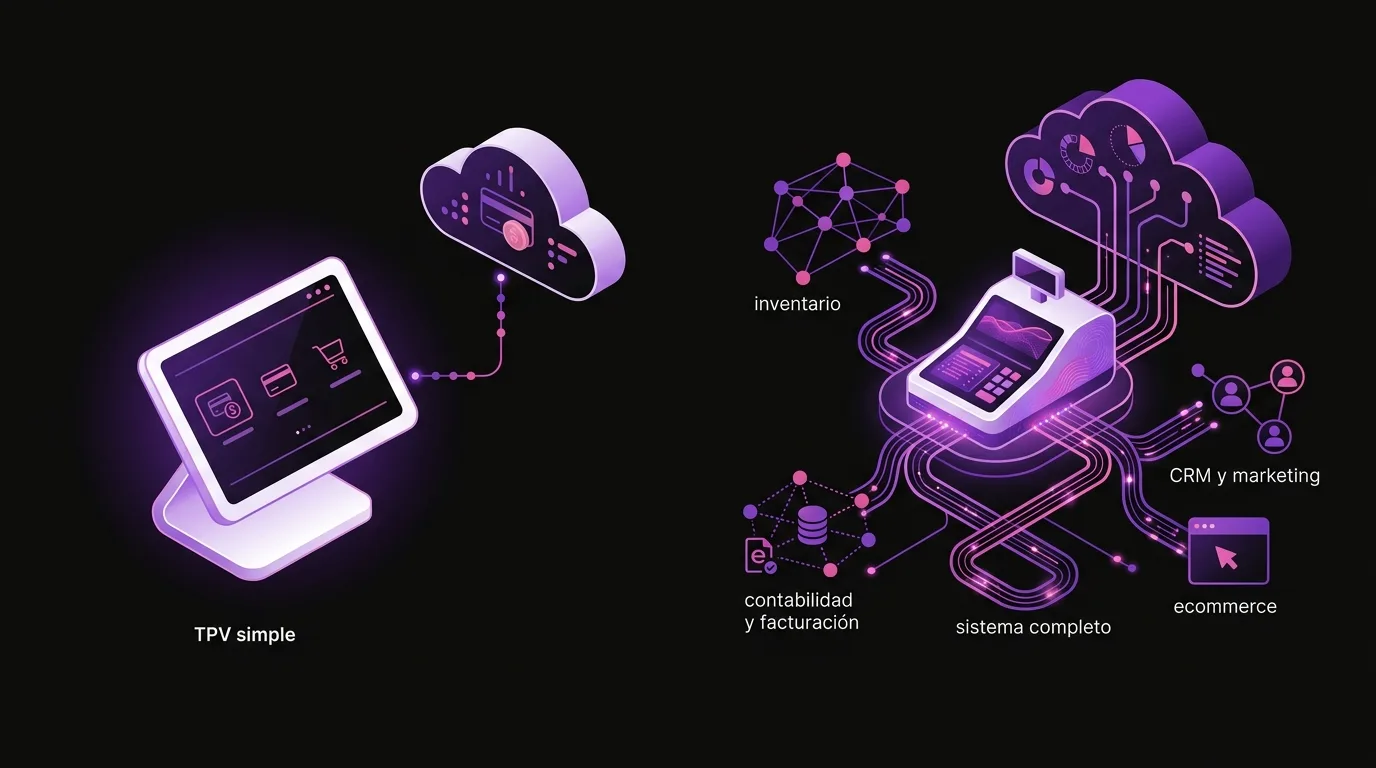
Square is a cloud-based payment and POS platform of US origin. Its proposition was born with a clear idea: that any small business could accept card payments without complications. Proprietary hardware, sign-up in minutes, per-transaction commission.
In Spain, Square offers POS and payment services. Its strength is the almost non-existent learning curve. A self-employed individual setting up a stall at a market or opening a small hair salon can be operational in a very short time without the need for training or implementation.
Square's revenue model is based on commissions for each card payment, plus fees depending on the plan. That means the more you sell, the more you pay in commissions. For a business with a high volume of transactions, that accumulated cost can be significant.
Regarding advanced functionalities, Square offers basic inventory management, product catalogue, sales reports and its own online shop solution (Square Online). These tools are sufficient for a small business with few product lines and no need for advanced accounting integration.
The big question mark for Square in the Spanish market in 2026 is taxation. VeriFactu, regulated by Royal Decree 1007/2023 and mandatory for companies and self-employed individuals subject to IRPF or IS, requires invoicing systems and POS to generate verifiable invoicing records for the AEAT. For Square, it is advisable to confirm directly with the provider what real coverage it has for this regulation in Spain before committing.
What is Odoo POS and how does it fit into Spanish retail?
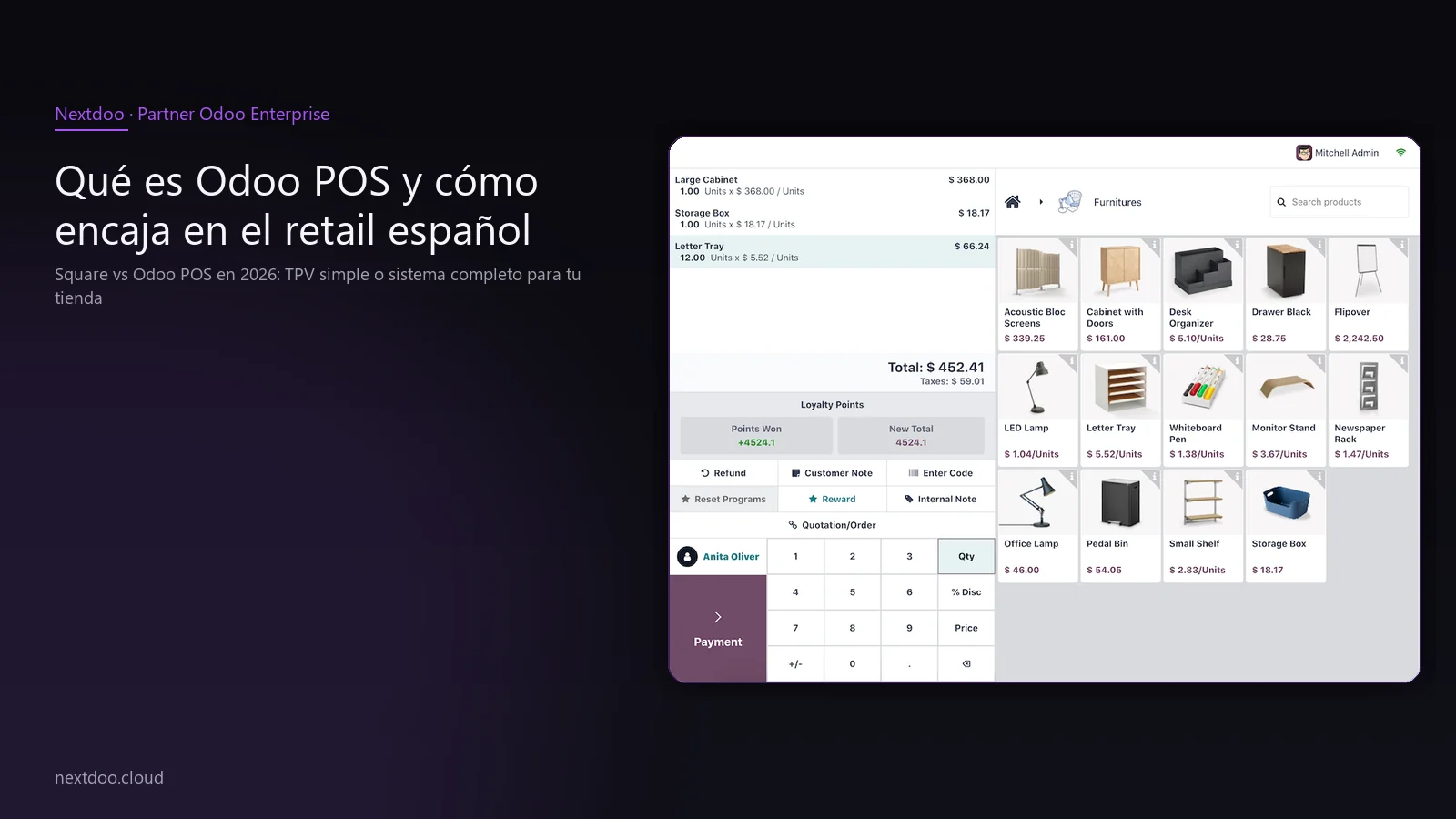
Odoo POS is not a standalone POS. It is the point of sale of a complete business management platform. That completely changes the approach.
When you work with Odoo in your shop, the POS is connected in real-time with stock, with accounting, with the online channel and with each customer's history. A sale in-store deducts from inventory, generates the accounting entry and automatically updates the customer's profile. No manual exports, no double data entry.
Odoo works on any computer, tablet or device with a browser. It does not depend on proprietary hardware. You can use industry-standard ticket printers (Epson, Star), common cash drawers and USB or wireless barcode readers. This provides real flexibility to adapt the hardware to your budget and space.
Regarding Spanish taxation, Odoo includes certified Spanish localisation. VeriFactu is natively covered, as is support for VAT Model 303, Model 347 for third-party transactions, the invoice register book and integration with accountancy services. For a Spanish SME that wants to stay up-to-date with the AEAT without headaches, this is a key differentiator.
Odoo is the solution that Nextdoo implements and supports as an official partner in Spain. We work with retail, hospitality, distribution and SMEs from various sectors. The goal is always for the system to adapt to the business, not the other way around.
Direct comparison: key differentiating points
Let's get into the practical details. Here are the criteria that matter most to a Spanish SME when evaluating a POS:
Ease of start-up
Square wins in start-up speed. Online sign-up, hardware delivered to your home and up and running in hours. For a business with a small catalogue and low operational complexity, that's a real advantage.
Odoo requires initial implementation. It's not something that can be configured in ten minutes. But that implementation is precisely what ensures the system is aligned with the reality of your business: how you receive goods, how you manage returns, how you issue invoices to B2B customers, how the till reconciles with accounting.
Implementation has a cost in time and money. What also has a cost is working for years with a system that doesn't cover your real needs and forces you to use spreadsheets or external tools to fill gaps.
Inventory and stock management
Square offers basic inventory management: product registration, stock by shop, low stock alerts. Sufficient for a business with few product lines and no logistical complexity.
Odoo offers advanced stock management: multiple warehouses and locations, product variants (size, colour, model), batch or serial number management, automated replenishment based on rules, goods receipt with validation, complete traceability of each unit. For a fashion shop, a hardware store or a spare parts distributor, that difference is what separates chaos from order.
Integrated Spanish accounting
This is where Square shows its Anglo-Saxon origin. Accounting integration for the Spanish market requires additional configurations or the use of third-party tools. Spanish VAT, ledger books, AEAT obligations and communication with accountancy services are not native functionalities in Square.
In Odoo, Spanish accounting is integrated as standard. The Spanish PGC chart of accounts, relevant tax models, automatic journal entry generation from POS sales and bank reconciliation are all part of the same system. The accountancy service receives what it needs without the merchant having to manually export, transform or resend anything.
VeriFactu and tax compliance 2026
Royal Decree 1007/2023 and its regulatory development oblige invoicing systems to generate verifiable records for the AEAT. This obligation affects companies and self-employed individuals subject to Corporation Tax or Personal Income Tax for economic activities.
Odoo has native support for VeriFactu in its Spanish localisation. This means that invoices and receipts generated from the POS comply with the registration, integrity, and unalterability requirements demanded by the regulation.
For Square, the recommendation is clear: consult directly with the provider what coverage it has for VeriFactu in Spain and demand written documentation before committing. A solution that does not comply with this regulation can expose you to penalties and the invalidation of your tax records.
Multi-store and scalability
Square supports multi-store in its most advanced version. It works well for small chains with simple operations: same catalogue, independent management per store, basic consolidated reports.
Odoo scales naturally. You can add stores, warehouses, online sales channels, or even new business lines within the same system. Transfers between stores, cross-replenishment, consolidated reports by area or format, and employee management are part of the same environment. You don't need to integrate external tools to manage the complexity that comes with growth.
Total cost and billing model
Square works with transaction fees. That's easy to understand at first, but the accumulated cost can be significant for a business with a relevant volume of card sales. Additionally, advanced functionalities require additional monthly payment plans.
Odoo has a per-user licence cost and an initial implementation cost. It does not charge a transaction fee. The payment gateway (Redsys, Stripe, Adyen, or others) has its own fees, but that is independent of the software. For businesses with medium or high volume, the Odoo model is usually more predictable and economical in the medium term.
We do not provide concrete figures in this article because the actual cost depends on the configuration, the number of users, the necessary integrations, and the scope of the implementation. What we can say is that the budget is adjustable to the reality of the SME and always starts with a prior analysis.
When does each option make sense?
There is no universal answer. There is a business profile for each tool.
Square might make sense if:
- You are a self-employed individual or a micro-business with a single point of sale terminal
- Your catalogue is small and stable, without complex variants
- You do not have integrated accounting management because you outsource everything to the accounting firm without the need for automatic data flow
- You value a quick start above everything else
- You accept the transaction fee model and have calculated it into your margin
Odoo is the natural choice if:
- You have or foresee having inventory with multiple references, variants, or locations
- You need integrated Spanish accounting and direct communication with your accounting firm
- You also want to sell online without duplicating the catalogue or stock
- You have or foresee having more than one store or more than one sales channel
- You need to comply with VeriFactu and want to do so without relying on external integrations
- Your business has or will have employees, and you want to manage commissions, shifts, or performance
The key is to think not about what you need today, but about what you will need in eighteen months. Businesses that start with Square because it was the quickest option and end up migrating to Odoo due to operational limitations have paid twice: for the implementation of Square and then for the migration to Odoo. If you already know you are going to grow, start directly with the tool that will accompany you.
What does migrating from Square to Odoo involve?
If you are already using Square and are noticing its limitations, migrating to Odoo is a perfectly viable path. It is not trivial, but neither is it a multi-year project.
What is usually migrated:
- Product catalogue with prices, variants, and categories
- Customer history and contact details
- Current stock per store or warehouse
- Suppliers and purchase rates if you have them registered
What is not usually migrated:
- History of old transactions (archived and accessed from Square if necessary)
- Specific configurations of proprietary Square hardware (replaced by standard Odoo-compatible hardware)
The process always starts with an analysis of the current situation: how you work, what data you have, what processes you want to improve, and what are the pain points that have led you to seek alternatives. From there, the scope and work plan are defined.
Why Nextdoo to implement Odoo in your store?
Nextdoo is an official Odoo Enterprise partner in Spain. We specialise in retail, hospitality, and Spanish SMEs that need a management system that truly works, not a nice demo that later doesn't fit the reality of the business.
We work with fashion retailers, sports shops, distributors, motorcycle dealerships, and hospitality businesses. We know how Spanish retail works: sales campaigns, returns management, seasonal advances, communication with the accountancy firm, and AEAT requirements.
Our process always starts by understanding your business before proposing anything. We don't sell standard implementations that then need to be adapted. We adapt from the beginning.
If you're evaluating whether Odoo fits your shop, the best way to find out is a direct conversation. Without obligation and without generic presentations.
Frequently asked questions
Does Square comply with VeriFactu in Spain?
At the time of writing this article, Square's coverage for VeriFactu in the Spanish market is not officially and publicly confirmed, as is the case with Odoo. Before contracting any POS, demand written documentation from the provider regarding compliance with Royal Decree 1007/2023. The AEAT publishes updated information about this obligation on its electronic headquarters. Non-compliance with VeriFactu can lead to penalties and the invalidation of your tax records.
Can I use Odoo POS with the hardware I already have?
In most cases, yes. Odoo POS is compatible with industry-standard hardware: Epson or Star ticket printers, cash drawers with pulse opening, USB or Bluetooth barcode readers, and standard touch screens. You don't depend on proprietary hardware. In the pre-implementation analysis, what you have and what you need to add or replace is reviewed.
What happens with my accountancy firm if I switch to Odoo?
Odoo generates accounting data in a format compatible with Spanish standards. Your accountancy firm can work directly from Odoo if they have access, or can receive exports in the formats they usually use. Many accountancy firms already know Odoo or work with clients who use it. In any case, the implementation includes the configuration of the information flow with your accountancy firm so that everything fits from day one.
Does Odoo POS work without an internet connection?
Yes. Odoo POS has an offline mode that allows you to continue selling even if the network goes down. Offline sales are automatically synchronised when connectivity is restored. It's an important feature for shops in areas with irregular coverage or for events outside the premises.
How long does an Odoo implementation take for a small shop?
It depends on the scope: number of shops, catalogue complexity, necessary integrations, and the state of current data. For a small shop with a simple catalogue, the implementation can be relatively short. For a chain with several shops, complex inventory, and the need for full accounting integration, the timeframe is longer. The preliminary analysis allows for a realistic estimate. We don't give generic timeframes because they may not correspond to your reality.
Can I start with just the POS and add accounting or eCommerce later?
Yes. Odoo is modular in practice. You can start with the POS and basic inventory, and add accounting, eCommerce, or other functionalities when the business requires it. The advantage is that everything remains within the same system, without migrations or external integrations. Growth is incremental and controlled.
Conclusion: the right decision depends on your actual situation
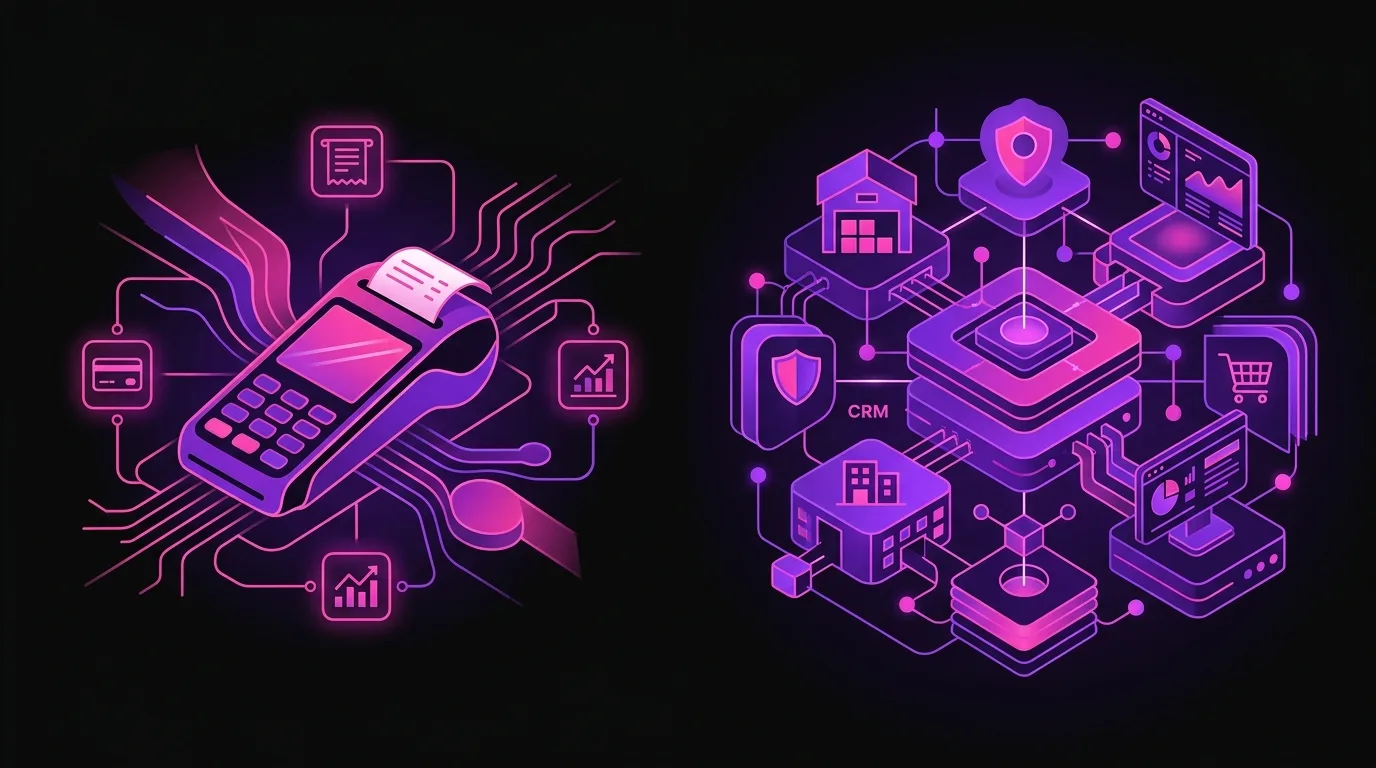
Square and Odoo don't really compete in the same segment. Square is an entry-level solution for small businesses that value simplicity above all else. Odoo is a complete management platform where the POS is just one part of a system that covers all business operations.
If you're starting with a very small business, without inventory complexity and without the need for accounting integration, Square can be a reasonable starting point. But if you already know you're going to grow, that you have or will have several product lines, that you need to comply with VeriFactu, and that you want your Spanish accounting to work autonomously, start directly with Odoo.
The cost of changing systems when the business is already up and running is much higher than implementing the correct tool from the start.
If you want to know if Odoo fits your shop, talk to Nextdoo. We analyse your situation and give you an honest answer, not a sales presentation.
Indicative information. Actual timeframes, costs, and scopes are confirmed after a personalised analysis. JLM Business Solutions SL · B16842831.
Frequently asked questions
Does Square comply with VeriFactu in Spain?
Square's coverage for VeriFactu in Spain is not officially and publicly confirmed at the time of writing this article. Before contracting any POS, demand written documentation from the provider regarding compliance with Royal Decree 1007/2023. The AEAT publishes updated information about this obligation on its electronic headquarters. Non-compliance with VeriFactu can lead to penalties and the invalidation of the business's tax records.
Can I use Odoo POS with the hardware I already have in my shop?
In most cases, yes. Odoo POS is compatible with industry-standard hardware: Epson or Star ticket printers, cash drawers, USB or Bluetooth barcode readers, and conventional touch screens. It does not depend on proprietary hardware. In the pre-implementation analysis, what you have and what should be added or replaced according to your needs is reviewed.
What happens with my accountancy firm if I switch to Odoo?
Odoo generates accounting data according to Spanish standards: PGC chart of accounts, VAT models, and ledger books. Your accountancy firm can work directly from Odoo if they have access, or receive exports in the usual formats. The implementation includes the configuration of the information flow with your accountancy firm so that everything fits from day one without duplicating work.
Does Odoo POS work without an internet connection?
Yes. Odoo POS has an offline mode that allows you to continue selling even if the network is interrupted. Offline sales are automatically synchronised upon restoring connectivity. It's an important feature for shops in areas with irregular coverage, for markets, or for events outside the usual premises.
Does it make sense to migrate from Square to Odoo if I've been using Square for a while?
It depends on whether Square's limitations are costing you time or money. If you manage inventory outside the POS, if your accountancy firm works with manually exported data, if you have difficulties with VeriFactu, or if you want to launch a synchronised online shop, migrating to Odoo makes sense. The catalogue, customers, and current stock are migratable. The process always starts with a preliminary, no-obligation analysis.
Can I start with just the POS in Odoo and add more functionalities later?
Yes. Odoo allows you to start with the POS and basic inventory, and add accounting, eCommerce, CRM, or other functionalities when the business requires it. Everything remains within the same system, without migrations or external integrations. Growth is incremental and does not force a platform change when the business matures.
Frequently asked questions
What is the main difference between Square and Odoo POS?
Square is a simple and quick-to-install payment terminal, ideal for very small businesses without the need for complex management. Odoo POS is a comprehensive system that includes point of sale, inventory, Spanish accounting and tax compliance, designed for SMEs that need to grow and manage multiple business areas.
How much does each option cost?
Square operates on a per-transaction commission plus monthly fees depending on the plan, meaning you pay more as your sales increase. Odoo POS has a fixed licence model, so costs are more predictable regardless of sales volume.
Do I need Odoo if I have a small, start-up shop?
Not necessarily. If you have a very new business with low stock and simple operations, Square may be sufficient for now. But if you anticipate growth in the coming years or already have inventory complexity, Odoo is a smarter investment from the outset.
Does Odoo comply with VeriFactu and Spanish tax obligations?
Yes, Odoo POS has native compliance with VeriFactu and AEAT regulations integrated. Square does not offer these specific functionalities for Spain, which can be a problem if your business grows and needs complex invoicing.
Is it complicated to migrate from Square to Odoo if I change my mind?
Migration is possible but requires planning: you need to export transaction, customer, and inventory data, and adapt it to Odoo's format. It is not an automatic process, which is why it's important to properly evaluate the correct option from the outset based on your growth plans.