In a packed restaurant on a Friday night, the system cannot fail: the order must reach the kitchen instantly, the table must be closed quickly and, at the end of the shift, the till must balance. Implementing Odoo in hospitality connects the POS, the kitchen, the warehouse and accounting, so you know not only how much you have sold, but also how much each dish costs you and what margin it leaves you. This guide explains how to set it up, step by step.
En 30 segundos. Implement Odoo for restaurants & bars. Streamline POS, orders, tables, kitchen, recipe costing, stock, TicketBAI/VeriFactu compliance. Partner guide.
What makes hospitality special
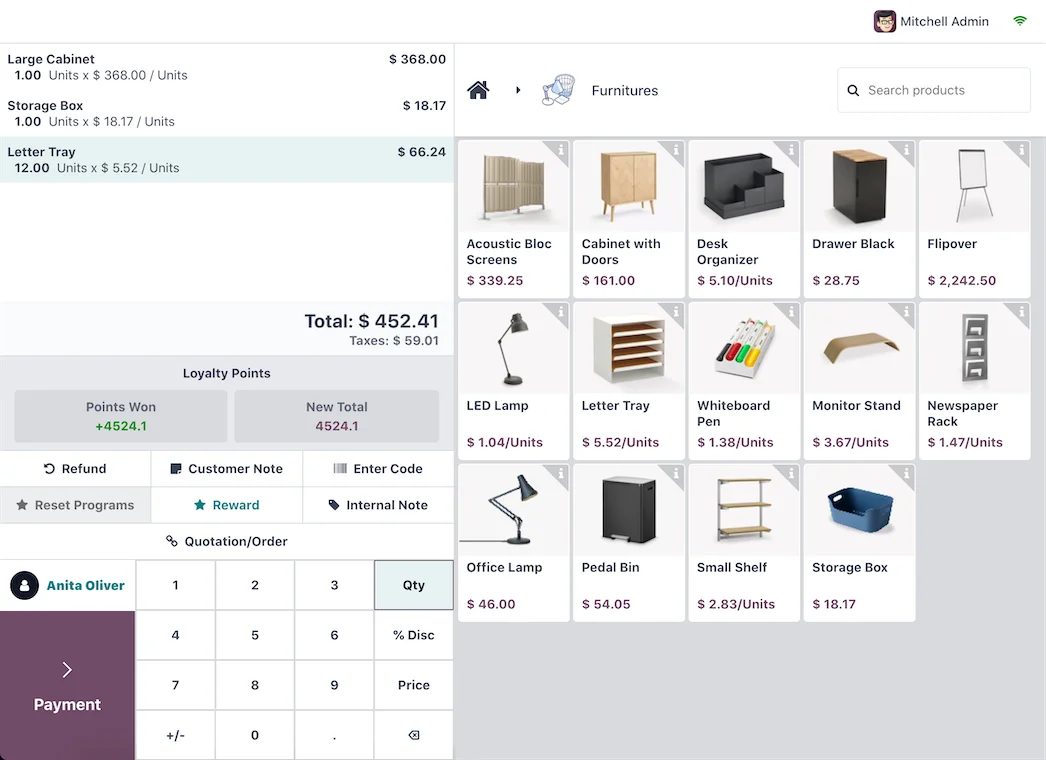
Hospitality brings two worlds together: the speed of retail at the till and the production control of a small factory (each dish is a product that consumes ingredients). That's why the POS alone isn't enough: every sale needs to deduct ingredients from the warehouse and you need to know the true cost of the menu. Much of the point of sale basis is shared with retail; you can see the POS approach in Odoo POS.
How to implement Odoo in hospitality step by step
Step 1 · POS with tables and rooms
The point of sale is configured for hospitality: table layout, rooms, waiters and payment methods. The goal is for opening, taking payment for and closing a table to be a matter of seconds. Deliverable: Operational front-of-house POS.
Step 2 · Orders and kitchen display
The order flow is connected so that what is ordered in the front-of-house appears instantly in the kitchen or bar, with its preparation order. No more handwritten tickets and forgotten dishes. Deliverable: Digital front-of-house-to-kitchen order.
Step 3 · Menu, costing sheets and stock
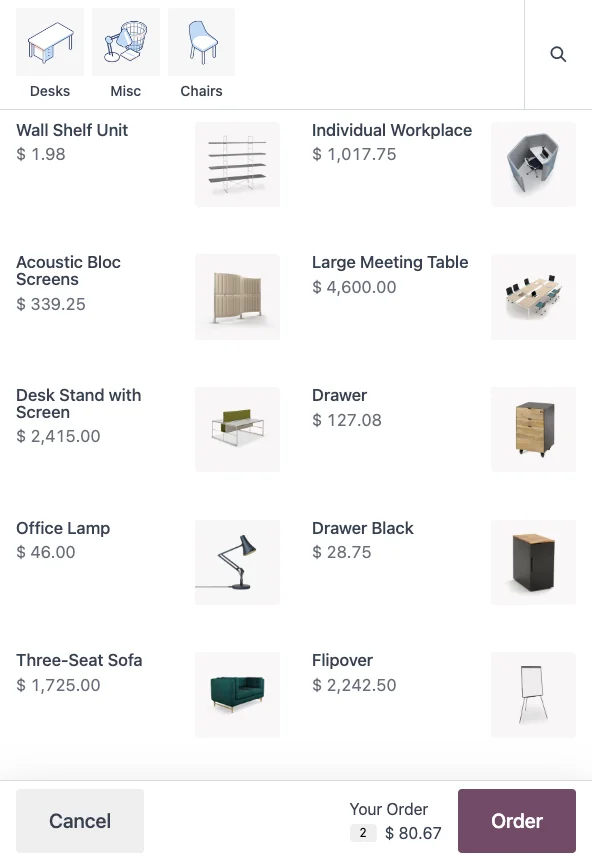
The menu is loaded and, behind each dish, its costing sheet (the recipe with its ingredients). This way, each sale deducts raw material from the warehouse and you know the cost and margin of each dish. This is the step that separates «selling a lot» from «making money». Deliverable: Menu with costs and linked stock.
Step 4 · Invoicing and tax regulations
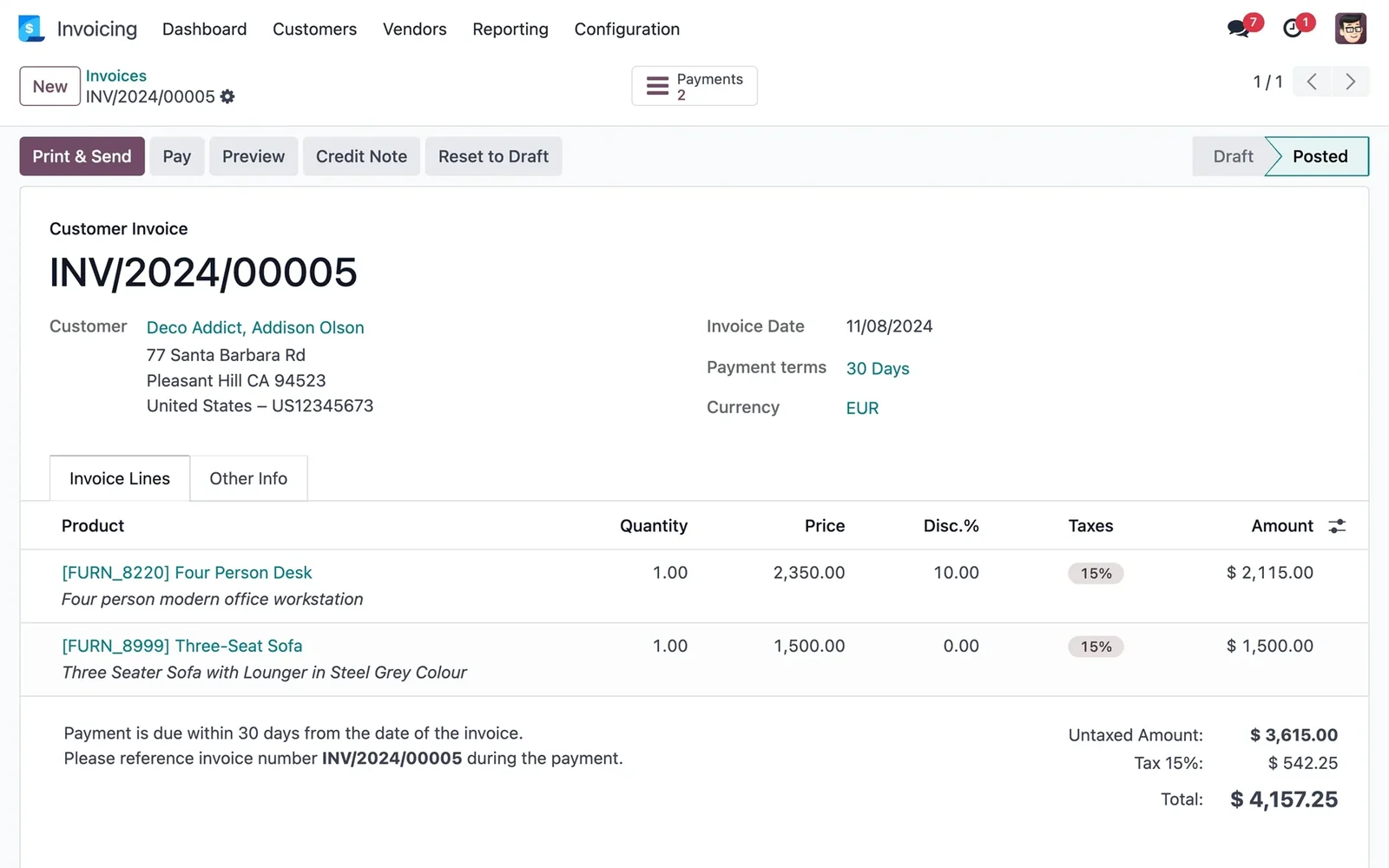
Invoicing is set up according to the law: TicketBAI in the Basque Country and Navarre, or VeriFactu in the rest of Spain, mandatory in 2026. Configuring it correctly from the start avoids issues with the Tax Agency; it's covered by VeriFactu and Odoo. Deliverable: Compliant tickets and invoices.
Step 5 · Front-of-house training and launch
The team is trained on the actual POS, with the menu and venue promotions, and it's launched —preferably on a quiet day—. Afterwards, reservations, loyalty programmes or home delivery orders are added depending on the business. Deliverable: Venue operating on Odoo.
What you can add later (in phases)
- Reservations and capacity management.
- Loyalty programmes for regular customers.
- Home delivery and collection orders, with the online menu.
- Purchases from suppliers with replenishment based on consumption.
How much does it cost and how long does it take?
As an indicative and non-binding reference, a venue that starts with POS, orders and menu is usually operational in a few weeks, and the cost depends on the number of terminals, rooms and whether you add kitchen, reservations or home delivery. A reliable figure comes from a diagnosis. Breakdown without made-up figures in how much Odoo costs.
Common mistakes in hospitality
- Setting up the POS without costing sheets: you sell without knowing your cost or your stock.
- Training the front-of-house team on the opening day.
- Leaving TicketBAI or VeriFactu until last.
- Opening kitchen, reservations and home delivery all at once instead of in phases.
With a partner experienced in hospitality, these stumbling blocks are avoided: how to choose an Odoo partner.
A Friday night service, with Odoo behind it
Imagine a packed venue. The waiter takes the order on the tablet and it instantly jumps to the kitchen and bar, each with its own; no one is running around with papers or missing a dish. When the customer asks for the bill, the table is closed in seconds and the ticket is issued according to tax regulations. Meanwhile, each dish served has deducted ingredients from the warehouse, so when you close, you know not only how much you've invoiced, but also how much it cost you and what margin you're left with. The next day, the system already alerts you what to restock. That peace of mind during peak hours is, in practice, the biggest reason to implement Odoo in hospitality.
What to add once the venue is up and running
Once the POS and menu are working, growth comes in phases according to your business. A restaurant with many reservations will activate capacity and reservations management; a local neighbourhood venue, loyalty programmes for regular customers; and whoever sees business in delivery, the online menu with collection and home delivery. The important thing is not to open everything on the first day: each addition performs better when the team has already mastered the previous one, and thus the project never overwhelms the front-of-house.
What you need before starting in your venue
For a quick start in your bar or restaurant, there are a few things that should be ready beforehand. They are not complicated, but getting them done in advance saves days.
The first thing is a well-defined menu: dishes, prices and, behind each one, the ingredients it consumes, because from there come cost control and stock deduction. Next, the front-of-house hardware: how many terminals or tablets, the kitchen and bar ticket printer, the card machine and, if you have one, the kitchen display; choosing compatible equipment avoids 90% of first-day problems. It's also advisable to decide your tax regime —TicketBAI in the Basque Country and Navarre or VeriFactu in the rest— to configure it from the start. And finally, be clear on how your front-of-house works: zones, shifts and who takes payment, so that the POS reflects your operations and not the other way around.
With this prepared, the launch focuses on configuring and training, not improvising. And as with any project, it's advisable to start with the essentials —POS, menu and stock— and add reservations, loyalty programmes or home delivery when the team is already comfortable, just like a phased implementation.
What you can measure from day one
One of the things that surprises most when implementing Odoo in hospitality is that, with almost no extra effort, you start to have data that was previously an intuition. From day one you know which dishes sell the most and which don't, what times work is concentrated, what margin each menu item leaves and how much each waiter or each table invoices. There's no need to set up complicated reports: the POS's own operations and the costing sheets provide this information.
With that in hand, decisions are no longer made by guesswork. You can adjust the menu by removing what isn't profitable, review the price of a dish whose cost has soared, or reinforce shifts during actual peak hours, not just the ones you think are. That leap —from managing by feeling to managing by data— is, for many hospitality professionals, the reason why a complete system pays off compared to a POS that only takes payments.
Frequently asked questions
Does Odoo serve as a POS for a bar or restaurant?
Yes. Odoo's point of sale is ready for hospitality: tables, rooms, kitchen orders and fast payment. You can start with just the POS and expand when you need to.
What is a costing sheet and why does it matter?
It's the recipe for each dish with its ingredients and quantities. Loading it into Odoo means each sale deducts stock and shows you the real cost and margin of the menu.
Does Odoo comply with TicketBAI and VeriFactu in hospitality?
Yes. The Enterprise edition covers TicketBAI in the Basque Country and Navarre and VeriFactu in the rest of Spain, mandatory in 2026. It's advisable to configure it from the start.
How long does it take to implement Odoo in a restaurant?
A launch with POS, orders and menu is usually ready in a few weeks. The timeframe depends on the rooms, terminals and whether you include kitchen, reservations or home delivery.
Do you want your restaurant running on Odoo without hassles during peak hours?
At Nextdoo, an official Odoo partner, we set up the POS, orders and costing sheets in phases, with your front-of-house team trained. Request a diagnosis for your venue at Odoo implementation.
Source: Odoo official documentation (Point of Sale). Indicative and non-binding figures.
Sources
Official sources consulted: Odoo official documentation and electronic headquarters of the Tax Agency (VeriFactu). Cost and timeframe figures are indicative and non-binding, subject to variations depending on the project.